
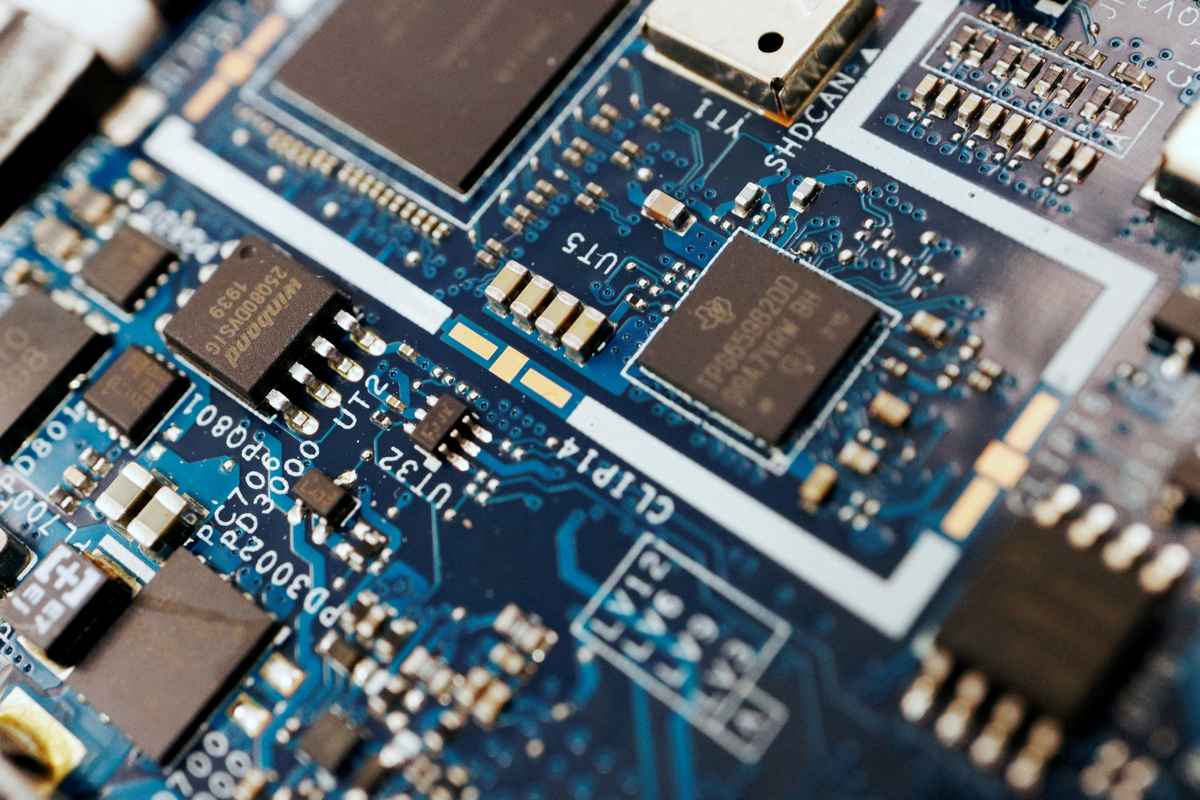
Semiconductor chips are seen on a circuit board of a computer in this illustration picture taken February 25, 2022.
13:01 JST, February 9, 2026
TAIPEI, Feb 9 (Reuters) – It would be “impossible” to move 40% of Taiwan’s semiconductor capacity to the U.S., the island’s top tariff negotiator said, pushing back against recent comments by American officials who called for a major production shift.
In an interview with Taiwanese television channel CTS that was broadcast late on Sunday, Taiwan Vice Premier Cheng Li-chiun said she had made it clear to Washington that Taiwan’s semiconductor ecosystem, built up over decades, could not be relocated.
“I have made it very clear to the United States that this is impossible,” she said, referring to the 40% goal the U.S. has floated.
That ecosystem will continue to grow in Taiwan, Cheng said, adding that the semiconductor industry would keep investing at home.
“Our overall capacity (in Taiwan) will only continue to grow,” she said. “But we can expand our presence in the United States.”
“Our international expansion, including increased investment in the United States, is based on the premise that we remain firmly rooted in Taiwan and continue to expand investment at home.”
On Tuesday, U.S. Commerce Secretary Howard Lutnick said the government needed to bring semiconductors to the U.S.
“You can’t have all semiconductor manufacturing 80 miles from China,” he said. “That’s just illogical … So we need to bring it back.”
“When we leave office my goal, for this administration, is 40% market share in leading-edge semiconductor manufacturing.”
Taiwan and the U.S. reached a deal last month to lower tariffs on the island’s exports to 15% from 20% and for Taiwan to increase its investment in the country.
Cheng said that there would be no relocation of Taiwan’s science parks, but Taiwan was willing to share its experience in building an industry cluster and help the U.S. develop a similar environment.
She also said she was confident that Taiwan’s semiconductor capacity – including existing, under construction and planned projects across advanced manufacturing, advanced packaging and the broader supply chain – would far exceed its investment in the U.S. or any other country.
In an interview on CNBC last month, Lutnick said his goal was to bring 40% of Taiwan’s entire chip supply chain and production to the U.S. He said that if this does not happen, tariffs on Taiwan would likely rise to 100%.
In September, Lutnick told U.S. television network NewsNation that Washington’s pitch to Taiwan would be a 50-50 split in making chips, the vast majority of which are now made on the island.
Taiwan rejected that idea at the time.
TSMC 2330.TW, the world’s largest contract chipmaker, is investing $165 billion to build factories in the U.S. state of Arizona.






Most Read
Popular articles in the past 24 hours
-
Seeking Nuclear Waste Site, Japan Eyes Remote Island of Minami-To...
-

Total Lunar Eclipse Visible for Some in Japan, While Clouds Block...
-
Japan Ministry Asks to Conduct Nuclear Waste Disposal-related Sur...
-

WBC to Begin: All the Pieces are in Place for Japan’s Second Stra...
-

Milano Cortina 2026: Ceremony for Winter Paralympic Torch Relay T...
-
Tokyo High Court Upholds Unification Church Dissolution Order; Li...
-
How Trump Assassination Attempts Played into His Decision to Atta...
-

CARTOON OF THE DAY (March 4)
Popular articles in the past week
-
Tokyo Spends Big on Children, Wins Over Parents
-

Japan’s Miura, Kihara Announce Withdrawal from Figure Skating Wor...
-
South Korea Tightens Rules on Foreigners Buying Homes in Seoul Me...
-
BOJ Keeping Eye on Economy and Takaichi's ‘Proactive Fiscal Polic...
-
Tokyo Measles Patient Traveled to Fukuoka Aboard JAL Planes; Susp...
-
Nidec Chairman Resigns Amid Accounting Scandal at Major Japanese ...
-

Strait of Hormuz Closure Shakes Markets; Prolonged Closure Could ...
-

Tourists Ignore Safety Barriers Near Famous Zao ‘Snow Monsters’ i...
Popular articles in the past month
-

Producer Behind Pop Group XG Arrested for Cocaine Possession
-

Japan PM Takaichi’s Cabinet Resigns en Masse
-

Man Infected with Measles Reportedly Dined at Restaurant in Tokyo...
-

Israeli Ambassador to Japan Speaks about Japan’s Role in the Reco...
-

Videos Plagiarized, Reposted with False Subtitles Claiming ‘Ryuky...
-

Prudential Life Insurance Plans to Fully Compensate for Damages C...
-

Woman with Measles Visited Hospital in Tokyo Multiple Times Befor...
-

iPS Treatments Pass Key Milestone, but Broader Applications Far f...
Top Articles in News Services
-
Survey Shows False Election Info Perceived as True
-
Hong Kong Ex-Publisher Jimmy Lai’s Sentence Raises International Outcry as China Defends It
-

Japan’s Nikkei Stock Average Falls as US-Iran Tensions Unsettle Investors (UPDATE 1)
-
Japan’s Nikkei Stock Average Touches 58,000 as Yen, Jgbs Rally on Election Fallout (UPDATE 1)
-
Japan’s Nikkei Stock Average Rises on Tech Rally and Takaichi’s Spending Hopes (UPDATE 1)
JN ACCESS RANKING
-
Producer Behind Pop Group XG Arrested for Cocaine Possession
-
Japan PM Takaichi’s Cabinet Resigns en Masse
-
Man Infected with Measles Reportedly Dined at Restaurant in Tokyo Station
-
Israeli Ambassador to Japan Speaks about Japan’s Role in the Reconstruction of Gaza
-
Videos Plagiarized, Reposted with False Subtitles Claiming ‘Ryukyu Belongs to China’; Anti-China False Information Also Posted in Japan