
Japan Tourism / Boxed Meals and Stargazing: A Scenic Journey on the Koumi Line
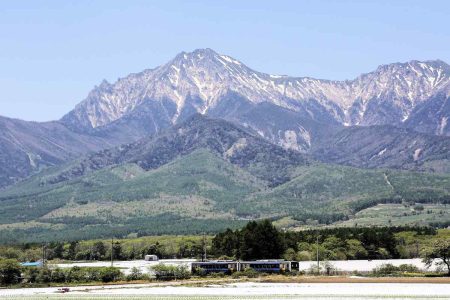
The world’s first hybrid train, the KiHa E200 type, runs through highland vegetable fields between Kiyosato and Nobeyama stations, against the backdrop of the Yatsugatake mountain range, whose highest point is 2,899 meters above sea level.

11:23 JST, November 28, 2025
The Koumi Line is a railway that runs through the part of Nagano Prefecture where I spent my childhood. The cities of Komoro — where I was born — and neighboring Saku — where I was raised — both sit along the line. It even employed my parents, who were both Koumi Line station attendants, my father at Nakagomi Station and mother at Komoro Station. The railway, the source of many cherished memories, was almost like a third parent to me.
The line is affectionately known as the Yatsugatake Kogen (Yatsugatake highlands) Line due to the fact that it passes over the area at the base of the Yatsugatake mountains.
After a long absence, I got the urge to travel on the Koumi Line again. I boarded the Azusa 5 limited express, scheduled to depart Shinjuku Station at 8 a.m. sharp. I was reminded of the lyrics of the 1977 hit song “Azusa Nigo” (Azusa 2 train) by the folk duo Karyudo, which mention an Azusa 2 train that leaves at exactly 8 a.m.
I arrived at Kobuchizawa Station at 9:53 a.m. and disembarked to transfer to the Koumi Line. Before boarding, I dashed to the Marumasa Soba noodle restaurant next to the ticket gate and quickly enjoyed a bowl of their famous Sanzoku Soba (bandit’s soba noodles).
After eating, I went to the Masaichi Honten kiosk on the first floor of the station building, where I bought a “Kogen Yasai to Katsu no Bento” (highland vegetables and chicken cutlet boxed lunch) to have for lunch later.
I then moved to the Koumi Line platform and boarded the High Rail 1375 sightseeing rapid train, departing for Komoro at 10:39 a.m.
As soon as the train left the station, the majestic forms of Mt. Kai-Komagatake and the Yatsugatake mountains came into view through the window.
The train passed Kiyosato Station and then crossed the Sakaigawa river, which runs along the border between Yamanashi and Nagano prefectures.
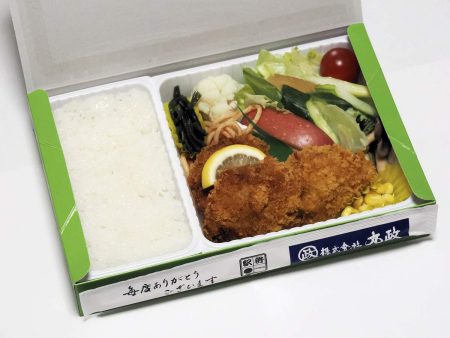
A bento boxed meal featuring highland vegetables and chicken cutlet, priced at ¥1,400
Just seconds later, the train passed the railroad crossing known as the “highest point on JR railways,” located at an altitude of 1,375 meters. This crossing is what gave the High Rail 1375 train its name.
Outside the window, I saw vast fields of highland vegetables stretching out at the foot of the Yatsugatake mountains.
“Well then, it’s about time for lunch,” I thought to myself.
When I opened the box, I was impressed by the abundant fresh greens contained inside. The lettuce, celery, cucumber and cauliflower were incredibly juicy and crisp, and the chicken cutlet was delicious. It had been fried slowly over low heat, creating a wonderfully crispy texture.
The High Rail 1375 rapid train makes three runs per day when it is in service, which is mainly on weekends — the first two during the daytime, and the third in the evening, which is called the Hoshizora (night sky) train.
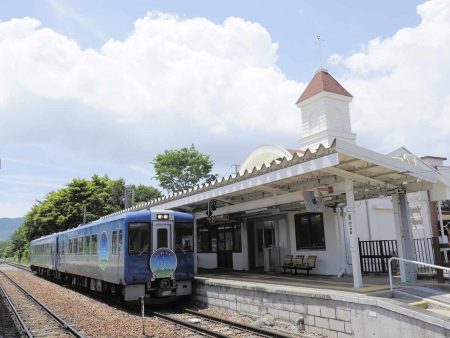
The High Rail 1375 train stops at Nobeyama Station.
The Hoshizora train offers a unique experience. It departs Kobuchizawa Station at dusk and stops at Nobeyama Station for about 40 minutes, during which passengers can enjoy stargazing.
“What stars will be visible in the night sky tonight?” I wondered.
With high hopes, I boarded the evening train, which departed at 7:22 p.m.
Immediately after we departed, an announcement was made: Passengers who had reserved a “High Rail Hoshizora Tokusei Bento” (High Rail starry sky special boxed meal) could now collect their food.
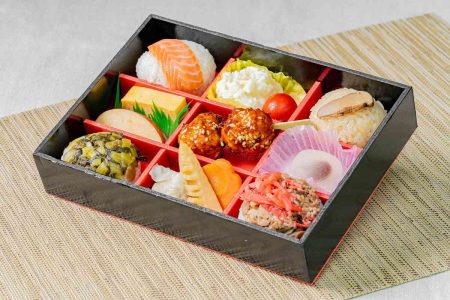
A “High Rail Hoshizora Tokusei Bento” boxed meal, priced at ¥1,300
I opened my boxed meal to find a pop-up cutout of the High Rail 1375 running with the Yatsugatake mountain range in the background. I enjoyed the food while reminiscing about models I had made on my summer vacations by cutting and pasting together pieces of cardboard.
The bento included a Shinshu salmon rice ball, a pickled nozawana leaves rice ball, a matsutake mushroom rice ball, kyoho grape kanten jelly mochi and more. This assortment of rice balls featured delicacies from Nagano and Yamanashi prefectures. The locally brewed beer “Hoshi no Furu Yoru ni” (on a starry night) that I purchased on the train paired perfectly with the food.
Soon afterwards, the train stopped at Nobeyama Station. Restraining my excitement, I went to the stargazing venue, the Ginga Koen (galaxy park). Looking up, I saw a sky full of winter stars and constellations, such as Orion, Sirius and Cassiopeia.
***
Japan Tourism is presented in collaboration with Ryoko Yomiuri Publication, which publishes Ryoko Yomiuri, a monthly travel magazine. If you are interested in stories click here. .



Most Read
Popular articles in the past 24 hours
-

Director Naomi Kawase's New Film Explores Heart Transplants in Ja...
-

Japan’s Nikkei Stock Average Rises on Tech Rally and Takaichi's S...
-

Takaichi Expected to Express Desire for Constitutional Revision P...
-
Japanese Man Living in Iraq Suspected of Illegally Entering U.S. ...
-

Security Services Law Unconstitutional: Do Not Restrict Career Ch...
-
New Leader of Japan's CRA Opposition Party Faces Challenge of For...
-

Milano Cortina 2026: Snowboarding Star Fukada Wins Gold in Hard-F...
-

Tokyo Exhibition Featuring VR Walk Through 2025 Osaka-Kansai Expo...
Popular articles in the past week
-

Japan PM Takaichi’s Cabinet Resigns en Masse
-

Man Infected with Measles Reportedly Dined at Restaurant in Tokyo...
-

Videos Plagiarized, Reposted with False Subtitles Claiming ‘Ryuky...
-

Sanae Takaichi Elected 105th Prime Minister of Japan; Keeps All C...
-

Japan's Govt to Submit Road Map for Growth Strategy in March, PM ...
-

Milano Cortina 2026: Figure Skaters Riku Miura, Ryuichi Kihara Pa...
-
Tokyo’s New Record-Breaking Fountain Named ‘Tokyo Aqua Symphony’
-

Bus Carrying 40 Passengers Catches Fire on Chuo Expressway; All E...
Popular articles in the past month
-
Japan PM Takaichi’s Cabinet Resigns en Masse
-

Japan Institute to Use Domestic Commercial Optical Lattice Clock ...
-

Israeli Ambassador to Japan Speaks about Japan’s Role in the Reco...
-
Man Infected with Measles Reportedly Dined at Restaurant in Tokyo...
-

Man Infected with Measles May Have Come in Contact with Many Peop...
-

Prudential Life Insurance Plans to Fully Compensate for Damages C...
-
Videos Plagiarized, Reposted with False Subtitles Claiming ‘Ryuky...
-

Woman with Measles Visited Hospital in Tokyo Multiple Times Befor...
Top Articles in Features
-
Sapporo Snow Festival Opens with 210 Snow and Ice Sculptures at 3 Venues in Hokkaido, Features Huge Dogu
-
Tokyo’s New Record-Breaking Fountain Named ‘Tokyo Aqua Symphony’
-

Tourists Flock to Ice Dome Lodge at Resort in Hokkaido, Japan; Facility Invites Visitors to Sleep on Beds Made of Ice
-
High-Hydration Bread on the Rise, Seeing Increase in Specialty Shops, Recipe Searches
-
Heirs to Kyoto Talent: Craftsman Works to Keep Tradition of ‘Kinran’ Brocade Alive Through Initiatives, New Creations
JN ACCESS RANKING
-
Japan PM Takaichi’s Cabinet Resigns en Masse
-
Japan Institute to Use Domestic Commercial Optical Lattice Clock to Set Japan Standard Time
-
Israeli Ambassador to Japan Speaks about Japan’s Role in the Reconstruction of Gaza
-
Man Infected with Measles Reportedly Dined at Restaurant in Tokyo Station
-
Man Infected with Measles May Have Come in Contact with Many People in Tokyo, Went to Store, Restaurant Around When Symptoms Emerged