
Visitors Feel 100 Years of History Under Red Roof of Former Post Office, Location Preserves Taisho Era Glory
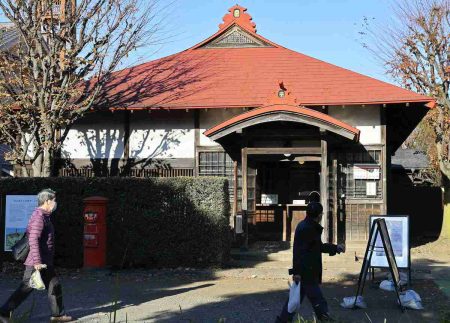
The exterior of the Former Kodaira Ogawa Post Office Building
16:52 JST, January 26, 2026
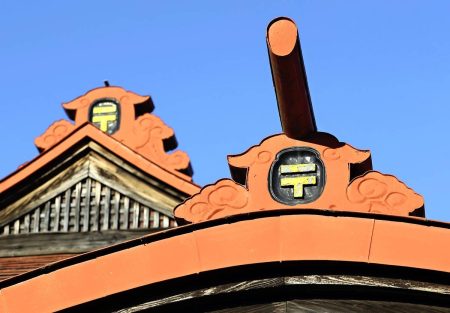
The roof features ornamentation with the post office symbol.
Strolling east from Kodaira Station in Tokyo, I suddenly stumbled upon a scene frozen in time near Ome Kaido avenue. The space gives off an air of a time long past. With temple-like dignified elegance, its striking red roof and eaves bear Japan’s iconic postal symbol — rendered in shimmering gold against a black background.
This structure, now known as the Former Kodaira Ogawa Post Office Building, became a beloved local fixture as a post office across more than seven decades of service from late in the Meiji era (1868–1912). This Kodaira city-designated tangible cultural property is one of the oldest standing post office buildings in the country.
The modern postal system was launched during the Meiji era, leading to the establishment of post offices nationwide. While most early branches were repurposed buildings, including the homes of local notables, this particular office was purpose-built in 1908 as a dedicated post office.
“It is interesting that this was developed as a formal ‘office’ back when the area was still largely a rural farming community,” said Jun Nakano of the city office’s culture and sports division.
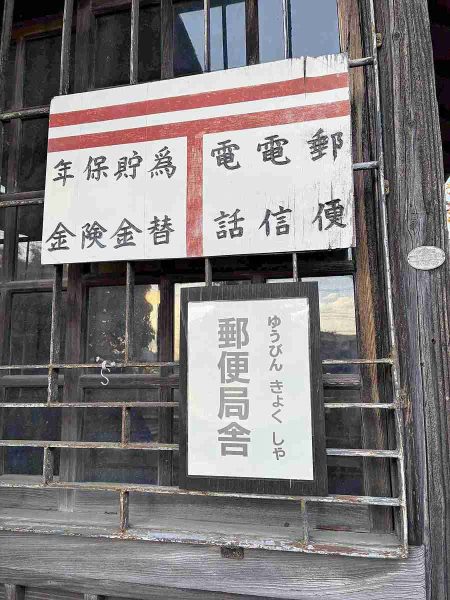
The word “telephone” is visible on a sign on the building.
The building remained in active use until 1983, and it was relocated and restored as part of Kodaira Furusato Mura, a local open-air museum, in 1992. The single-story wooden structure spans 128 square meters. Inside, there is a counter with a vintage wire mesh partition separating the entrance from the back office. The interior sparks the imagination, making visitors wonder if someone was standing in this very spot buying stamps a century ago.
In a corner of the room sits a partitioned space about the size of a single tatami mat. On the glass panel of its wooden door, the words “telephone room” are still visible in faded lettering.
Akiko Tanaka, a Postal Museum Japan curator, notes that during the Taisho era (1912–1926) and early in the Showa era (1926-1989), when private telephones were scarce, it was common practice for people to visit the post office to make calls. Nakano said, “This clearly illustrates the versatility of the post office, serving a diverse range of public needs beyond just mail.”
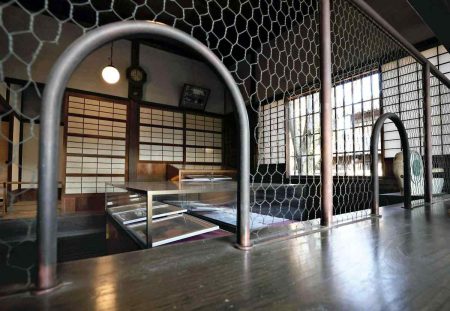
The office area can be seen through the counter’s wire mesh.
Beyond the tatami room, with its tokonoma alcove, the building features a kitchen and an engawa veranda — remnants of a time after World War II when employees actually lived on-site. Even an antique safe remains. When it was relocated, the post office was meticulously restored to its Taisho-era glory, when it was at its most vibrant.
“I can truly feel the spirit of the era and how people lived back then,” said a local homemaker. “I hope this place is cherished for generations to come.”
Former Kodaira Ogawa Post Office Building
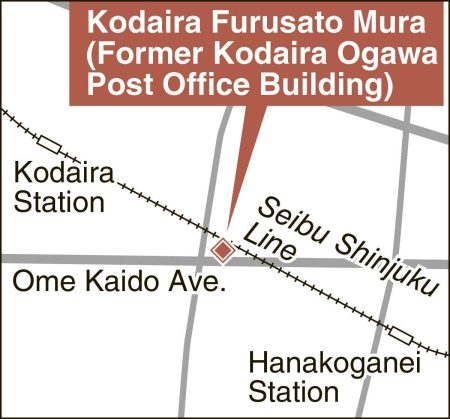
Address: 3-9-1 Tenjincho, Kodaira, Tokyo
Access: About a 20-minute walk from Kodaira Station on the Seibu Shinjuku Line
Hours: Open 10 a.m. to 4 p.m. Closed on Mondays and other dates. Admission is free.


Related Tags




Most Read
Popular articles in the past 24 hours
-

Lady Bess: Iroha Okuda, Mayuko Kominami Discuss Performing Elizab...
-

Japan Considering Taking Part in U.S. ‘Golden Dome’ Defense Syste...
-

Japan's TEPCO Releases Footage from Fukushima N-Plant Reactor
-

Oil Reserve Releases: G7 Members Unite against Growing Threat
-

46 Evacuated from UAE, Oman on Japanese Govt-chartered Flight
-

Japan's Sanyo Shinkansen Suspended Again; Between Okayama, Aioi S...
-

Driver Dies in Collision with Express Train at Crossing in Mito; ...
-

Raise Interest Rate, Stop Yen’s Fall to Stabilize Prices
Popular articles in the past week
-

Japan Figure Skating Legend Yuzuru Hanyu Is Proud Disaster Surviv...
-

Nippon Life Insurance's U.S. Arm Sues OpenAI Over Legal Assistanc...
-
Govt to Utilize ODA for Ensuring Economic Security; Securing Ener...
-
15 Measles Patients Confirmed in Tokyo in Past 6 Days; 1 May Have...
-
Massive Sewer Pipe Found Jutting Out of Highway in Osaka
-
Japan Govt to Tighten Requirements to Receive Permanent Residency...
-

Beckoning Cats Get Makeover to Fit Modern Lifestyles with Sleek D...
-
Japan's 2nd Round of U.S. Investments May Be Worth Over $100 Bill...
Popular articles in the past month
-

Producer Behind Pop Group XG Arrested for Cocaine Possession
-

Japan PM Takaichi’s Cabinet Resigns en Masse
-

Man Infected with Measles Reportedly Dined at Restaurant in Tokyo...
-

Videos Plagiarized, Reposted with False Subtitles Claiming ‘Ryuky...
-
Japan Figure Skating Legend Yuzuru Hanyu Is Proud Disaster Surviv...
-

iPS Treatments Pass Key Milestone, but Broader Applications Far f...
-

Sanae Takaichi Elected Prime Minister of Japan; Keeps All Cabinet...
-

Nepal Bus Crash Kills 19 People, Injures 25 Including One Japanes...
Top Articles in Features
-

Tokyo’s New Record-Breaking Fountain Named ‘Tokyo Aqua Symphony’
-

High-Hydration Bread on the Rise, Seeing Increase in Specialty Shops, Recipe Searches
-
Japanese Students Use Traditional Pickle to Create Novel Wagashi Confectionery
-

My Spendthrift Mother Constantly Asks Me for Money
-
Heirs to Kyoto Talent: Craftsman Works to Keep Tradition of ‘Kinran’ Brocade Alive Through Initiatives, New Creations
JN ACCESS RANKING
-
Producer Behind Pop Group XG Arrested for Cocaine Possession
-
Japan PM Takaichi’s Cabinet Resigns en Masse
-
Man Infected with Measles Reportedly Dined at Restaurant in Tokyo Station
-
Videos Plagiarized, Reposted with False Subtitles Claiming ‘Ryukyu Belongs to China’; Anti-China False Information Also Posted in Japan
-
Japan Figure Skating Legend Yuzuru Hanyu Is Proud Disaster Survivor and Gold Medalist, Vows to Continue Support Efforts