
Okayama: Red Bricks, Green Ivy from Old Textile Factory Evoke Kurashiki’s History
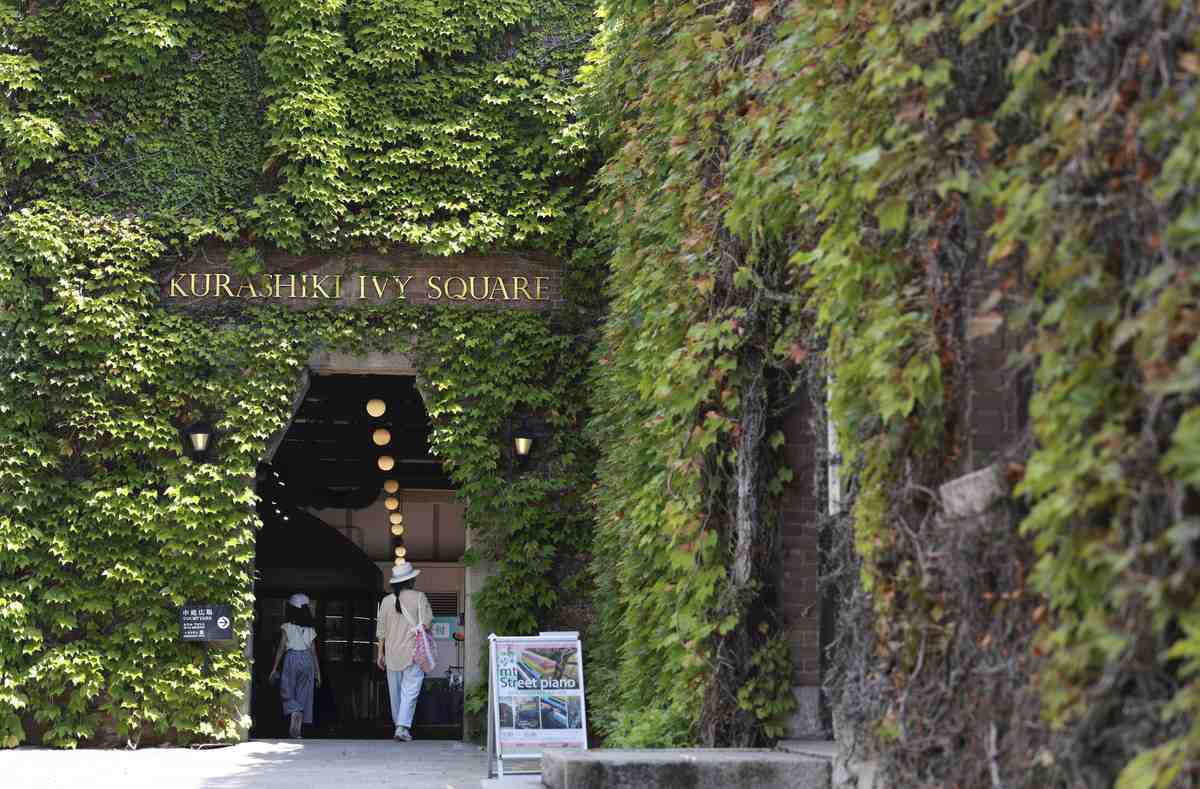
The ivy-covered red brick exterior of Kurashiki Ivy Square in Okayama Prefecture
12:07 JST, October 18, 2025
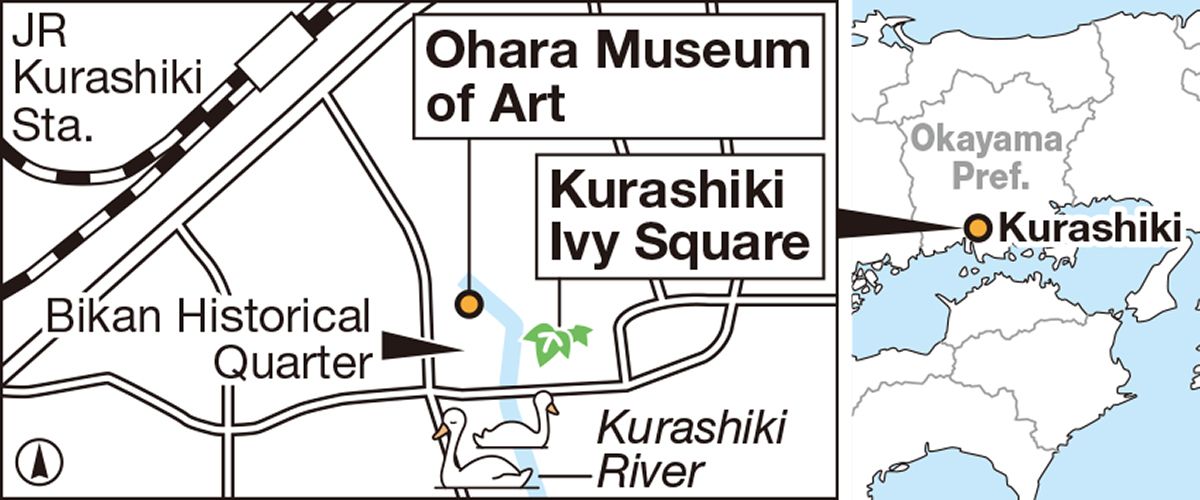
KURASHIKI, Okayama — Kurashiki Ivy Square is located in a scenic zone called the Bikan Historical Quarter, which is known for white-walled alleys, in Kurashiki, Okayama Prefecture.
The ivy-covered red brick cultural complex preserves the appearance of a former textile factory that had contributed to the region’s development. It conveys the city’s history to the present day and attracts international tourists.
Passing through the imposing arched red-brick main gate leads to the entrance of a hotel. The two-story accommodation buildings have walls entirely covered in ivy on both sides. The expansive lobby features high ceilings, chic wooden interiors and elegant lighting.
Beyond the lobby lies a courtyard spanning about 1,400 square meters. Carp swim in the pond, and water lilies associated with the French Impressionist painter Claude Monet bloom. It resembles the garden of a medieval European castle or temple.
Basil Ong Tze Wee, a 24-year-old graduate student visiting from Singapore, said, “The contrast between the red bricks and the green ivy is beautiful and gives it a cultural feeling.”
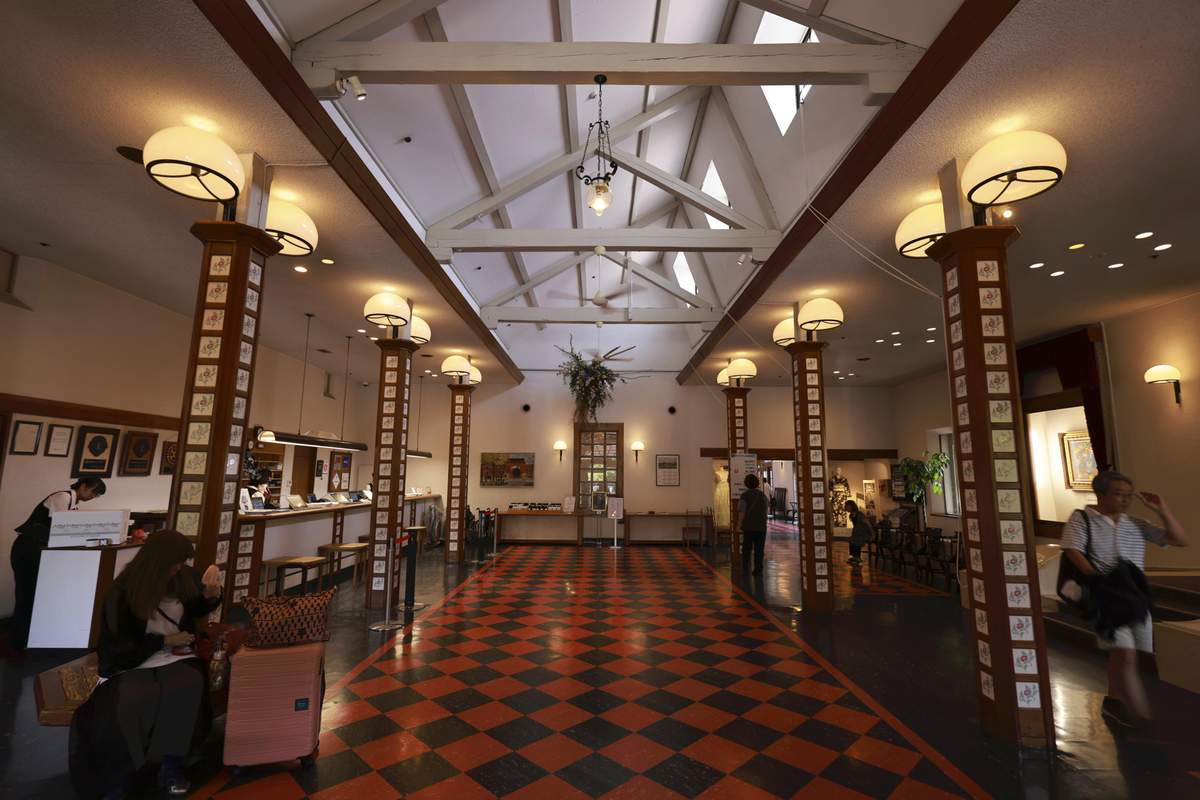
Chic wooden interiors and elegant lighting in Kurashiki Ivy Square
Kurashiki Ivy Square opened in 1974, utilizing a factory complex that was built in 1889 by Kurashiki Spinning Works, now Kurabo Industries Ltd.
The site of about 30,000 square meters includes a 145-room hotel, restaurants, multipurpose halls, a pottery studio and a souvenir shop. The nearby Kurabo Memorial Hall chronicles the textile industry and the history of the homegrown company.
The factory remained closed for a long time after World War II. In 1969, the streetscape along the Kurashiki River was designated as a scenic zone, prompting Kurabo to begin considering reusing the factory.
When the Sanyo Shinkansen Line opened between Shin-Osaka and Okayama stations in 1972, tourist numbers surged. Responding to local requests, the city planned for development of lodging and cultural facilities. While some people called for a mid- to high-rise hotel, local architect Shizutaro Urabe (1909-1991), who was involved in the design, apparently had a different vision.
“I heard he had advocated the idea that the spinning mill symbolizes the progress [of the city] and has cultural value. So it should be preserved carefully,” said Ryosuke Takahashi, general manager of the firm that operates Ivy Square.
The brick structure of the factory was retained and the building was reborn as a cultural facility centered around a hotel. The ivy covering the walls was planted around that time for the purpose of moderating the temperature by blocking the afternoon sun.
It was designated a Heritage of Industrial Modernization site in 2007 and recognized as a constituent cultural asset of the Cultural Affairs Agency’s Japan Heritage site “Kurashiki and the Story of Fiber” in 2017.
“It calms the mind and makes you feel like you’re in the era of the Meiji Restoration,” said a 52-year-old woman from Tokyo, who stayed at the hotel.
Takahashi hopes that visitors will experience the history of Kurashiki’s development through this tourist spot woven from red brick and ivy.

Old boats revived in scenic historical zone
The Kurashiki Bikan Historical Quarter spans about 21 hectares, and it is lined with townhouses and white-walled storehouses preserved since the Edo period (1603-1867).
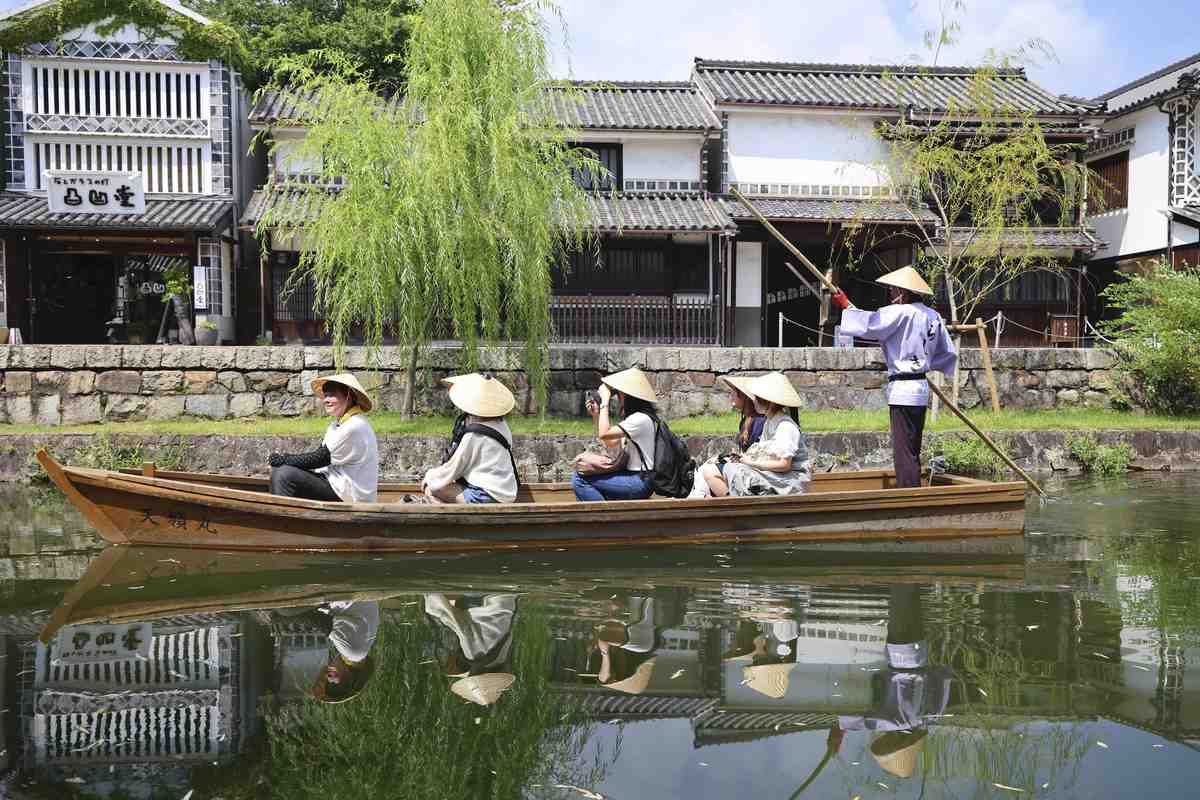
Taking a ride on a riverboat the Kurashiki Bikan Historical Quarter is a popular activity.
The district draws over 3 million visitors annually who come to stroll in the scenic alleys.
The Ohara Museum of Art has an exterior that looks like an ancient Greek temple. It houses artworks including El Greco’s “Annunciation” and one of Monet’s “Water Lilies” paintings.
The quarter also boasts shops selling domestic jeans originating from Kurashiki’s Kojima district, along with many retro cafes and restaurants housed in renovated townhouses.
Boats that had transported goods during the Edo period have been revived for use on the Kurashiki River. Willow trees sway along the riverbank as boatmen use poles to guide their vessels, carrying tourists along the waterway.
Sora and Yume, swans that were gifted to the city in 2007 from a zoo in Hyogo Prefecture, swim on the river. They have since raised chicks.

Refreshing lemon noodles
The long-established udon restaurant Onishi sits along the Kurashiki River just a 5-minute walk from Kurashiki Ivy Square. Its most popular menu item is Setouchi Oroshi Lemon Udon (¥850 including tax).
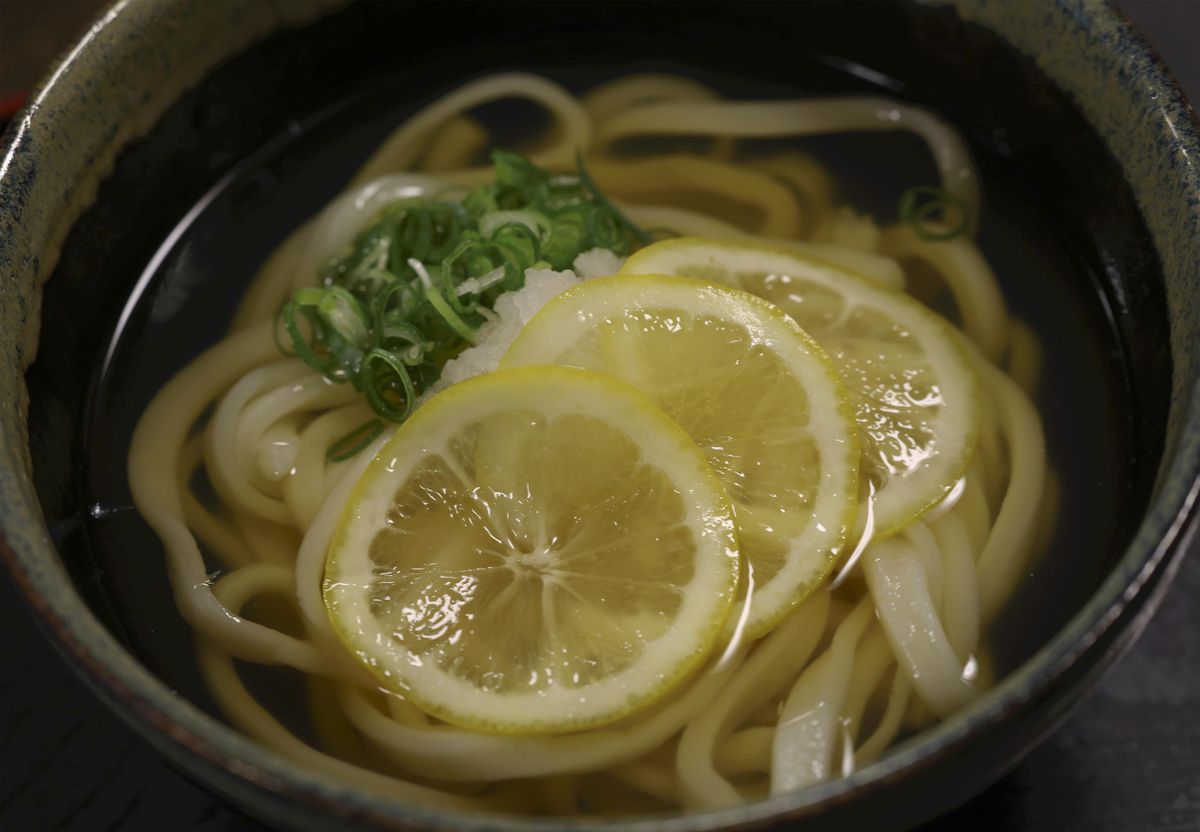
Setouchi Oroshi Lemon Udon
Lemons harvested on Ikuchi Island in Hiroshima Prefecture are grated and blended with a cold broth made from kombu and bonito flakes, creating a gentle sweet-and-sour citrus flavor.
The handmade noodles have a smooth texture, yet are chewy. Lemons harvested in autumn and winter have a more sour taste, making a nice accompaniment to the warm broth. The dish is good throughout the coming season.
“Please try our carefully crafted noodles,” the restaurant’s owner Hiroshi Onishi, 54, said. The shop is open from 11 a.m. to 4 p.m. It is closed on Wednesdays.
Kurashiki Ivy Square
About a 15-minute walk from JR Kurashiki Station. Paid parking is available. A beer garden operates during summer.


Related Tags





Most Read
Popular articles in the past 24 hours
-
JR Tokai Breaks Ground on Yamanashi Maglev Station; Will Be Part ...
-
Rising Kabuki Star Works to Ensure Deaf Audience's Enjoyment of P...
-

Japan Considering Taking Part in U.S. ‘Golden Dome’ Defense Syste...
-

Lady Bess: Iroha Okuda, Mayuko Kominami Discuss Performing Elizab...
-
Japan's TEPCO Releases Footage from Fukushima N-Plant Reactor
-

46 Evacuated from UAE, Oman on Japanese Govt-chartered Flight
-

Driver Dies in Collision with Express Train at Crossing in Mito; ...
-

Japan's Sanyo Shinkansen Suspended Again; Between Okayama, Aioi S...
Popular articles in the past week
-

Japan Figure Skating Legend Yuzuru Hanyu Is Proud Disaster Surviv...
-

Nippon Life Insurance's U.S. Arm Sues OpenAI Over Legal Assistanc...
-
Govt to Utilize ODA for Ensuring Economic Security; Securing Ener...
-
15 Measles Patients Confirmed in Tokyo in Past 6 Days; 1 May Have...
-
Massive Sewer Pipe Found Jutting Out of Highway in Osaka
-

Japan Govt to Tighten Requirements to Receive Permanent Residency...
-
Beckoning Cats Get Makeover to Fit Modern Lifestyles with Sleek D...
-
Japan Govt Survey Finds Just 10% of Workers Want Working Hours to...
Popular articles in the past month
-

Producer Behind Pop Group XG Arrested for Cocaine Possession
-

Japan PM Takaichi’s Cabinet Resigns en Masse
-

Man Infected with Measles Reportedly Dined at Restaurant in Tokyo...
-

Videos Plagiarized, Reposted with False Subtitles Claiming ‘Ryuky...
-
Japan Figure Skating Legend Yuzuru Hanyu Is Proud Disaster Surviv...
-

iPS Treatments Pass Key Milestone, but Broader Applications Far f...
-

Sanae Takaichi Elected Prime Minister of Japan; Keeps All Cabinet...
-

Nepal Bus Crash Kills 19 People, Injures 25 Including One Japanes...
Top Articles in Features
-
Tokyo’s New Record-Breaking Fountain Named ‘Tokyo Aqua Symphony’
-
High-Hydration Bread on the Rise, Seeing Increase in Specialty Shops, Recipe Searches
-
Japanese Students Use Traditional Pickle to Create Novel Wagashi Confectionery
-

My Spendthrift Mother Constantly Asks Me for Money
-
Heirs to Kyoto Talent: Craftsman Works to Keep Tradition of ‘Kinran’ Brocade Alive Through Initiatives, New Creations
JN ACCESS RANKING
-
Producer Behind Pop Group XG Arrested for Cocaine Possession
-
Japan PM Takaichi’s Cabinet Resigns en Masse
-
Man Infected with Measles Reportedly Dined at Restaurant in Tokyo Station
-
Videos Plagiarized, Reposted with False Subtitles Claiming ‘Ryukyu Belongs to China’; Anti-China False Information Also Posted in Japan
-
Japan Figure Skating Legend Yuzuru Hanyu Is Proud Disaster Survivor and Gold Medalist, Vows to Continue Support Efforts