
Heirs to Kyoto Talent / Niwatori Hoko Float Leader Carries On Tradition at Famous Gion Festival in Summer
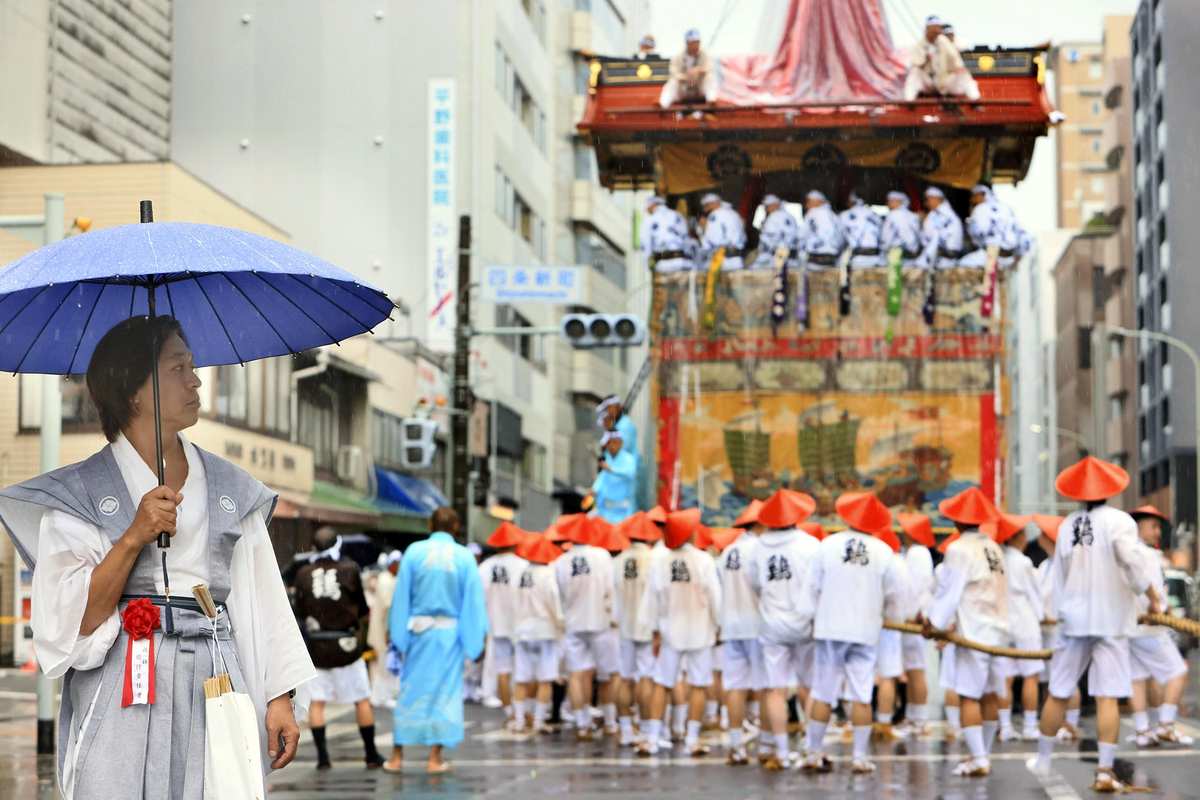
Sakamoto stands near the Niwatori Hoko float in Kyoto on July 17.

10:48 JST, August 17, 2025
KYOTO — The procession of yama and hoko floats was held under summer cumulonimbus clouds at the Gion Festival in Kyoto last month. In the scorching heat, decorative floats were pulled along Miyako-oji avenue to ohayashi musical accompaniment played with drums and gongs.
On July 12, the Niwatori Hoko, one of the 23 decorative floats, was assembled in an area surrounded by buildings as the sound of cicadas began to reverberate through the neighborhood. It was five days before the procession of the floats on the day of the saki matsuri, or early festival, of the Gion Festival. A procession was also eventually held for the ato matsuri, or later festival, a week later.
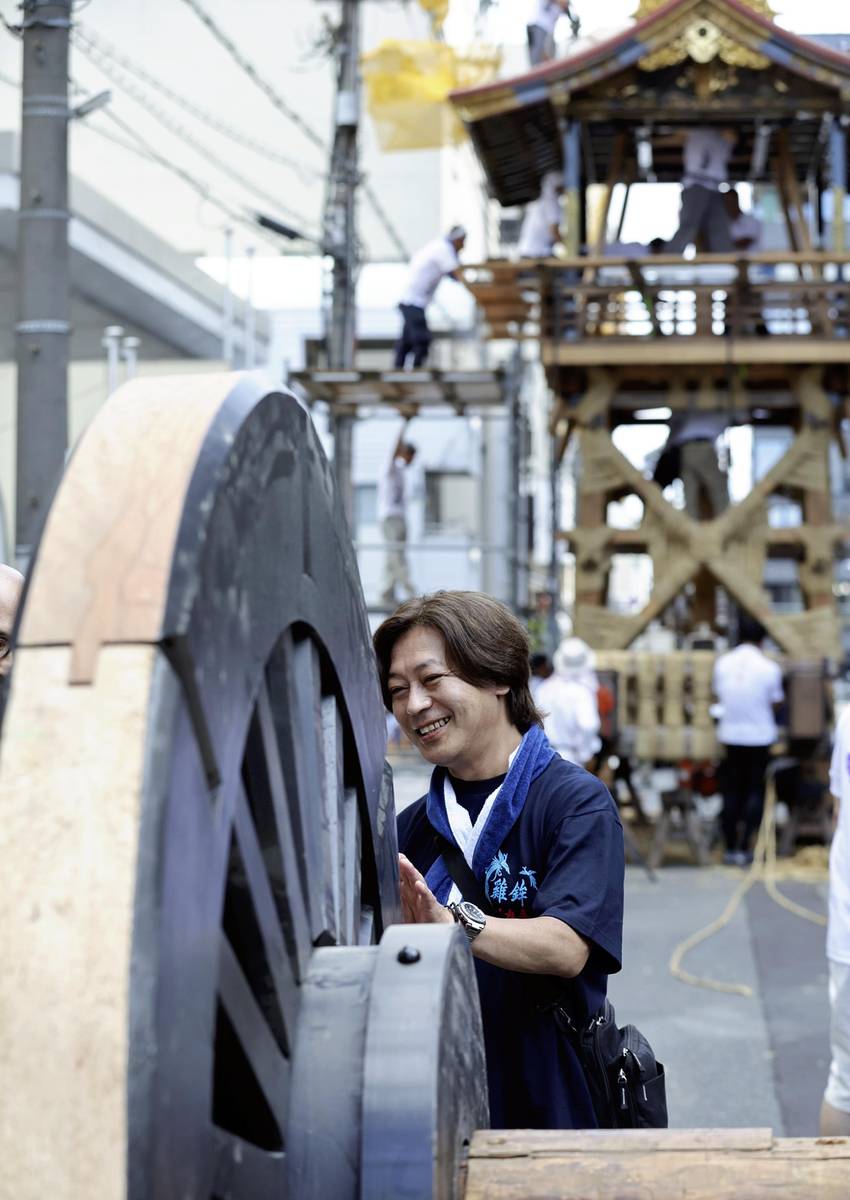
Atsushi Sakamoto smiles as he touches a rear wheel of the Niwatori Hoko float in Kyoto on July 12.
The name of the Niwatori Hoko, or chicken float, originates from a story about a chicken that came to live inside a drum during the era of Yao, a legendary king of ancient China. The drum was played to urge rulers to govern well, but it fell into disuse as a turbulent age died down, according to the legend.
Applause erupted at 9 a.m. on July 12, when the wheels were attached to the float.
“This year, we’ll be back from the parade without any accidents,” said Atsushi Sakamoto, 57, a representative of the float’s preservation group, as he touched the left rear wheel. “We’ll be able to do it.”
Last year, part of the left rear wheel broke during the procession, forcing the Niwatori Hoko to exit the parade. This made Sakamoto painfully aware that completing the procession safely is not something to be taken for granted.
Secret base
Sakamoto is the fourth-generation owner of Manpuku, a restaurant facing Shijo-dori avenue in the center of Kyoto. As the area is home to the float preservation group, he grew up listening to the sound of ohayashi every day when the Gion Matsuri approached each year. From an early age, it was natural for him to aspire to become a musician for the festival.
Since Sakamoto was a child, the Niwatori Hoko has started to be assembled every year around July 10. To his young eyes, it was like a secret base.
“As the float grew taller day by day, I sneaked in and climbed it at night with neighborhood kids and ate snacks inside,” he said. It is a cherished memory he will never get to experience again.
Sakamoto joined a group of ohayashi musicians and was assigned to play the gong when he was a first-year elementary school student. It was the moment his dream came true. He said that it was a special feeling when the sound of the gong penetrated his body and made him part of the festival.
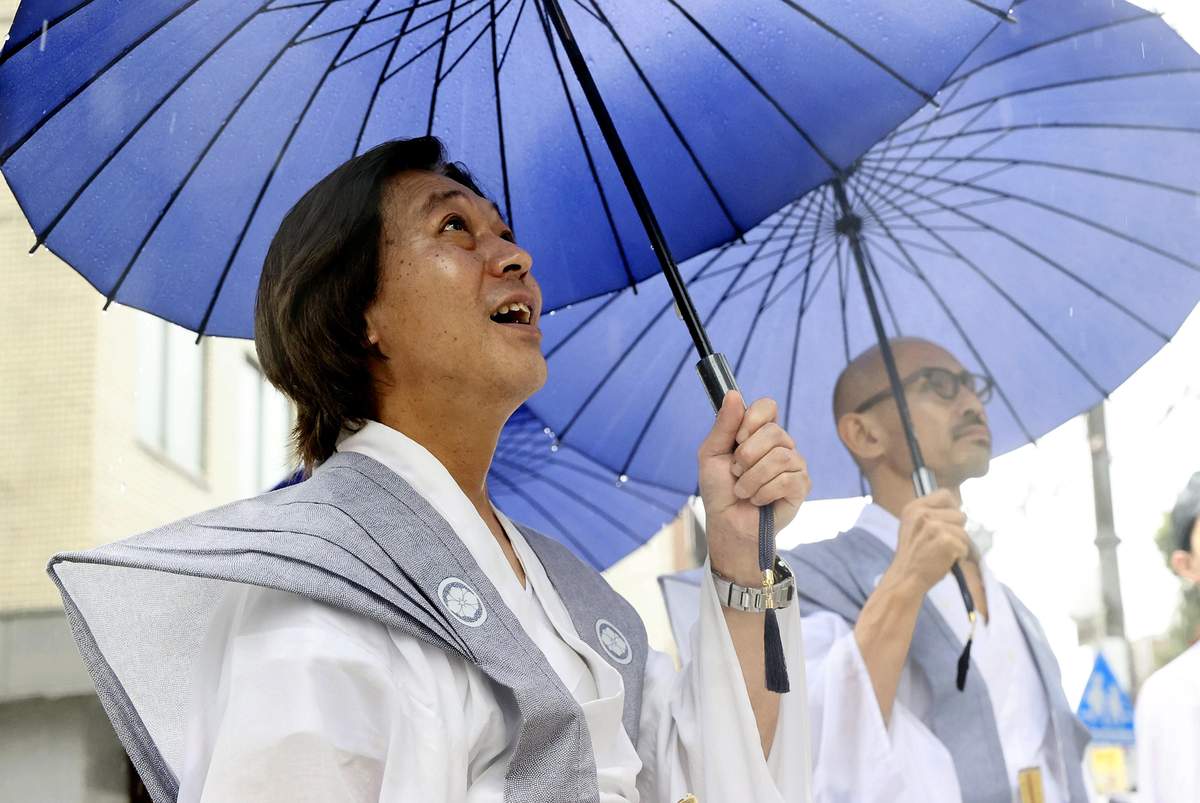
Sakamoto looks up at the float.
In the procession, musicians used to bring thousands of chimaki wrapped rice dumplings in a float and throw them to spectators. It was believed that if they put the misfortune collected while touring the town into chimaki and threw them, the misfortune would be transformed into good fortune.
Although this is no longer done to avoid a chaotic scene, Sakamoto felt proud of having been born and raised in the area.
“Musicians can bring happiness to people when parading with the float,” he said.
Pulling through trouble
Sakamoto became the representative of the preservation group in 2020, when he had to respond to an unusual situation. Due to the COVID-19 pandemic, the traditional Gion Festival saw a ban on building floats and the cancellation of the procession.
There was a sense of relief when the festival returned to its original state in 2023, but the problem of the damaged wheel arose last year. It was unprecedented for a Gion Festival float to stop during the parade. Sakamoto had never felt such heartbreak in his half-century of involvement with the festival.
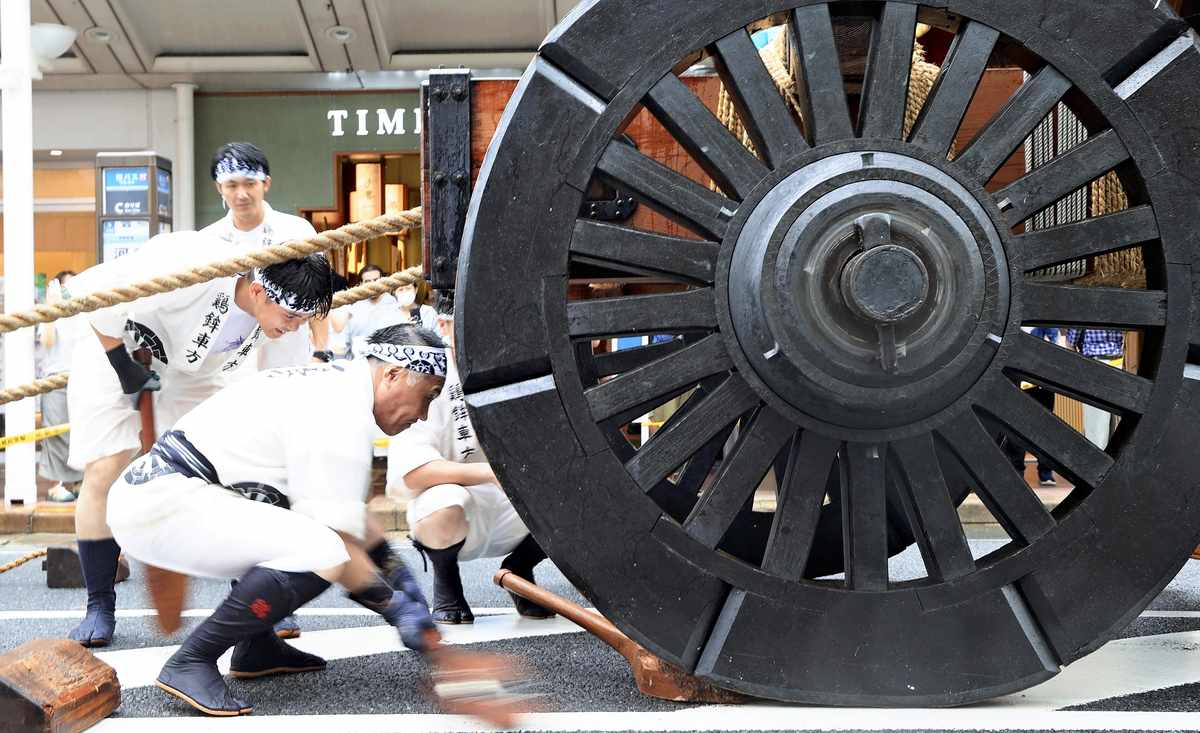
People in charge of steering the float move the front wheels to fine-tune the float direction.
But when he and other group members returned to their base without a sense of accomplishment, they were greeted by a large crowd of cheering spectators. At the request of ohayashi musicians, they paraded through the neighborhood, playing gongs and drums.
The Gion Festival is said to have begun more than 1,000 years ago in the hope of warding off plagues. However, in recent years, the festival’s float parade was added to the UNESCO Intangible Cultural Heritage list, and the festival is notable for the elegance of the floats, known as “moving museums.” Regulations have increased, and fewer local residents have been involved in the event. Sakamoto said he sometimes feels a sense of frustration, as the distance between the festival and people seems to have grown.
Nevertheless, because of the cancellation of the procession, he was overwhelmed by the realization during the past year of how much the treasure of the town, passed down through generations, is cherished by people, and he believes those sentiments must be preserved and passed on to future generations. Sakamoto said he was able to reevaluate the meaning of the festival and was determined to succeed in this year’s procession.
On July 17, the Niwatori Hoko began to move forward amid unusually heavy rain. Dressed in kamishimo traditional attire, Sakamoto led the float, turning repeatedly to check that it was proceeding smoothly. He sometimes walked slowly and got beside the wheels.
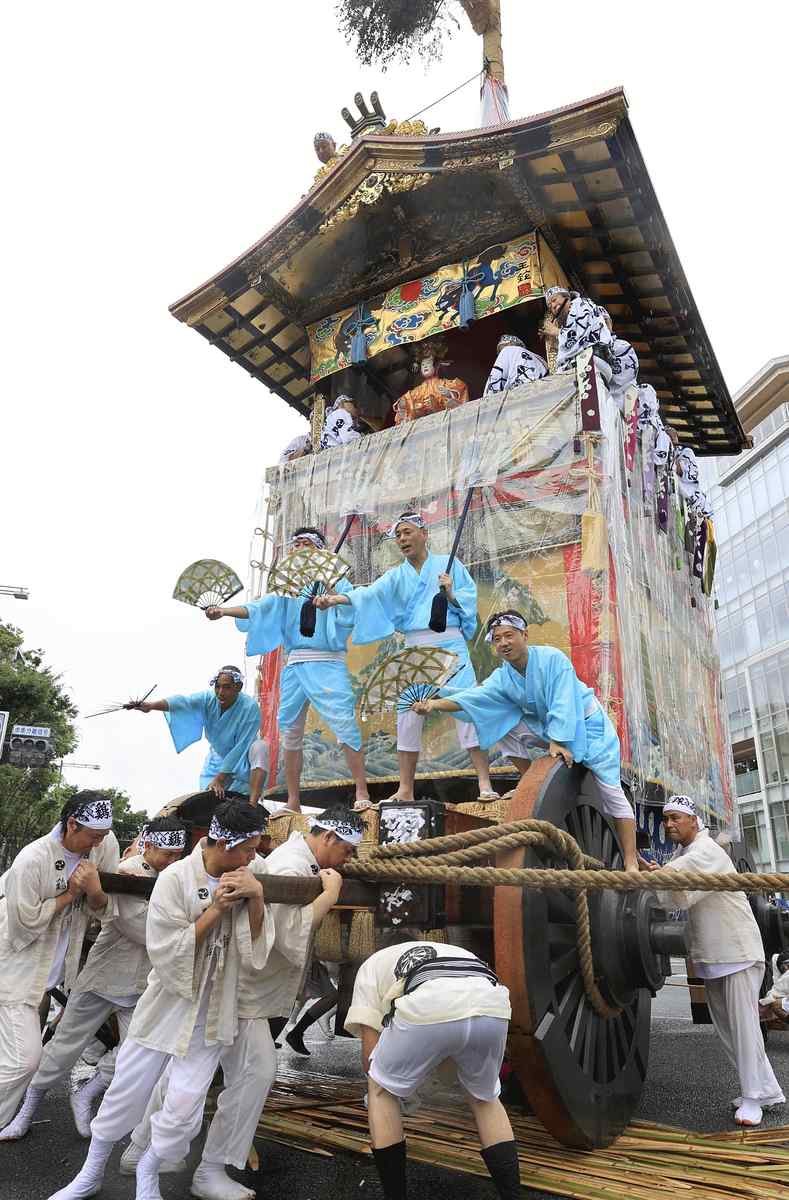
Niwatori Hoko performs a spectacular change of direction.
Just before returning to its point of departure, the Niwatori Hoko faced the final difficult challenge of the parade. When the float performed a dynamic change of direction at an intersection, called tsujimawashi, it was welcomed by the cheers of spectators, who were delighted to see it return.
Sakamoto’s eyes were filled with tears as he looked up at the float while listening to the music signaling the end of the procession.
“I can’t describe my feelings in words,” he said emotionally.
He wants to pass on his passions and feelings after all these efforts, along with the float, to future generations.
***
If you are interested in the original Japanese version of this story, click here.
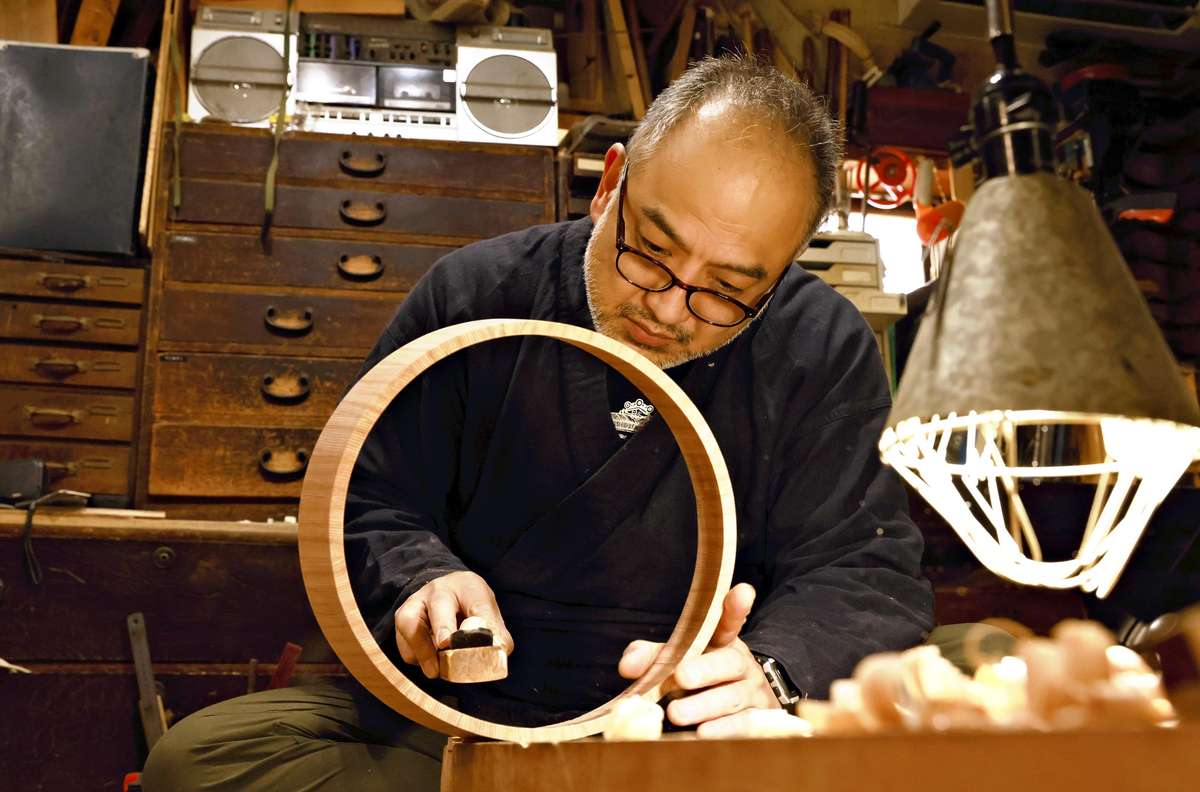
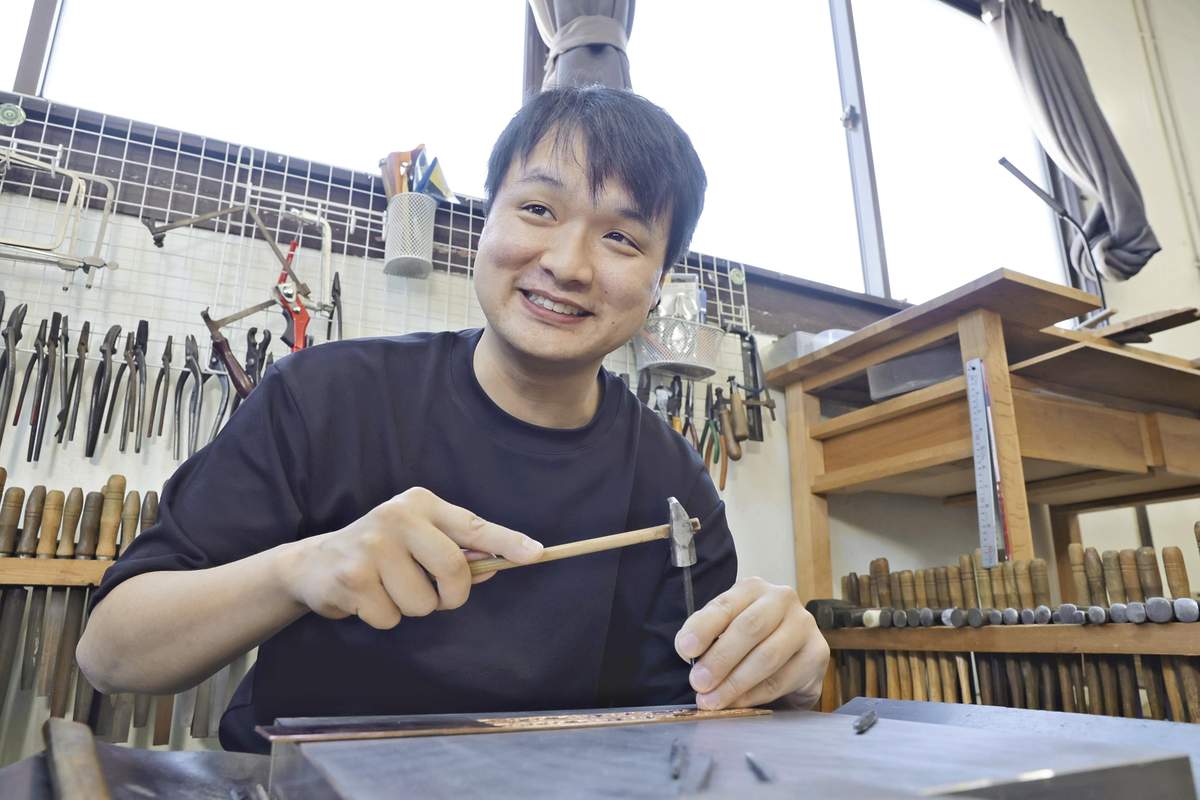
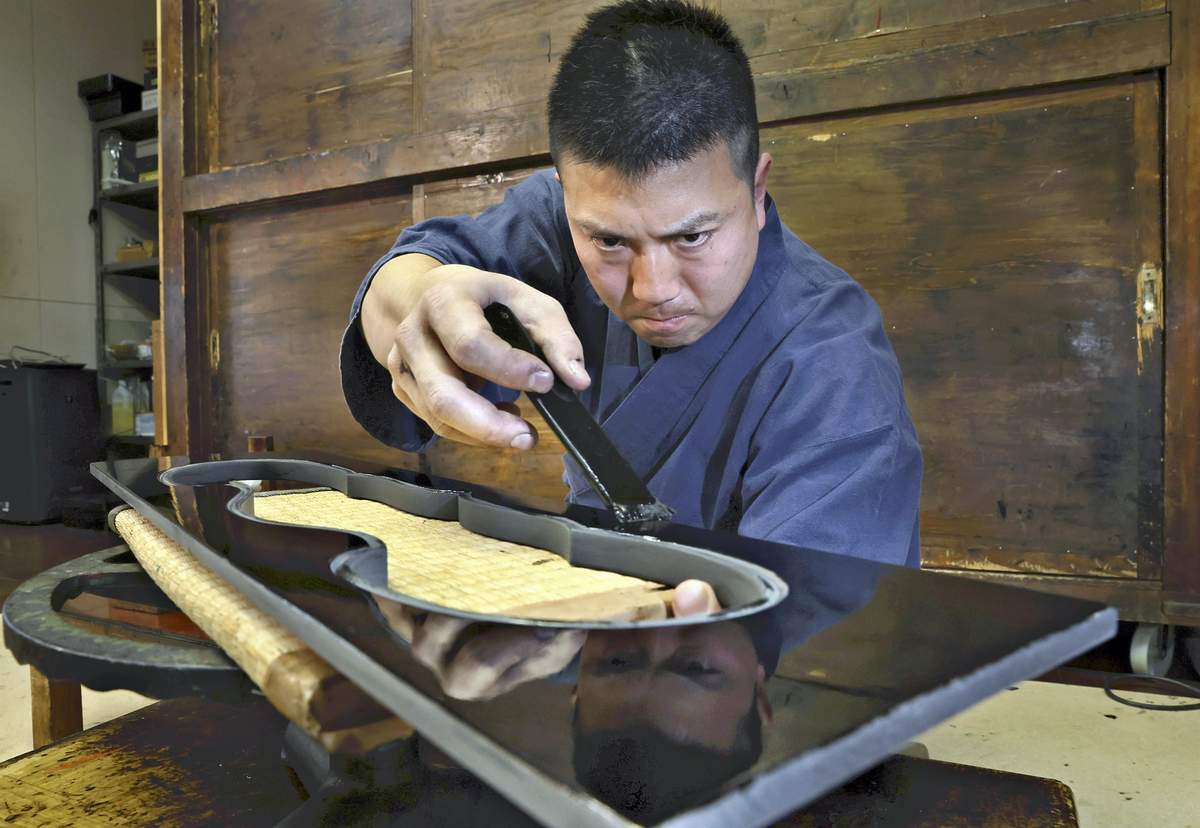

Heirs to Kyoto Talent: Maki-e Artisan Uses Brilliant Skill to Preserve Traditional Lacquerware Craft







Most Read
Popular articles in the past 24 hours
-
2 Unpublished Early Novellas by Japan's Kenzaburo Oe Discovered, ...
-

Prime Minister Sanae Takaichi to Visit Fukushima Pref. on 15th An...
-
Pass Rate for Overseas Driver's License Conversion Test in Japan ...
-
Tokyo High Court Upholds Unification Church Dissolution Order
-

Nikkei Average Sinks over 1,500 Points in Morning
-

Japanese Speedskater Takagi Announces Retirement
-

Sumo Scene / Former Makuuchi Daiamami Pays Tribute to Home Island...
-

Japan's Services Activity Hits Nearly Two-Year High, PMI Shows
Popular articles in the past week
-
Milano Cortina 2026: Japanese Gold Medalist Figure Skater Miura S...
-
Tokyo Spends Big on Children, Wins Over Parents
-

Japan’s Miura, Kihara Announce Withdrawal from Figure Skating Wor...
-

Yokohama to Test Out Renewable-Powered Offshore Floating Data Cen...
-

BOJ Keeping Eye on Economy and Takaichi's ‘Proactive Fiscal Polic...
-
Tokyo Measles Patient Traveled to Fukuoka Aboard JAL Planes; Susp...
-

South Korea Tightens Rules on Foreigners Buying Homes in Seoul Me...
-

Nidec Chairman Resigns Amid Accounting Scandal at Major Japanese ...
Popular articles in the past month
-

Producer Behind Pop Group XG Arrested for Cocaine Possession
-

Japan PM Takaichi’s Cabinet Resigns en Masse
-

Man Infected with Measles Reportedly Dined at Restaurant in Tokyo...
-

Israeli Ambassador to Japan Speaks about Japan’s Role in the Reco...
-

Videos Plagiarized, Reposted with False Subtitles Claiming ‘Ryuky...
-

Prudential Life Insurance Plans to Fully Compensate for Damages C...
-

Woman with Measles Visited Hospital in Tokyo Multiple Times Befor...
-

iPS Treatments Pass Key Milestone, but Broader Applications Far f...
Top Articles in Features
-

Tokyo’s New Record-Breaking Fountain Named ‘Tokyo Aqua Symphony’
-

High-Hydration Bread on the Rise, Seeing Increase in Specialty Shops, Recipe Searches
-
Heirs to Kyoto Talent: Craftsman Works to Keep Tradition of ‘Kinran’ Brocade Alive Through Initiatives, New Creations
-

Maltese Pavilion’s Famous Ftira Bread Now Available in Osaka; Loaves Became Popular during 2025 Osaka-Kansai Expo
-
Visitors Enjoy Early Blooming Flowers Set Against Mt. Fuji
JN ACCESS RANKING
-
Producer Behind Pop Group XG Arrested for Cocaine Possession
-
Japan PM Takaichi’s Cabinet Resigns en Masse
-
Man Infected with Measles Reportedly Dined at Restaurant in Tokyo Station
-
Israeli Ambassador to Japan Speaks about Japan’s Role in the Reconstruction of Gaza
-
Videos Plagiarized, Reposted with False Subtitles Claiming ‘Ryukyu Belongs to China’; Anti-China False Information Also Posted in Japan