
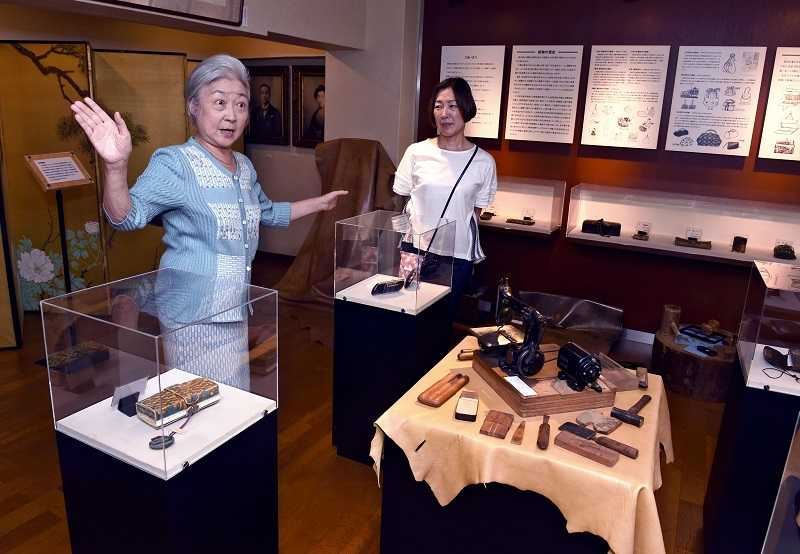
Fukuromono Museum curator Kazue Kido, left, and her daughter Maki at the facility in Sumida Ward, Tokyo.
By Madoka Ishibashi / Yomiuri Shimbun Staff Writer
9:17 JST, August 17, 2022
One of the country’s largest pigskin producers is right here in the capital — in Sumida Ward.
And smack-dab in the middle of the ward’s Ryogoku district — where the rich history and tradition of the industry are on display — leather goods manufacturer and seller Azumaya opened the Fukuromono Museum in 2004.
The museum defines “fukuromono” as a general term for anything used to carry items that resemble a bag.
Its 30-square-meter space showcases tobacco holders, belt bags and wallets, among items that were used from the Edo period (1603-1867) to the Taisho era (1912-1926).
Items on exhibit include those made by Azumaya as well as donations from the East Japan Handbag Manufacturers Association. And including production tools, such as manual sewing machines, there are about 100 items on display.
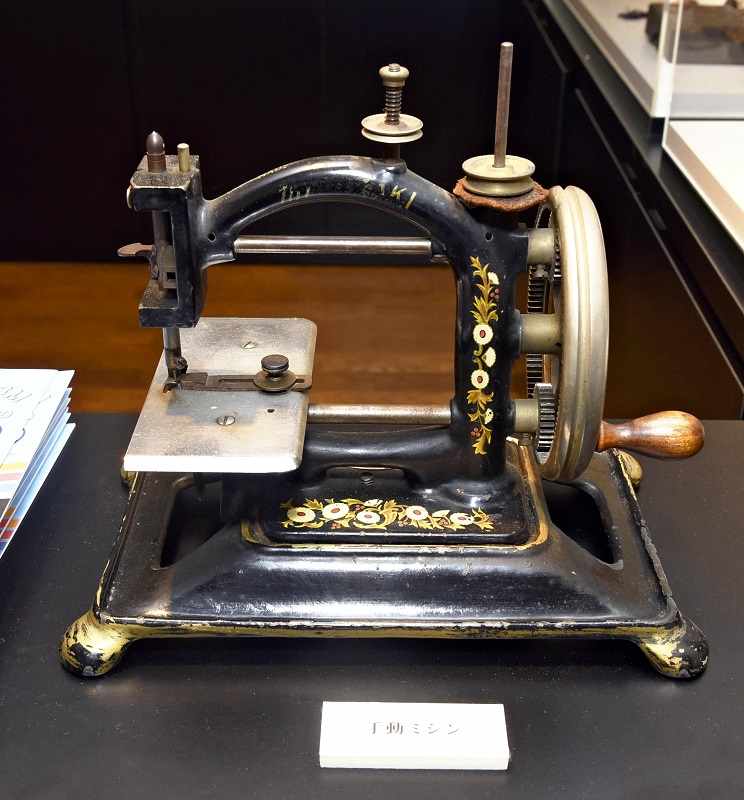
An old manual sewing machine on display
What stands out is a colorful accessory case sitting in the center of the exhibition area. It displays an item called hakoseko, a handbag that women of samurai families used when going out.
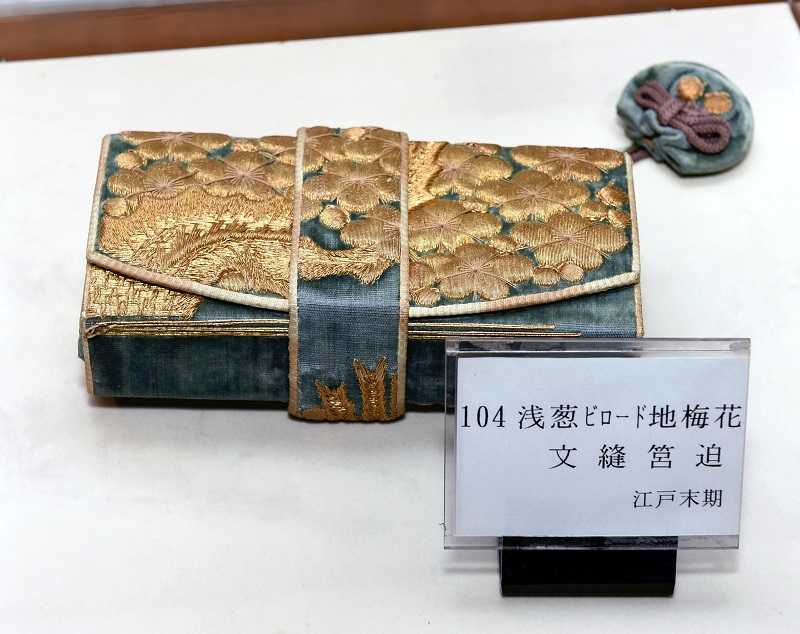
A hakoseko purse
It features a plum tree in full bloom that is embroidered with gold thread on a pale blue-green velvet cloth. I am impressed by the beauty of the colors, the elaborate work and the item’s well-preserved condition.
“It had to have been carefully preserved, and with future generations in mind,” said Maki Kido, 48, Azumaya’s sixth-generation owner.
The facility’s cigar cases, which in the past had been exported to the United States, are almost completely out of circulation and are now more so a novelty item.
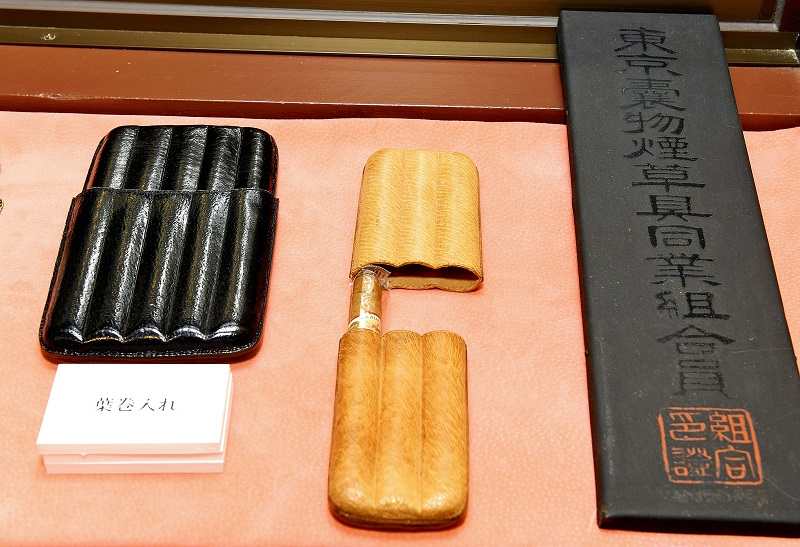
Cigar holders
Said Maki’s mother and museum curator Kazue Kido: “There is no chance to see them in use now because accessories evolve with the times.”
This can also be said about items familiar today. Looking at wallets, for example, we see that smaller ones are popular these days as society trends toward being cashless.
“Long wallets used to be our mainstay product, but no longer sell well,” Maki lamented.
Instead, she revived small gamaguchi coin pouches that were popular in the past, thinking they would suit the times.
Things that were once valuable become buried under the ups and downs that are part of the times and culture. And that makes me wonder how accessories will evolve moving forward.
“We will find the best form that is needed at the time,” Maki said.
Accessories continue to vary in shape and form to remain handy in society. The museum was a great opportunity to remind me of that.
Fukuromono Museum
The facility was renovated and reopened in July 2021. Everyone who wrote their names on the visitor’s list will be given a bookmark fashioned of the edge of a leather piece in the color of their choice. The museum is a seven-minute walk from JR Ryogoku Station.
Address: 1-1-7 Ryogoku, Sumida Ward, Tokyo
Hours: 1 p.m. to 4 p.m. on weekdays
Admission: Free


Related Tags




Most Read
Popular articles in the past 24 hours
-
Lady Bess: Iroha Okuda, Mayuko Kominami Discuss Performing Elizab...
-

Japan's TEPCO Releases Footage from Fukushima N-Plant Reactor
-

Japan Considering Taking Part in U.S. ‘Golden Dome’ Defense Syste...
-

Oil Reserve Releases: G7 Members Unite against Growing Threat
-

Japan's Sanyo Shinkansen Suspended Again; Between Okayama, Aioi S...
-
46 Evacuated from UAE, Oman on Japanese Govt-chartered Flight
-

Driver Dies in Collision with Express Train at Crossing in Mito; ...
-
Paw Patrol: Larry Marks 15 Years at 10 Downing Street
Popular articles in the past week
-

Japan Figure Skating Legend Yuzuru Hanyu Is Proud Disaster Surviv...
-

Nippon Life Insurance's U.S. Arm Sues OpenAI Over Legal Assistanc...
-
Govt to Utilize ODA for Ensuring Economic Security; Securing Ener...
-
15 Measles Patients Confirmed in Tokyo in Past 6 Days; 1 May Have...
-
Massive Sewer Pipe Found Jutting Out of Highway in Osaka
-

Japan Govt to Tighten Requirements to Receive Permanent Residency...
-
Beckoning Cats Get Makeover to Fit Modern Lifestyles with Sleek D...
-
Japan's 2nd Round of U.S. Investments May Be Worth Over $100 Bill...
Popular articles in the past month
-

Producer Behind Pop Group XG Arrested for Cocaine Possession
-

Japan PM Takaichi’s Cabinet Resigns en Masse
-

Man Infected with Measles Reportedly Dined at Restaurant in Tokyo...
-

Videos Plagiarized, Reposted with False Subtitles Claiming ‘Ryuky...
-
Japan Figure Skating Legend Yuzuru Hanyu Is Proud Disaster Surviv...
-

iPS Treatments Pass Key Milestone, but Broader Applications Far f...
-

Sanae Takaichi Elected Prime Minister of Japan; Keeps All Cabinet...
-

Nepal Bus Crash Kills 19 People, Injures 25 Including One Japanes...
Top Articles in Features
-

Tokyo’s New Record-Breaking Fountain Named ‘Tokyo Aqua Symphony’
-
High-Hydration Bread on the Rise, Seeing Increase in Specialty Shops, Recipe Searches
-
Japanese Students Use Traditional Pickle to Create Novel Wagashi Confectionery
-

My Spendthrift Mother Constantly Asks Me for Money
-
Heirs to Kyoto Talent: Craftsman Works to Keep Tradition of ‘Kinran’ Brocade Alive Through Initiatives, New Creations
JN ACCESS RANKING
-
Producer Behind Pop Group XG Arrested for Cocaine Possession
-
Japan PM Takaichi’s Cabinet Resigns en Masse
-
Man Infected with Measles Reportedly Dined at Restaurant in Tokyo Station
-
Videos Plagiarized, Reposted with False Subtitles Claiming ‘Ryukyu Belongs to China’; Anti-China False Information Also Posted in Japan
-
Japan Figure Skating Legend Yuzuru Hanyu Is Proud Disaster Survivor and Gold Medalist, Vows to Continue Support Efforts