
Defense Equipment Transfers: Expanding Exports Can Strengthen Japan’s Self-defense Capabilities
14:46 JST, November 26, 2025
Relaxing restrictions on defense equipment exports and expanding overseas sales channels will likely be able to strengthen the foundation of the defense industry.
While maintaining its position as a peaceful nation, it is important for Japan to review its approach to exports in response to changes in the security environment and the times.
The ruling Liberal Democratic Party’s Research Commission on Security has begun reviewing the implementation guidelines for the Three Principles on Transfer of Defense Equipment and Technology.
The current guidelines permit exports of finished defense equipment only when the partner country’s intended use falls within the “five categories” of rescue, transport, warning, surveillance and minesweeping.
The LDP argues that the five categories make it difficult for Japan to export defense equipment. The party intends to advance discussions toward the abolition of them.
Even now, in cases of joint development of defense equipment with other countries, the five categories are not applied, and exports are permitted for lethal equipment such as destroyers that have missile defense systems.
In the case of the Philippines, Manila initially requested the export of used destroyers from Japan. However, not even used vessels can be exported unless they are traded within the framework of joint development, so discussions are underway within the Japanese government to partially modify the vessels’ specifications and position such exports as joint development.
There is also a plan to export destroyers to Indonesia in such a manner.
Expanding exports of equipment also contributes to deepening security cooperation with partner nations. Japan will be able to cooperate with countries that use the same equipment in areas such as repairs and parts procurement.
Ukraine, which has been facing Russia’s aggression, was considered overwhelmingly disadvantaged when the war began. It is believed that nevertheless, Ukraine has been able to continue fighting for so long, not only because it relies on support for weapons from Western nations, but also because it manufactures attack drones and other weapons domestically.
Japan has effectively banned arms exports for a long time. As a result, the production capacity of the defense industry, whose deliveries are limited to the Self-Defense Forces, has weakened.
As an island nation, Japan would not be able to maintain its war-sustaining capability in an emergency without sufficient domestic procurement of weapons and ammunition. Promoting the growth of the defense industry is an urgent issue.
Some have been concerned that abolishing the five categories could potentially encourage conflicts around the world.
However, the LDP has stated that it will continue to uphold the three principles. These principles include the prohibition of equipment transfers to countries involved in conflicts, the contribution to peace through equipment transfers and the proper management of transferred equipment by partner nations.
It is hoped that Japan will strengthen the foundation of its self-defense capabilities while utilizing its history in which the country has made strides as a peaceful nation, a stance that has earned high regard from the international community.
(From The Yomiuri Shimbun, Nov. 26, 2025)



Most Read
Popular articles in the past 24 hours
-

Masako Ikeda, Voice of Maetel in ‘Galaxy Express 999,' Dies at 87
-

Japan Defense Agency to Develop AI Intelligence Analysis System f...
-

Government to Establish ‘Command Center’ for Developing Nuclear P...
-

Moai Statue Shows Lasting Bond Between Miyagi Pref. Town, Easter ...
-

Paw Patrol: Larry Marks 15 Years at 10 Downing Street
-

Milano Cortina 2026: Japan’s Oguri Wins Para Snowboard Silver at ...
-

CARTOON OF THE DAY (March 13)
-
Japan's Defense Ministry: North Korea Appears to Have Fired Balli...
Popular articles in the past week
-

Japan Figure Skating Legend Yuzuru Hanyu Is Proud Disaster Surviv...
-

Govt to Utilize ODA for Ensuring Economic Security; Securing Ener...
-
15 Measles Patients Confirmed in Tokyo in Past 6 Days; 1 May Have...
-

Massive Sewer Pipe Found Jutting Out of Highway in Osaka
-

Japan Govt to Tighten Requirements to Receive Permanent Residency...
-

Beckoning Cats Get Makeover to Fit Modern Lifestyles with Sleek D...
-
JR Tokai Breaks Ground on Yamanashi Maglev Station; Will Be Part ...
-

Power Outage Forces About 980 Passengers in Yokohama to Walk to T...
Popular articles in the past month
-

Producer Behind Pop Group XG Arrested for Cocaine Possession
-

Japan PM Takaichi’s Cabinet Resigns en Masse
-

Man Infected with Measles Reportedly Dined at Restaurant in Tokyo...
-

Videos Plagiarized, Reposted with False Subtitles Claiming ‘Ryuky...
-
Japan Figure Skating Legend Yuzuru Hanyu Is Proud Disaster Surviv...
-

iPS Treatments Pass Key Milestone, but Broader Applications Far f...
-

Sanae Takaichi Elected Prime Minister of Japan; Keeps All Cabinet...
-
Nepal Bus Crash Kills 19 People, Injures 25 Including One Japanes...
Top Articles in Editorial & Columns
-

Riku-Ryu Pair Wins Gold Medal: Their Strong Bond Leads to Major Comeback Victory
-

Reciprocal Tariffs Ruled Illegal: Judiciary Would Not Tolerate President’s High-Handed Approach
-
Japan’s Plan for Investment in U.S.: Aim for Mutual Development by Ensuring Profitability
-
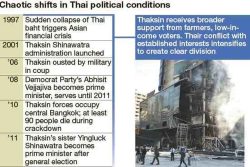
Chronic Issues Erode Thailand’s Economy as Political Confusion Persists, Threatening Terminal Decline in Its Economy
-
Iran Situation: Japan Must Exert Diplomatic Efforts without Merely Standing by
JN ACCESS RANKING
-
Producer Behind Pop Group XG Arrested for Cocaine Possession
-
Japan PM Takaichi’s Cabinet Resigns en Masse
-
Man Infected with Measles Reportedly Dined at Restaurant in Tokyo Station
-
Videos Plagiarized, Reposted with False Subtitles Claiming ‘Ryukyu Belongs to China’; Anti-China False Information Also Posted in Japan
-
Japan Figure Skating Legend Yuzuru Hanyu Is Proud Disaster Survivor and Gold Medalist, Vows to Continue Support Efforts