
An Age of Indecisive Multiparty Politics Begins; Major Parties’ Weakness Opens Door to Smaller Players
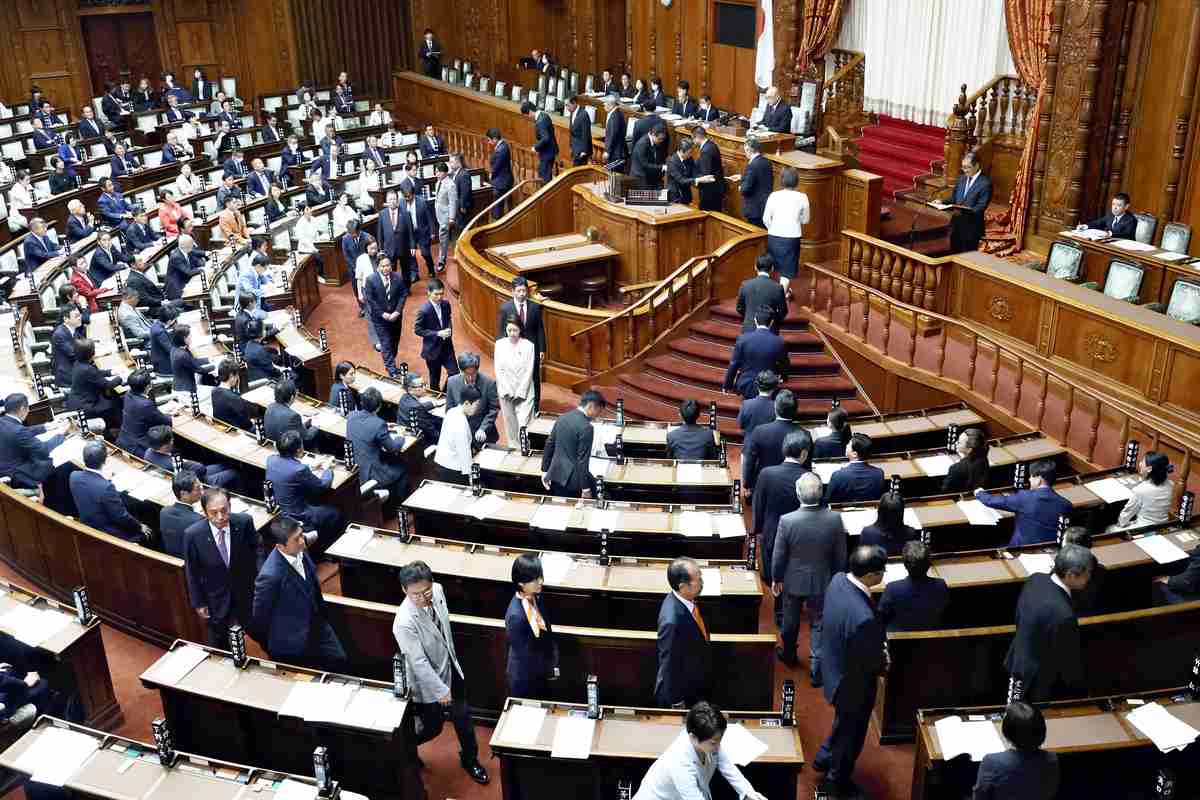
The House of Councillors plenary session opens on August 1.
8:00 JST, August 9, 2025
Political parties seem to have a life expectancy. As a party gets older, it is inevitable that it will wane. Many voters may naturally think of this when they see the results of July’s House of Councillors election.
Almost all traditional parties suffered losses, while many relatively young parties achieved their goals and claimed victory. The ruling Liberal Democratic Party, established in 1955, lost many seats and fell short of even the “must-win target” set by Prime Minister Shigeru Ishiba. Its coalition partner Komeito, which celebrated its 60th anniversary last year, also lost heavily. The ruling bloc’s loss of its majority in the House of Councillors came less than a year after its defeat in the House of Representatives election last October.
Founded in 1922 despite a harsh crackdown by the police and having the longest history of any Japanese party, the Japanese Communist Party (JCP) also performed poorly in the recent upper house election. The Social Democratic Party, descended from the defunct Japan Socialist Party, which was once the largest opposition party and had faced off against the LDP for nearly four decades, managed to get one seat, but its percentage of the votes decreased.
What drew the most attention was that Sanseito, created in 2020, made remarkable gains to become the sixth largest opposition party in the upper house. The Democratic Party for the People, also formed in 2020, won 17 seats, its best upper house election result so far. Moreover, the newly created Conservative Party of Japan won two seats, and Team Mirai also got a seat.
In this decade, new parties have been set up one after another, such as the Japan Innovation Party in 2016, the now leading opposition Constitutional Democratic Party of Japan in 2017, and Reiwa Shinsengumi in 2019. Eleven parties now fulfill the requirements set by the Political Party Subsidization Law, and all but the JCP will receive subsidies to secure their financial base. This is the highest number of qualifying parties seen this century. So, it is not too much of an overstatement to call this situation a multiparty system.
However, this situation is not unprecedented in Japanese political history. In 1992-94, when the LDP fell from power after a long era of one-party rule, there was a new-party boom. When former Kumamoto Gov. Morihiro Hosokawa established the Japan New Party in 1992, he attracted wide support and became the prime minister in 1993. Around this time, defectors from the LDP who had clashed with the party leadership over political reform issues launched their own new parties one after another. All of them advocated changing the electoral system of the lower house to make a two-party system and changes of power possible.
The lower house election in 1993 was dominated by this issue. New parties made enormous gains, and both the LDP and the Socialist Party suffered severe defeats. After the election, a multiparty system began, to such an extent that no party had any interest in consensus-building. Japan had fallen into a system of “politics that cannot decide.” Even though political reform that brought a single-seat constituency system was introduced in the lower house election after many twists and turns, the current political situation is far from the envisaged two-party system. In retrospect, the prevailing political reform fever of those days was an idealistic and unfulfilled dream.
Thirty years later, we find ourselves in something like another multiparty era. The ruling bloc has a minority of seats in both houses and needs to cooperate with the opposition. The greater the number of parties involved, the harder it is to form a consensus in the Diet. There are so-called temporary coalitions, meaning ad hoc tie-ups with opposition forces on specific policy issues. This approach is time-consuming and lacks long-term perspective.
Parties that campaigned on drastic tax cuts or getting tough on foreign residents fared well in the upper house election. These pledges may be fulfilled in the near future. But they will surely worsen the already critical financial situation and the current severe labor shortage, undermining the national interest and lowering living standards in the long term.
There is no momentum for the opposition camp to form a coalition to supplant the ruling bloc. So, if the LDP and Komeito fail to get a new partner, a lack of political stability and an indecisive administration will linger for months. At some future time, voters will surely feel frustrated, and their distrust of politics will grow.
So, it may be instructive to think about what causes a multiparty situation. It happens when the existing parties lose the confidence of the voters or fail to present adequate policies. I think the ruling party should accept responsibility, especially since poor leadership in the ruling party is one of the reasons newcomers flourished in the election. In other words, when an administration is powerless and gets only low approval ratings, new parties have a greater chance to succeed.
Heading into the lower house election of 1993, then Prime Minister Kiichi Miyazawa of the LDP was a very experienced and intelligent politician but his support base in the party was weak, and he could not show enough strength to lead the party. The same can be said for Ishiba. As a result of his minority administration in the lower house, his policymaking seems to flip-flop and lacks a strategy. A more serious problem is that he has been regarded as a weak and indecisive leader. As long as he is the prime minister, it will be hard for the ruling bloc to win an election. So, the opposition may hope that he stays in office.
The only way for the LDP to restore voters’ confidence is to get a new and effective leader to update the image of a weak and old-fashioned party. This is easier said than done. However, there is no alternative for the LDP if it wants to stop its decline and extend its life expectancy.
Political Pulse appears every Saturday.
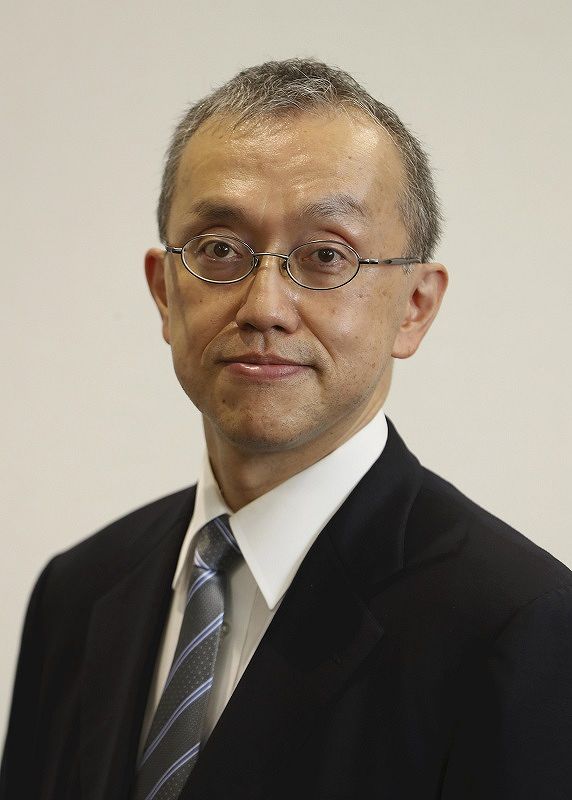
Takayuki Tanaka
Takayuki Tanaka is the president of The Yomiuri Shimbun, Osaka. His previous posts included managing editor of The Yomiuri Shimbun, Tokyo.




Most Read
Popular articles in the past 24 hours
-

Japan Defense Agency to Develop AI Intelligence Analysis System f...
-

Moai Statue Shows Lasting Bond Between Miyagi Pref. Town, Easter ...
-

Milano Cortina 2026: Japan’s Oguri Wins Para Snowboard Silver at ...
-
Japan's Defense Ministry: North Korea Appears to Have Fired Balli...
-

Aichi Fisheries Cooperatives Use Smart Tech to Farm Triploid Oyst...
-

Teachers Support Students’ Inquiry Learning behind the Scenes
-
Japan's Lower House Passes Budget Proposal; Could Be Delayed in U...
-

National Intelligence Council: Proposed Body Must Be Utilized To ...
Popular articles in the past week
-

Japan Figure Skating Legend Yuzuru Hanyu Is Proud Disaster Surviv...
-

Govt to Utilize ODA for Ensuring Economic Security; Securing Ener...
-

15 Measles Patients Confirmed in Tokyo in Past 6 Days; 1 May Have...
-
Massive Sewer Pipe Found Jutting Out of Highway in Osaka
-

Japan Govt to Tighten Requirements to Receive Permanent Residency...
-
JR Tokai Breaks Ground on Yamanashi Maglev Station; Will Be Part ...
-

Beckoning Cats Get Makeover to Fit Modern Lifestyles with Sleek D...
-
Power Outage Forces About 980 Passengers in Yokohama to Walk to T...
Popular articles in the past month
-

Producer Behind Pop Group XG Arrested for Cocaine Possession
-

Japan PM Takaichi’s Cabinet Resigns en Masse
-

Man Infected with Measles Reportedly Dined at Restaurant in Tokyo...
-

Videos Plagiarized, Reposted with False Subtitles Claiming ‘Ryuky...
-
Japan Figure Skating Legend Yuzuru Hanyu Is Proud Disaster Surviv...
-

iPS Treatments Pass Key Milestone, but Broader Applications Far f...
-

Sanae Takaichi Elected Prime Minister of Japan; Keeps All Cabinet...
-

Nepal Bus Crash Kills 19 People, Injures 25 Including One Japanes...
Top Articles in Editorial & Columns
-

Riku-Ryu Pair Wins Gold Medal: Their Strong Bond Leads to Major Comeback Victory
-
Reciprocal Tariffs Ruled Illegal: Judiciary Would Not Tolerate President’s High-Handed Approach
-
Japan’s Plan for Investment in U.S.: Aim for Mutual Development by Ensuring Profitability
-
Chronic Issues Erode Thailand’s Economy as Political Confusion Persists, Threatening Terminal Decline in Its Economy
-
Iran Situation: Japan Must Exert Diplomatic Efforts without Merely Standing by
JN ACCESS RANKING
-
Producer Behind Pop Group XG Arrested for Cocaine Possession
-
Japan PM Takaichi’s Cabinet Resigns en Masse
-
Man Infected with Measles Reportedly Dined at Restaurant in Tokyo Station
-
Videos Plagiarized, Reposted with False Subtitles Claiming ‘Ryukyu Belongs to China’; Anti-China False Information Also Posted in Japan
-
Japan Figure Skating Legend Yuzuru Hanyu Is Proud Disaster Survivor and Gold Medalist, Vows to Continue Support Efforts