
ASEAN Plus 3 Share Concerns About Excessive Exchange Rate Fluctuation; Seeking Stability in Exchange Rate
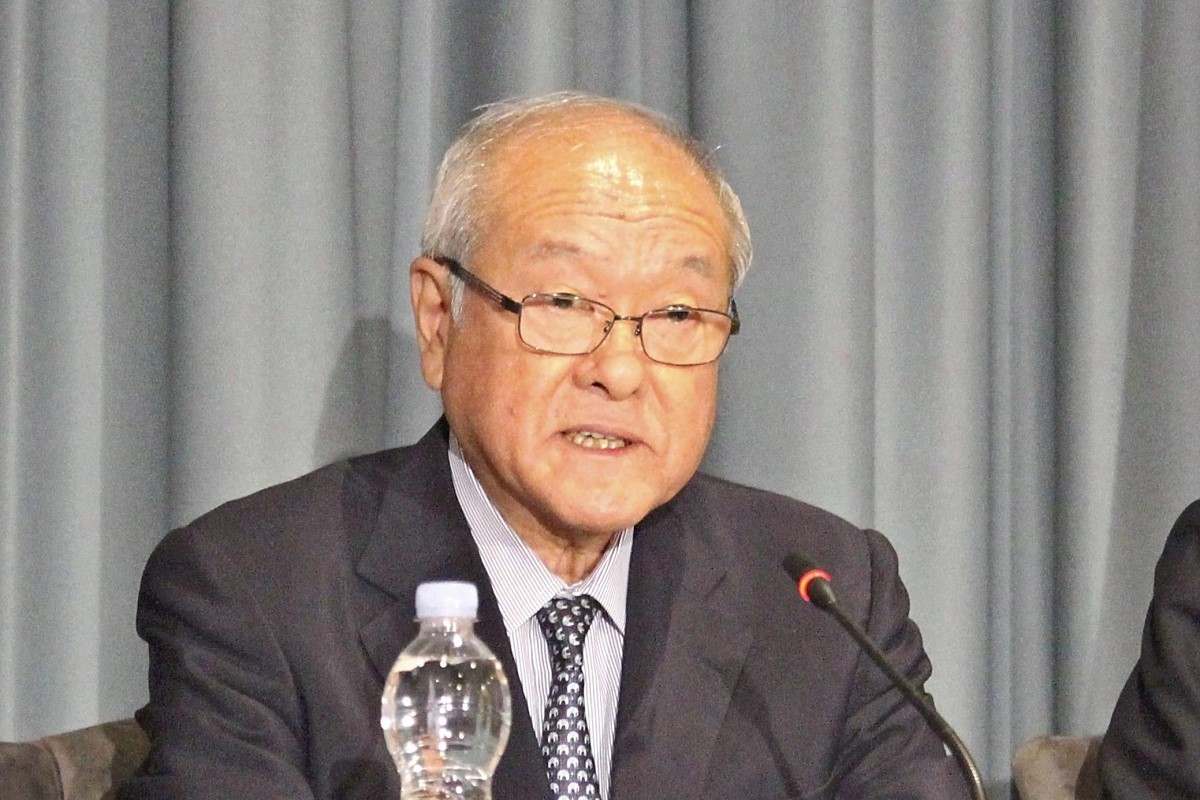
Finance Minister Shunichi Suzuki speaks at a press conference in Tbilisi on Friday.
14:07 JST, May 5, 2024
TBILISI — Japan, China, South Korea and the Association of Southeast Asian Nations shared concerns Friday about excessive exchange rate fluctuations caused by speculation amid the continued depreciation of their respective currencies against the U.S. dollar in the foreign exchange market.
The ASEAN Plus Three group held a meeting of their finance ministers and central bank governors in Tbilisi and adopted a joint statement that included “heightened foreign exchange market volatility” as a risk to the regional economy
Speaking at a press conference, Finance Minister Shunichi Suzuki emphasized that it is desirable for exchange rates to move stably. “Excessive moves are undesirable,” he said.
Concerns about inflation are increasing in Asian countries as their currencies weaken. The Thai baht has fallen more than 7% against the dollar since the beginning of the year. The Indonesian rupiah has also declined 5%, and the Indonesian central bank raised interest rates for the first time in six months in April.
The yen also temporarily dropped to the lower ¥160 range against the dollar on April 29, its weakest level in about 34 years.
The yen then immediately soared to the ¥154 level. On Thursday, the yen appreciated from the ¥157 level to the ¥153 range in less than an hour.
The yen was at the upper ¥152 level against the dollar when the New York market closed Friday, but it continued to fluctuate and hit the upper ¥151 range. Regarding the possibility of foreign exchange intervention by the Japanese government and the Bank of Japan to buy the yen and sell the dollar, Suzuki said that he would not comment. But, he said, “When there are excessive moves, it may be necessary to ‘smooth them out.’”
At the meeting, the ASEAN Plus Three group formally agreed to expand the Chiang Mai Initiative, a regional currency swap arrangement set up in preparation for a currency crisis, and to create a framework for responding to emergencies such as the spread of infectious diseases.
The finance ministers of Japan and Pacific island nations also met for the first time and agreed to cooperate on climate change, among other issues.






Most Read
Popular articles in the past 24 hours
-
Business Hotels Expanding into Regional Areas in Japan, Aiming to...
-

6 Injured at Naked Festival in Japan’s Okayama Prefecture; Police...
-

Fiji Defense Minister Hopes Japan Will Support Stabilization of P...
-

Space One Delays Launch of No. 3 Kairos Rocket; Company to Announ...
-

Milano Cortina 2026: Malinin Highlights Dangers of Social Media i...
-

Reciprocal Tariffs Ruled Illegal: Judiciary Would Not Tolerate Pr...
-
3rd Japan Pacific Islands Defense Dialogue to Begin in Tokyo on S...
-

Japanese Film, Anymart, Wins Critics’ Award at International Film...
Popular articles in the past week
-

Japan PM Takaichi’s Cabinet Resigns en Masse
-

Man Infected with Measles Reportedly Dined at Restaurant in Tokyo...
-

Sanae Takaichi Elected Prime Minister of Japan; Keeps All Cabinet...
-

Japan's Govt to Submit Road Map for Growth Strategy in March, PM ...
-

Bus Carrying 40 Passengers Catches Fire on Chuo Expressway; All E...
-

Milano Cortina 2026: Figure Skaters Riku Miura, Ryuichi Kihara Pa...
-

Japan, U.S. Name 3 Inaugural Investment Projects; Reached Agreeme...
-

U.S. Firm to Build Training Hub in Fukushima N-plant for Debris R...
Popular articles in the past month
-
Japan PM Takaichi’s Cabinet Resigns en Masse
-

Japan Institute to Use Domestic Commercial Optical Lattice Clock ...
-

Israeli Ambassador to Japan Speaks about Japan’s Role in the Reco...
-
Man Infected with Measles Reportedly Dined at Restaurant in Tokyo...
-

Videos Plagiarized, Reposted with False Subtitles Claiming ‘Ryuky...
-

Man Infected with Measles May Have Come in Contact with Many Peop...
-

Prudential Life Insurance Plans to Fully Compensate for Damages C...
-

Woman with Measles Visited Hospital in Tokyo Multiple Times Befor...
Top Articles in Business
-
Prudential Life Insurance Plans to Fully Compensate for Damages Caused by Fraudulent Actions Without Waiting for Third-Party Committee Review
-
Narita Airport, Startup in Japan Demonstrate Machine to Compress Clothes for Tourists to Prevent People from Abandoning Suitcases
-
Japan, U.S. Name 3 Inaugural Investment Projects; Reached Agreement After Considerable Difficulty
-

Toyota Motor Group Firm to Sell Clean Energy Greenhouses for Strawberries
-

SoftBank Launches AI Service for Call Centers That Converts Harsh Customer Voices into Softer Voices
JN ACCESS RANKING
-
Japan PM Takaichi’s Cabinet Resigns en Masse
-
Japan Institute to Use Domestic Commercial Optical Lattice Clock to Set Japan Standard Time
-
Israeli Ambassador to Japan Speaks about Japan’s Role in the Reconstruction of Gaza
-
Man Infected with Measles Reportedly Dined at Restaurant in Tokyo Station
-
Videos Plagiarized, Reposted with False Subtitles Claiming ‘Ryukyu Belongs to China’; Anti-China False Information Also Posted in Japan