
Tariff Uncertainty Clouds Firms’ Earnings Forecasts; Timing Unknown for U.S. Special Measures for Japan
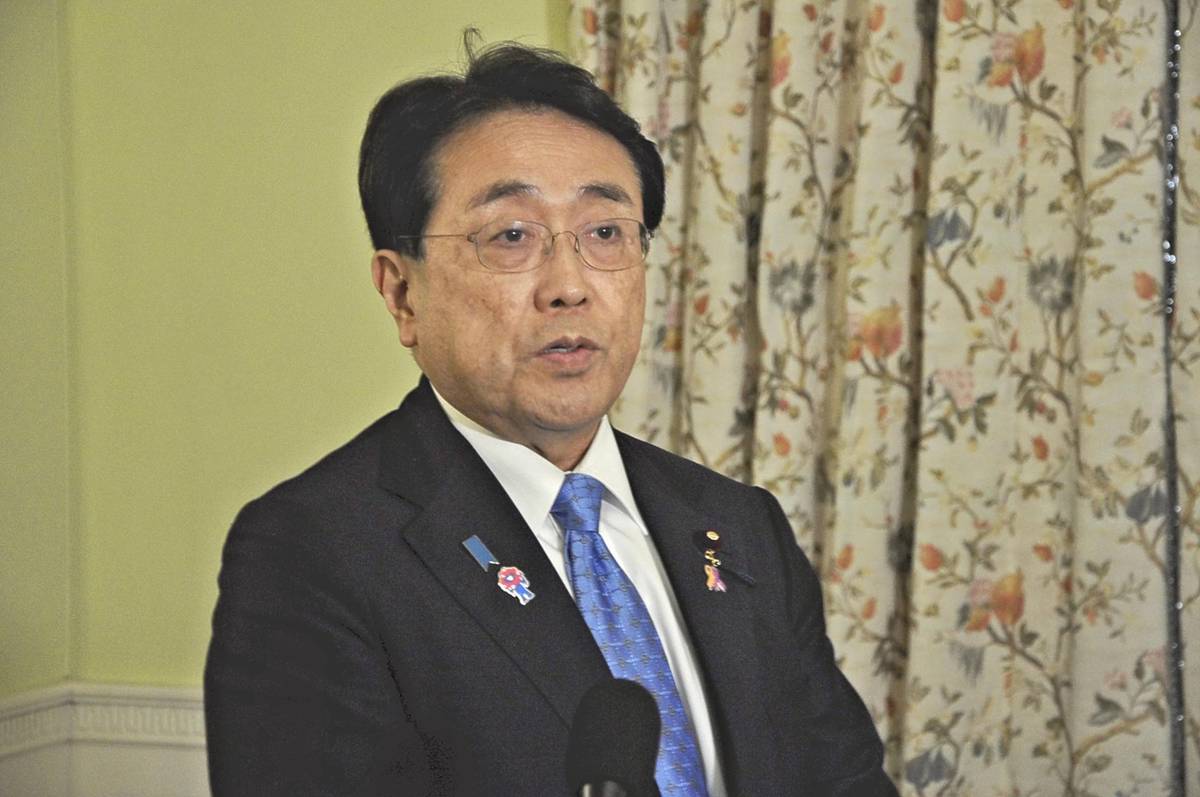
Economic revitalization minister Ryosei Akazawa answers questions from reporters after meeting U.S. government officials in Washington on Thursday.
14:06 JST, August 9, 2025
Differences in understanding between Japan and the United States over the application of special provisions for new “reciprocal” tariffs are expected to be resolved, as Washington agreed to apply the special provisions to Japan by amending a presidential executive order.
The news that the United States will also lower tariffs on cars imported from Japan came as a relief to those in industries concerned.
However, it will be up to the United States when the executive order will be revised, meaning that the outlook remains uncertain.
“The United States is an important market for wagyu beef. We’re relieved to hear that the tariff rate will be returned to the same as before,” said an official of the Japan Livestock Products Export Promotion Council. The existing tariff for beef is 26.4%, but if 15% were added on top of that, it would deal a blow to beef producers and others engaged in exports.
The auto industry also welcomed the move. “We are grateful that tax rate cuts have become more likely,” said a source close to a major carmaker.
Economic revitalization minister Ryosei Akazawa said in Washington on Thursday that the U.S. government has agreed to amend the presidential executive order in a timely manner. He also explained that the U.S. would reimburse excess tariffs collected since the new rate took effect on Thursday.
However, the specific timing for the revision has yet to be decided, and it remains uncertain when the tariff rate on cars will be lowered from 27.5% at present to 15% in line with the Japan-U.S. agreement.
The uncertain timing has added confusion to individual carmakers’ earnings projections.
While Toyota Motor Corp. and Mazda Motor Corp. are making estimates on the premise that the 15% tariff rate will be applied from August, Honda Motor Co. and Subaru Corp. expect the new rate will be applied from September.
The U.S. tariff measures are projected to push down the combined operating profits of the country’s seven major carmakers for the business year ending in March 2026 by about ¥2.7 trillion. But if the application of the new tariff rate is delayed, it will deal an even greater blow to the carmakers.
“We wonder why the government has left such an important agreement to be handled like a verbal promise,” said a source close to a leading automaker.
Akazawa told reporters on Thursday that he will continue efforts for the steady implementation of the Japan-U.S. agreement.







Most Read
Popular articles in the past 24 hours
-
Business Hotels Expanding into Regional Areas in Japan, Aiming to...
-
Milano Cortina 2026: Japan Sees Leap in Olympic Performance Throu...
-
Milano Cortina 2026: Japan's Satoshi Furuno Places 4th in Men's S...
-
Fiji Defense Minister Hopes Japan Will Support Stabilization of P...
-
Milano Cortina 2026: Speed Skater Takagi Finishes 6th in the 1,50...
-
6 Injured at Naked Festival in Japan’s Okayama Prefecture; Police...
-

Milano Cortina 2026: Malinin Highlights Dangers of Social Media i...
-
3rd Japan Pacific Islands Defense Dialogue to Begin in Tokyo on S...
Popular articles in the past week
-

Japan PM Takaichi’s Cabinet Resigns en Masse
-

Man Infected with Measles Reportedly Dined at Restaurant in Tokyo...
-

Sanae Takaichi Elected Prime Minister of Japan; Keeps All Cabinet...
-

Japan's Govt to Submit Road Map for Growth Strategy in March, PM ...
-

Bus Carrying 40 Passengers Catches Fire on Chuo Expressway; All E...
-

Milano Cortina 2026: Figure Skaters Riku Miura, Ryuichi Kihara Pa...
-
Japan, U.S. Name 3 Inaugural Investment Projects; Reached Agreeme...
-
U.S. Firm to Build Training Hub in Fukushima N-plant for Debris R...
Popular articles in the past month
-
Japan PM Takaichi’s Cabinet Resigns en Masse
-

Japan Institute to Use Domestic Commercial Optical Lattice Clock ...
-

Israeli Ambassador to Japan Speaks about Japan’s Role in the Reco...
-
Man Infected with Measles Reportedly Dined at Restaurant in Tokyo...
-

Videos Plagiarized, Reposted with False Subtitles Claiming ‘Ryuky...
-

Man Infected with Measles May Have Come in Contact with Many Peop...
-

Prudential Life Insurance Plans to Fully Compensate for Damages C...
-

Woman with Measles Visited Hospital in Tokyo Multiple Times Befor...
Top Articles in Business
-
Prudential Life Insurance Plans to Fully Compensate for Damages Caused by Fraudulent Actions Without Waiting for Third-Party Committee Review
-
Narita Airport, Startup in Japan Demonstrate Machine to Compress Clothes for Tourists to Prevent People from Abandoning Suitcases
-
Japan, U.S. Name 3 Inaugural Investment Projects; Reached Agreement After Considerable Difficulty
-
Toyota Motor Group Firm to Sell Clean Energy Greenhouses for Strawberries
-

SoftBank Launches AI Service for Call Centers That Converts Harsh Customer Voices into Softer Voices
JN ACCESS RANKING
-
Japan PM Takaichi’s Cabinet Resigns en Masse
-
Japan Institute to Use Domestic Commercial Optical Lattice Clock to Set Japan Standard Time
-
Israeli Ambassador to Japan Speaks about Japan’s Role in the Reconstruction of Gaza
-
Man Infected with Measles Reportedly Dined at Restaurant in Tokyo Station
-
Videos Plagiarized, Reposted with False Subtitles Claiming ‘Ryukyu Belongs to China’; Anti-China False Information Also Posted in Japan