
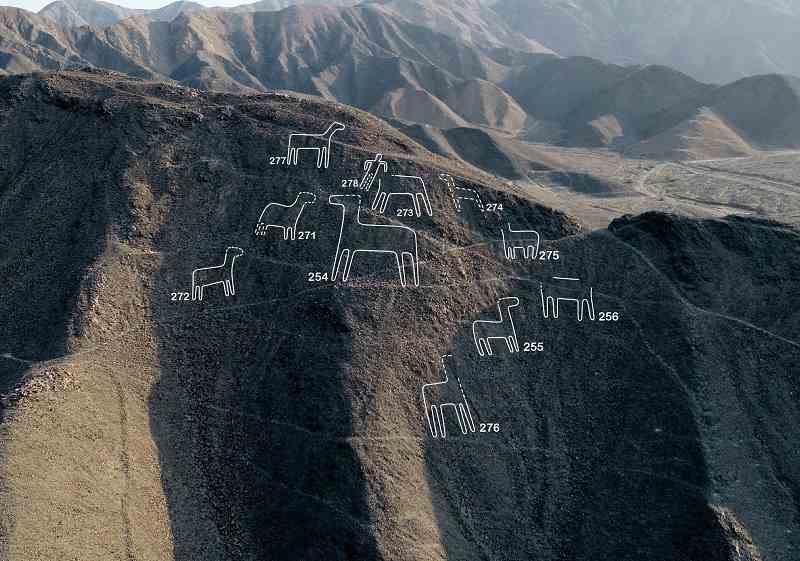
A general view shows mapping of geoglyphs found in the Nazca Plain as part of research led by Peruvian and Japanese researchers from Yamagata University, in this undated photo released on Dec. 19.
19:42 JST, January 13, 2023
More than a hundred new designs discovered in and around Peru’s ancient Nazca Plain and surrounding areas could bring new information to light about the mysterious pre-Columbian artworks that have intrigued scientists and visitors for decades.
Following two years of field surveys with aerial photos and drones, Peruvian and Japanese researches from Yamagata University in December reported the discovery of 168 new designs at the UNESCO World Heritage site on Peru’s southern Pacific coast.
The geoglyphs, huge figures carved into the South American desert, date back more than 2,000 years and represent humans, cats, snakes, killer whales, birds and native camalids — animals such as llamas, guanacos and alpacas.
Jorge Olano, head archaeologist for the Nazca Lines research program, said the new figures averaged between 2 and 6 meters in length. The purpose of the Nazca lines, which could only be seen from the air, remain a mystery.
Last month’s findings, however, are smaller and can be seen from the ground, Masato Sakai, a professor from Yamagata University who led the study, told Reuters.
The figures, iconic vestiges of Peru’s rich history, are about a three-hour drive from the capital Lima.
Researchers had already discovered 190 figures in the area since 2004. But the vastness of the terrain they cover has complicated efforts to study and conserve the heritage site.
Yamagata University said the research will be used in artificial intelligence-based surveys to help inform the lines’ preservation.
Studies from the university in collaboration with Peru’s government have helped delineate and protect the area, which is facing threats from urban and economic developments.
“Some geoglyphs are in danger of being destroyed due to the recent expansion of mining-related workshops in the archaeological park,” Sakai said.







Most Read
Popular articles in the past 24 hours
-

Business Hotels Expanding into Regional Areas in Japan, Aiming to...
-

Milano Cortina 2026: Japan Sees Leap in Olympic Performance Throu...
-

Milano Cortina 2026: Japan's Satoshi Furuno Places 4th in Men's S...
-

Fiji Defense Minister Hopes Japan Will Support Stabilization of P...
-

6 Injured at Naked Festival in Japan’s Okayama Prefecture; Police...
-

Milano Cortina 2026: Speed Skater Takagi Finishes 6th in the 1,50...
-

Milano Cortina 2026: Malinin Highlights Dangers of Social Media i...
-

3rd Japan Pacific Islands Defense Dialogue to Begin in Tokyo on S...
Popular articles in the past week
-

Japan PM Takaichi’s Cabinet Resigns en Masse
-

Man Infected with Measles Reportedly Dined at Restaurant in Tokyo...
-

Sanae Takaichi Elected Prime Minister of Japan; Keeps All Cabinet...
-

Japan's Govt to Submit Road Map for Growth Strategy in March, PM ...
-

Bus Carrying 40 Passengers Catches Fire on Chuo Expressway; All E...
-

Milano Cortina 2026: Figure Skaters Riku Miura, Ryuichi Kihara Pa...
-

Japan, U.S. Name 3 Inaugural Investment Projects; Reached Agreeme...
-

U.S. Firm to Build Training Hub in Fukushima N-plant for Debris R...
Popular articles in the past month
-
Japan PM Takaichi’s Cabinet Resigns en Masse
-

Japan Institute to Use Domestic Commercial Optical Lattice Clock ...
-

Israeli Ambassador to Japan Speaks about Japan’s Role in the Reco...
-
Man Infected with Measles Reportedly Dined at Restaurant in Tokyo...
-

Videos Plagiarized, Reposted with False Subtitles Claiming ‘Ryuky...
-

Man Infected with Measles May Have Come in Contact with Many Peop...
-

Prudential Life Insurance Plans to Fully Compensate for Damages C...
-

Woman with Measles Visited Hospital in Tokyo Multiple Times Befor...
Top Articles in Science & Nature
-
Japan Institute to Use Domestic Commercial Optical Lattice Clock to Set Japan Standard Time
-
Japan to Face Shortfall of 3.39 Million Workers in AI, Robotics in 2040; Clerical Workers Seen to Be in Surplus
-

Record 700 Startups to Gather at SusHi Tech Tokyo in April; Event Will Center on Themes Like Artificial Intelligence and Robotics
-

iPS Treatments Pass Key Milestone, but Broader Applications Far from Guaranteed
-
iPS Cell Products for Parkinson’s, Heart Disease OK’d for Commercialization by Japan Health Ministry Panel
JN ACCESS RANKING
-
Japan PM Takaichi’s Cabinet Resigns en Masse
-
Japan Institute to Use Domestic Commercial Optical Lattice Clock to Set Japan Standard Time
-
Israeli Ambassador to Japan Speaks about Japan’s Role in the Reconstruction of Gaza
-
Man Infected with Measles Reportedly Dined at Restaurant in Tokyo Station
-
Videos Plagiarized, Reposted with False Subtitles Claiming ‘Ryukyu Belongs to China’; Anti-China False Information Also Posted in Japan