
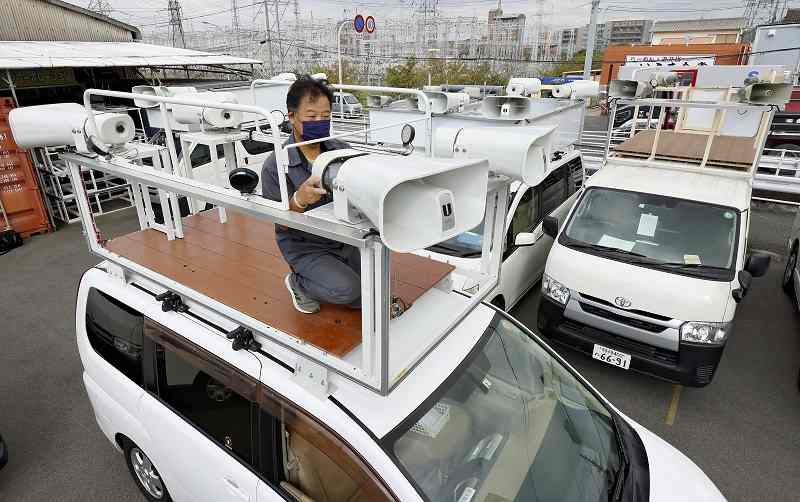
A worker prepares a campaign car in Daito, Osaka Prefecture, in October 2021.
13:05 JST, July 6, 2022
The House of Councillors election will be held Sunday. The following are questions and answers about the cost of the election.
Q: How much will it cost to hold the Upper House election?
A: The initial budget for fiscal 2022 includes ¥60.4 billion for the Upper House election. The funds come from taxes. There are about 105.44 million voters, including overseas voters, meaning it will cost about ¥570 per voter.
Upper House elections have been generally in the ¥50 billion range, with the previous election in 2019 costing ¥57 billion. According to the Internal Affairs and Communications Ministry, the reason for the increase this time around is due to the cost of placing disinfectant at the entrances and exits of polling places as measures against the coronavirus.
Q: What is the breakdown of expenses?
A: In the fiscal 2022 budget, about 90%, or ¥55.5 billion will be allocated for outsourcing to local governments that will be responsible for election administration. Each municipality will use the money to pay for polling station venues, ballot-counting stations and staff to help with vote-casting and counting, among other expenses.
The budget also includes ¥237 million for candidate posters and ¥119 million to hire campaign vehicles. In order to ensure equal opportunities for all candidates, these expenses are covered by public funds.
Q: Does it cost the same for the lower house election?
A: The cost of the lower house election is estimated at between ¥60 billion and ¥70 billion. The reason why the lower house election costs more is that there are more candidates.


Most Read
Popular articles in the past 24 hours
-

Japan PM Takaichi’s Cabinet Resigns en Masse
-

Japan's Govt to Submit Road Map for Growth Strategy in March, PM ...
-

Bus Carrying 40 Passengers Catches Fire on Chuo Expressway; All E...
-

Riku-Ryu Pair Wins Gold Medal: Their Strong Bond Leads to Major C...
-
Survey Shows False Election Info Perceived as True
-

Japan’s Plan for Investment in U.S.: Aim for Mutual Development b...
-
Sanae Takaichi Elected Japan's 105th Prime Minister (UPDATE 1)
-
Milano Cortina 2026: Japan Sets Winter Olympics Medal Record at 1...
Popular articles in the past week
-
Japan PM Takaichi’s Cabinet Resigns en Masse
-

Man Infected with Measles Reportedly Dined at Restaurant in Tokyo...
-

Videos Plagiarized, Reposted with False Subtitles Claiming ‘Ryuky...
-
Japan's Govt to Submit Road Map for Growth Strategy in March, PM ...
-

Milano Cortina 2026: Figure Skaters Riku Miura, Ryuichi Kihara Pa...
-

Tokyo’s New Record-Breaking Fountain Named ‘Tokyo Aqua Symphony’
-
CRA Leadership Election Will Center on Party Rebuilding; Lower Ho...
-
Bus Carrying 40 Passengers Catches Fire on Chuo Expressway; All E...
Popular articles in the past month
-
Japan PM Takaichi’s Cabinet Resigns en Masse
-

Japan Institute to Use Domestic Commercial Optical Lattice Clock ...
-

Israeli Ambassador to Japan Speaks about Japan’s Role in the Reco...
-

Man Infected with Measles May Have Come in Contact with Many Peop...
-

China Eyes Rare Earth Foothold in Malaysia to Maintain Dominance,...
-

Prudential Life Insurance Plans to Fully Compensate for Damages C...
-
Man Infected with Measles Reportedly Dined at Restaurant in Tokyo...
-

Woman with Measles Visited Hospital in Tokyo Multiple Times Befor...
Top Articles in Politics
-
Japan PM Takaichi’s Cabinet Resigns en Masse
-

Sanae Takaichi Elected 105th Prime Minister of Japan; Keeps All Cabinet Appointees from Previous Term
-
Japan’s Govt to Submit Road Map for Growth Strategy in March, PM Takaichi to Announce in Upcoming Policy Speech
-

LDP Wins Historic Landslide Victory
-

LDP Wins Landslide Victory, Secures Single-party Majority; Ruling Coalition with JIP Poised to Secure Over 300 seats (UPDATE 1)
JN ACCESS RANKING
-
Japan PM Takaichi’s Cabinet Resigns en Masse
-
Japan Institute to Use Domestic Commercial Optical Lattice Clock to Set Japan Standard Time
-
Israeli Ambassador to Japan Speaks about Japan’s Role in the Reconstruction of Gaza
-
Man Infected with Measles May Have Come in Contact with Many People in Tokyo, Went to Store, Restaurant Around When Symptoms Emerged
-
Prudential Life Insurance Plans to Fully Compensate for Damages Caused by Fraudulent Actions Without Waiting for Third-Party Committee Review