
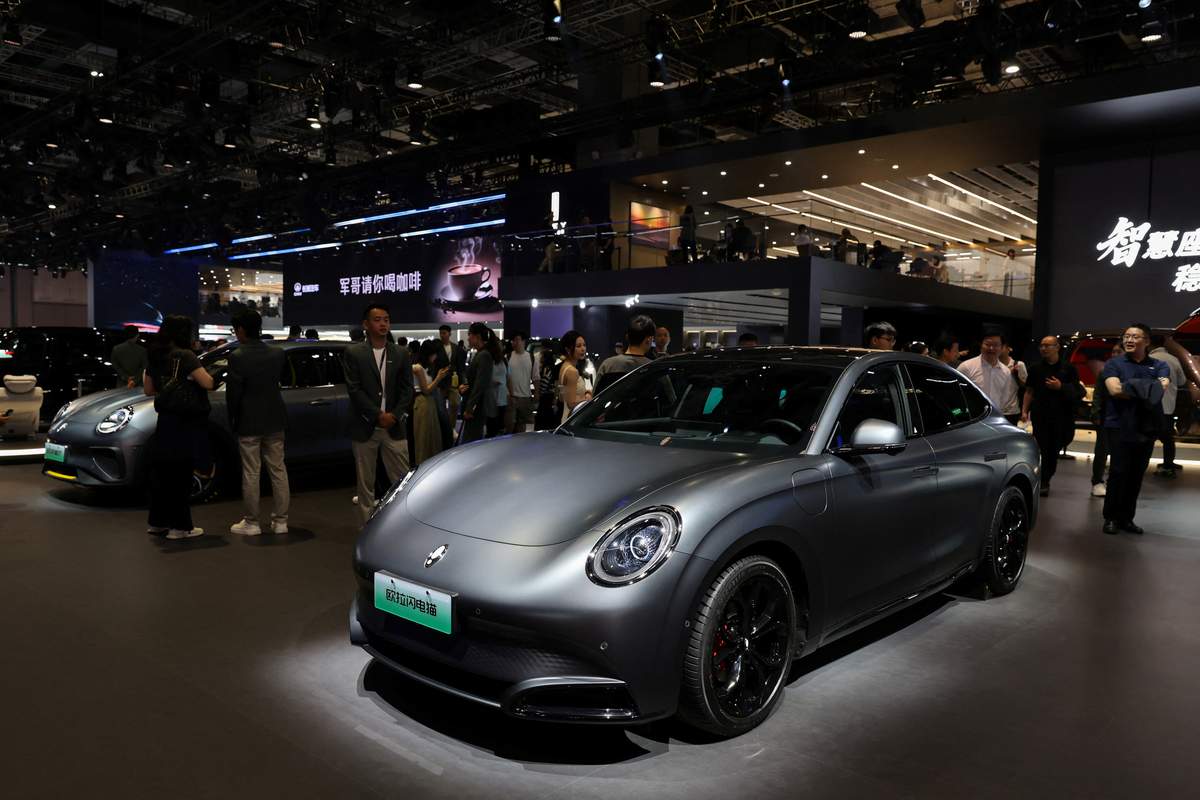
A Great Wall Motors (GWM) Ora electric vehicle (EV) is displayed at the GWM booth during a media day for the Auto Shanghai show in Shanghai, China April 24, 2025.
11:42 JST, February 13, 2026
Feb 13 (Reuters) – Global EV registrations fell 3% in January as the introduction of a purchase tax and lower EV subsidies in China and policy changes in the U.S. hindered sales, data by consultancy Benchmark Mineral Intelligence (BMI) showed on Friday.
WHY IT’S IMPORTANT
Global carmakers with large exposure to the U.S. market have booked some $55 billion in writedowns in the past year as they scale back electric vehicle ambitions on a tough U.S. market under President Donald Trump, price wars in China and a more complex mix of vehicle types in Europe.
The European Union and China, the world’s largest EV market, also relaxed regulations aimed at supporting electrification.
BY THE NUMBERS
Global EV registrations, a proxy for sales, fell by 3% year-on-year to almost 1.2 million units in January, according to the data, which includes battery-electric and plug-in hybrid cars.
They were down by 20% in China to less than 600,000, the lowest in almost two years, and 33% in North America to just over 85,000 vehicles sold. The U.S. sold in the month the fewest EVs since early 2022.
Sales in Europe grew by 24% in the month, the slowest rate since last February, to over 320,000 registrations.
They were up by 92% in the rest of the world to just under 190,000, their highest on record, sustained by incentives in Thailand and strong growth in South Korea and Brazil.
QUOTES
“We’ve seen a growing number of exports reported from China for the EV market,” BMI data manager Charles Lester said. “We’re expecting that to continue, trying to have a strong year of EV exports over 2026, targeting many different regions, including the likes of Southeast Asia, which is where we’ve seen a lot of growth over the past few months.”
CONTEXT
Electrification proponents emphasize the need to curb planet-warming CO2 emissions, but carmakers say a quick transition threatens jobs and profit.
As a result hybrid cars, seen as a compromise between battery-electric and combustion engine engines, have become more popular among buyers. Some experts however argue that the emergence of “mild hybrid” cars, which mostly use traditional fuels, only modestly contribute to lowering emissions.







Most Read
Popular articles in the past 24 hours
-
CRA Leadership Election Will Center on Party Rebuilding; Lower Ho...
-

Crime in Japan Ticks Up for 4th Straight Year
-

Milano Cortina 2026: From Despair to Pure Joy: Takanashi’s 4-Year...
-

Milano Cortina 2026: Mitsuki Ono Wins Bronze in Women’s Snowboard...
-

Flu Cases Surging Again: Infection Can Also Be Prevented by Humid...
-
High School Baseball Players Referred to Prosecutors for Sharing ...
-
Man Arrested for Shining Laser Beam at Driver’s Compartment of Mo...
-

Shina, Ogawa Running for Leadership of Japan's CRA Party
Popular articles in the past week
-

Woman with Measles Visited Hospital in Tokyo Multiple Times Befor...
-

Prudential Life Insurance Plans to Fully Compensate for Damages C...
-

LDP Wins Historic Landslide Victory
-

Woman with No Overseas Travel History Infected with Measles in Na...
-

LDP Wins Landslide Victory, Secures Single-party Majority; Ruling...
-

Measles Patient Flew Between Tokyo, Hokkaido in Late January; Lik...
-
Symptomatic Measles Victim Visited Defense Ministry in Tokyo; May...
-

Tokyo, Many Regions across Japan Hit with Heavy Snow
Popular articles in the past month
-

Japan Institute to Use Domestic Commercial Optical Lattice Clock ...
-

Israeli Ambassador to Japan Speaks about Japan’s Role in the Reco...
-

Man Infected with Measles May Have Come in Contact with Many Peop...
-
China Eyes Rare Earth Foothold in Malaysia to Maintain Dominance,...
-
Australian Woman Dies After Mishap on Ski Lift in Nagano Prefectu...
-

Japan, Qatar Ministers Agree on Need for Stable Energy Supplies; ...
-
Woman with Measles Visited Hospital in Tokyo Multiple Times Befor...
-
Foreign Snowboarder in Serious Condition After Hanging in Midair ...
Top Articles in News Services
-

Prudential Life Expected to Face Inspection over Fraud
-

Japan’s Nikkei Stock Average Touches 58,000 as Yen, Jgbs Rally on Election Fallout (UPDATE 1)
-

Trump Names Former Federal Reserve Governor Warsh as the Next Fed Chair, Replacing Powell
-
Suzuki Overtakes Nissan as Japan’s Third‑Largest Automaker in 2025
-
Japan Bond Yields Surge to Records as Election Stokes Fiscal Concerns; Stocks and Yen Fall
JN ACCESS RANKING
-
Japan Institute to Use Domestic Commercial Optical Lattice Clock to Set Japan Standard Time
-
Israeli Ambassador to Japan Speaks about Japan’s Role in the Reconstruction of Gaza
-
Man Infected with Measles May Have Come in Contact with Many People in Tokyo, Went to Store, Restaurant Around When Symptoms Emerged
-
China Eyes Rare Earth Foothold in Malaysia to Maintain Dominance, Counter Japan, U.S.
-
Australian Woman Dies After Mishap on Ski Lift in Nagano Prefecture