
Japan-China Strain Set to Persist as Beijing Officials Self-Interestedly Bash Tokyo; Takaichi Unlikely to Back Down
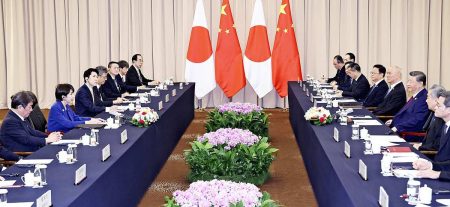
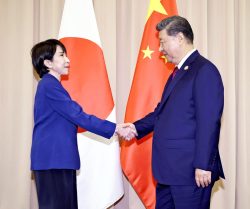
A Japan-China summit was held on the sidelines of the APEC summit held in South Korea on Oct. 31.
8:00 JST, December 27, 2025
The standoff between Japan and China shows signs of becoming protracted. China has strongly protested Prime Minister Sanae Takaichi’s Nov. 7 response to a question in the Diet, in which she stated that a Taiwan emergency could constitute a “survival-threatening situation,” thereby implying that it would trigger the exercise of Japan’s right of collective self-defense. The Japan side has no intention of retracting her response. Many Japanese government officials predict that it will take several years to resolve this situation.
Why is China so opposed? When Takaichi, a hawkish politician who has visited Yasukuni Shrine every year, won the Liberal Democratic Party’s presidential election in October and became prime minister, most people expected Japan-China relations to deteriorate. Looking at the current Japan-China conflict, that view turned out to be correct.
However, when Takaichi and Chinese President Xi Jinping met in South Korea on Oct. 31, during the Asia-Pacific Economic Cooperation summit, they agreed to promote a “mutually beneficial relationship based on common strategic interests,” which seemed like a good start. According to a Chinese government source, Xi agreed to meet with Takaichi because China took into account her extremely high approval ratings and the possibility of a long-term administration. It was also because maintaining economic ties with Japan was necessary amid a slowing Chinese economy. After Takaichi won the LDP presidential election, China also viewed her decision not to visit Yasukuni Shrine’s autumn festival as a positive signal.
This was not a decision made solely by Xi. According to the same source, Foreign Minister Wang Yi and the Chinese government’s Japan School (a group of diplomats who have completed Japanese language training, and who work at Japanese diplomatic missions overseas or are involved in formulating policies toward Japan) analyzed Takaichi’s words and actions, and the Communist Party’s Central Committee for Foreign Affairs concluded that a meeting with Takaichi, who had just taken office, would not be a negative.
However, the Japan School’s plans were soon thrown into disarray. On Nov. 1, the day after the meeting, Takaichi met with Taiwan’s representative to APEC and posted the information on social media. While it is customary for the Japanese prime minister to meet with a Taiwan representative on the sidelines of the APEC summit every year, the Chinese side failed to catch wind of this fact. In response to the prime minister’s social media post, the Chinese Foreign Ministry issued a warning to Japan, stating that the Japanese leader “sent a gravely wrong signal to the “Taiwan independence” forces, and those actions are egregious in nature and impact.” However, six days later, the prime minister also said in the Diet that a Taiwan emergency could pose an existential threat.
Takaichi’s Diet response was reported to Xi, who is solely responsible for the “internal affair” of Taiwan. He is said to have been furious, issuing orders to increase pressure on Japan. From that point on, China’s criticism of Japan sharply increased. A Japanese government official said, “The Chinese government’s Japan School diplomats are desperately trying to increase pressure on Japan and avoid responsibility.” China’s ongoing campaign of criticism of Japan in the international community can be seen as a manifestation of this collective self-protection drive.
However, while China has taken measures such as asking its citizens to reconsider traveling to or studying in Japan, it has not taken any strong economic measures against Japan.
Japan is most wary of China imposing export restrictions on rare earths to Japan. Following a 2010 collision between a Chinese fishing boat and a Japan Coast Guard patrol vessel off the Senkaku Islands, China imposed export restrictions on rare earths as part of its efforts to pressure Japan. At the time, Japan, which was unprepared for these export restrictions, was deeply shaken. Japan has since taken measures such as stockpiling rare earths, but if China were to impose export restrictions again, the Japanese economy could be affected once more.
However, it appears unlikely that China will impose export restrictions on rare earths. At the U.S.-China summit held at the end of October, China agreed to suspend the worldwide rare earth export restrictions it had announced earlier that month. If China were to impose export restrictions on Japan, it would be in violation of the U.S.-China agreement. China’s top priority in diplomacy is stabilizing its relationship with the Trump administration, and it would be difficult to take any measures that go against that aim. Some believe that China cannot take strong measures that would backfire on its sluggish economy.
It’s likely that the Japan-China conflict will continue for a long time. A Chinese government source revealed, “We will gradually tone down our criticism of Japan, but for the time being, we will refuse dialogue between the leaders.” In past Japan-China conflicts, Japan has often found a compromise to allow the Chinese side to lower its raised fist, but this time it looks like that will not be easy. China continues to demand the withdrawal of the prime minister’s remark in the Diet, as instructed by Xi. Japan cannot comply, as a withdrawal would lead to a decline in relations with the United States and weaken deterrence. It thus seems unlikely that a compromise will be found.
In a public opinion poll conducted by The Yomiuri Shimbun in late November, 56% of respondents approved of the Takaichi administration’s China stance, far exceeding the 29% who disapproved. Takaichi’s high public approval rating also limits the room for her to retract her answer.
What is necessary now is for both Japan and China to avoid further escalation. Japan has been refuting China’s one-sided criticisms of Japan one by one, and must continue to do so calmly to prevent erroneous discourse from spreading in the international community, but it must also avoid further provoking China. China should also remain calm, but the diplomatic officials who incurred Xi’s wrath are continuing to criticize Japan in droves, and are unlikely to be willing to listen anything from Japan for the time being.
Political Pulse appears every Saturday.
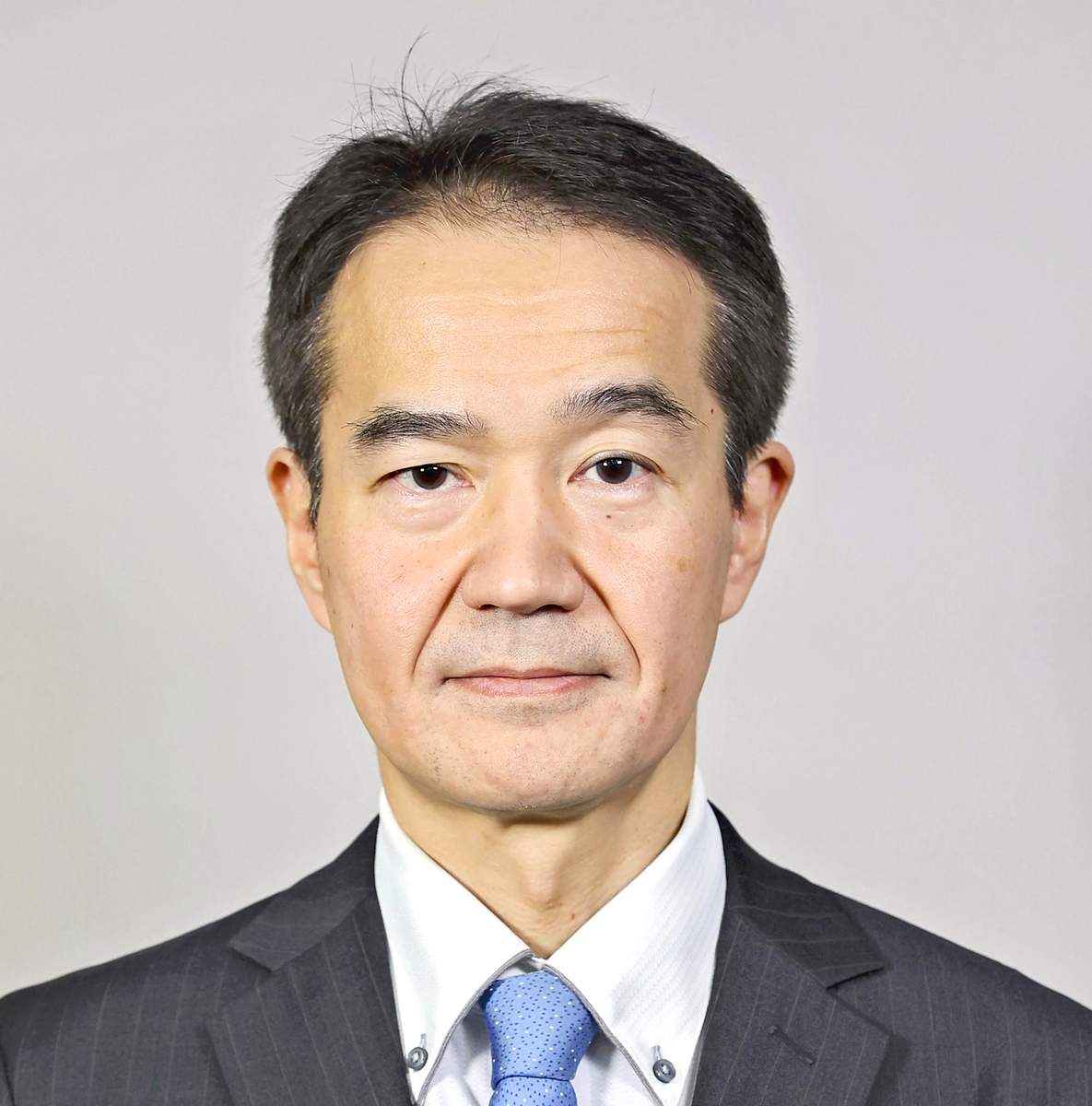
Seima Oki
Seima Oki is a deputy editor in the Political News Department of The Yomiuri Shimbun.





Most Read
Popular articles in the past 24 hours
-

Director Naomi Kawase's New Film Explores Heart Transplants in Ja...
-

Milano Cortina 2026: Japan’s Mari Fukada Wins Gold in Women’s Sno...
-

Japan’s Nikkei Stock Average Rises on Tech Rally and Takaichi's S...
-

Milano Cortina 2026: Japan’s Taiga Hasegawa Wins Silver in Men’s ...
-
Japanese Man Living in Iraq Suspected of Illegally Entering U.S. ...
-

Mark Zuckerberg Quizzed on Kids' Instagram Use in Social Media Tr...
-

Milano Cortina 2026: Russian Flag and Anthem Set to Return at Nex...
-

Milano Cortina 2026: Snowboarding Star Fukada Wins Gold in Hard-F...
Popular articles in the past week
-

Japan PM Takaichi’s Cabinet Resigns en Masse
-

Man Infected with Measles Reportedly Dined at Restaurant in Tokyo...
-

Videos Plagiarized, Reposted with False Subtitles Claiming ‘Ryuky...
-

Sanae Takaichi Elected 105th Prime Minister of Japan; Keeps All C...
-

Japan's Govt to Submit Road Map for Growth Strategy in March, PM ...
-

Milano Cortina 2026: Figure Skaters Riku Miura, Ryuichi Kihara Pa...
-

Tokyo’s New Record-Breaking Fountain Named ‘Tokyo Aqua Symphony’
-

Bus Carrying 40 Passengers Catches Fire on Chuo Expressway; All E...
Popular articles in the past month
-
Japan PM Takaichi’s Cabinet Resigns en Masse
-

Japan Institute to Use Domestic Commercial Optical Lattice Clock ...
-

Israeli Ambassador to Japan Speaks about Japan’s Role in the Reco...
-

Man Infected with Measles May Have Come in Contact with Many Peop...
-
Man Infected with Measles Reportedly Dined at Restaurant in Tokyo...
-

Prudential Life Insurance Plans to Fully Compensate for Damages C...
-

Woman with Measles Visited Hospital in Tokyo Multiple Times Befor...
-
Videos Plagiarized, Reposted with False Subtitles Claiming ‘Ryuky...
Top Articles in Editorial & Columns
-

Riku-Ryu Pair Wins Gold Medal: Their Strong Bond Leads to Major Comeback Victory
-

40 Million Foreign Visitors to Japan: Urgent Measures Should Be Implemented to Tackle Overtourism
-
University of Tokyo Professor Arrested: Serious Lack of Ethical Sense, Failure of Institutional Governance
-
China Provoked Takaichi into Risky Move of Dissolving House of Representatives, But It’s a Gamble She Just Might Win
-
Policy Measures on Foreign Nationals: How Should Stricter Regulations and Coexistence Be Balanced?
JN ACCESS RANKING
-
Japan PM Takaichi’s Cabinet Resigns en Masse
-
Japan Institute to Use Domestic Commercial Optical Lattice Clock to Set Japan Standard Time
-
Israeli Ambassador to Japan Speaks about Japan’s Role in the Reconstruction of Gaza
-
Man Infected with Measles May Have Come in Contact with Many People in Tokyo, Went to Store, Restaurant Around When Symptoms Emerged
-
Man Infected with Measles Reportedly Dined at Restaurant in Tokyo Station