
Tokyo Facility Founded in the Wake of Great Kanto Quake Spearheads Specialized Elder Care Efforts, Research for 100 Yrs
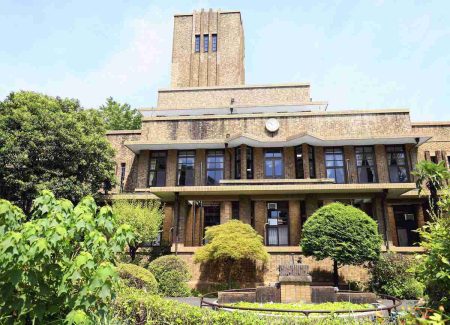
The Yokufukai main building, notable for its modern exterior
16:37 JST, September 27, 2025
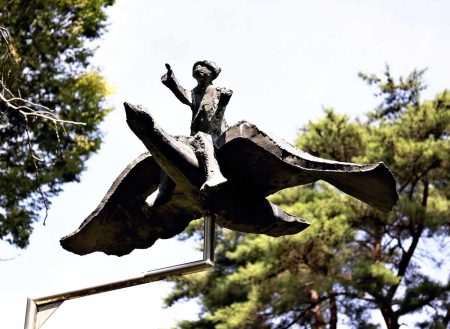
The courtyard features a sculpture from the fairytale “Nils Holgersson’s Wonderful Journey Through Sweden.”
A five-minute walk west from Ring Road No. 8 through a quiet residential neighborhood, you’ll discover an area enveloped in greenery. This is Yokufukai, a comprehensive facility for the elderly. Founded in 1925 following the Great Kanto Earthquake of Sept. 1, 1923, the facility celebrates its 100th anniversary this year.
Yokufukai was established as a foundation to assist elderly people unable to support themselves after the earthquake, funded by donations from the Imperial family and relief funds. Its name was inspired by a passage from the Analects of Confucius, which discusses human happiness and ideals.
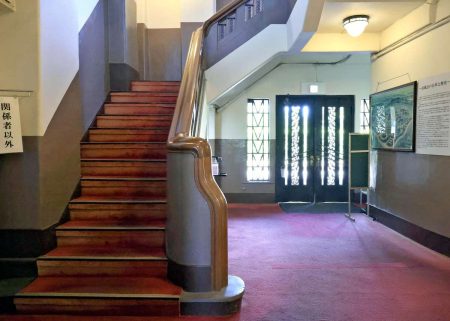
The main building retains its original appearance with red carpets and grand staircases.
Today, the expansive 63,000-square-meter grounds are home to a special nursing home and rehabilitation facility — both for the elderly — complete with a hospital and more, making it one of Japan’s leading specialized institutions.
Two of the buildings — the reinforced concrete main building and the prayer hall — remain in their original state. The main building, with one basement level and three stories above ground, was designed by architects Yoshikazu Uchida, who also designed the University of Tokyo’s Yasuda Auditorium, and Tatsundo Toki. Its striking facade features a central tower, evoking the image of two outstretched wings. Its sturdiness is evident, with a Yokufukai administration official saying, “It is robustly earthquake resistant to this day.”
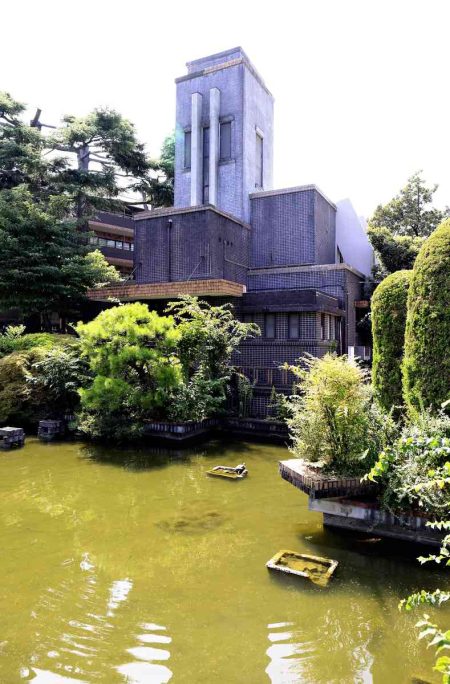
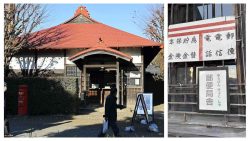
The prayer hall
Once long used for patient rooms, the main building now houses the administrative office. During World War II, it was temporarily taken over by the Imperial Japanese Army’s intelligence unit. According to testimony from someone involved at the time and published in a Yokufukai newsletter, the main building stored foreign codebooks and related documents, which were burned just before the end of the war.
The prayer hall, built after completion of the main building, initially appears Christian-like, but inside is an Amida Buddha statue. According to Yokufukai’s 10th anniversary commemorative magazine, a bon-sho temple bell was once rung in the mornings and evenings. Read as “raihai-do,” the room’s name follows the Buddhist style. It was also used as an entertainment hall for events and performances.
Yokufukai is known for its research in geriatric medicine. Dr. Kazuo Hasegawa, a leading authority on dementia care, also served as a permanent director. The facility focuses on home-visit rehabilitation and offers telephone consultations for caregivers.
“We hope to continue contributing to society for the next 100 years,” said Toru Yamamoto, an executive director of Yokufukai.
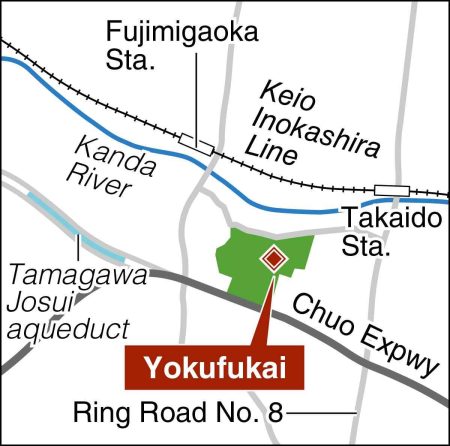
Yokufukai
Address: 1-12-1 Takaido-Nishi, Suginami Ward, Tokyo
Access: Eight-minute walk from Fujimigaoka Station on the Keio Inokashira Line; 9-minute walk from Takaido Station on the line. A free shuttle bus is available from Takaido Station.


Related Tags


Most Read
Popular articles in the past 24 hours
-

Beer Yeast Helps Save Labor, Water Use in Growing Rice; Govt Hope...
-
Japan Tourism Agency Calls for Strengthening Measures Against Ove...
-

Morley Robertson, Widely-Recognized Journalist, Dies at 63
-

Korean Air to Increase Aomori-Seoul Flights Amid Upbeat Demand
-

Japan's Yomiuri Giants Begin Spring Training in Miyazaki Pref.; A...
-

PokéPark KANTO’s Shops Bring Gifts and Goodies of All Kinds to Fa...
-
Calls from My Ex-husband’s Sister — Is It Time to Stop the Relati...
-

A Fitting Dish for Winter: Tender Lamb Stewed with Beans, Tomatoe...
Popular articles in the past week
-
Record-Breaking Snow Cripples Public Transport in Hokkaido; 7,000...
-

North Korea Possibly Launches Ballistic Missile
-

Japan Institute to Use Domestic Commercial Optical Lattice Clock ...
-
Foreign Snowboarder in Serious Condition After Hanging in Midair ...
-
Narita Airport, Startup in Japan Demonstrate Machine to Compress ...
-
Sakie Yokota, Last Surviving Parent of a North Korea Abductee, Ur...
-
Japan to Face Shortfall of 3.39 Million Workers in AI, Robotics i...
-
Toyota Motor Group Firm to Sell Clean Energy Greenhouses for Stra...
Popular articles in the past month
-
Univ. in Japan, Tokyo-Based Startup to Develop Satellite for Disa...
-
JAL, ANA Cancel Flights During 3-day Holiday Weekend due to Blizz...
-
Snow Expected in Tokyo, Neighboring Prefectures from Jan. 2 After...
-
China Confirmed to Be Operating Drilling Vessel Near Japan-China ...
-

China Eyes Rare Earth Foothold in Malaysia to Maintain Dominance,...
-
Tokyo, Yokohama Observe First Snowfall of Season; 1 Day Earlier t...
-
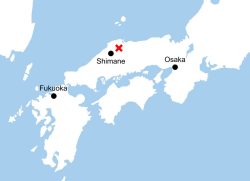
M6.2 Earthquake Hits Japan's Tottori, Shimane Prefectures; No Tsu...
-
Japan, Qatar Ministers Agree on Need for Stable Energy Supplies; ...
Top Articles in Features
-
Pangasius Catfish Increasingly Featured on Japanese Restaurant Menus, Home Dining Tables Due to Affordability, Mild Flavor
-

Tourists Flock to Ice Dome Lodge at Resort in Hokkaido, Japan; Facility Invites Visitors to Sleep on Beds Made of Ice
-
Hokkaido Village Attracts Visitors with Red-crowned Cranes, National Special Natural Monument
-
Traditional Umbrellas Illuminated in Gifu City, Projection Mapping Lights Up Park Near Gifu Castle
-

Elementary School Students’ Roasted Sweet Potato Gelato a Hot Seller
JN ACCESS RANKING
-
Univ. in Japan, Tokyo-Based Startup to Develop Satellite for Disaster Prevention Measures, Bears
-
JAL, ANA Cancel Flights During 3-day Holiday Weekend due to Blizzard
-
China Confirmed to Be Operating Drilling Vessel Near Japan-China Median Line
-
China Eyes Rare Earth Foothold in Malaysia to Maintain Dominance, Counter Japan, U.S.
-
M6.2 Earthquake Hits Japan’s Tottori, Shimane Prefectures; No Tsunami Threat (Update 4)