
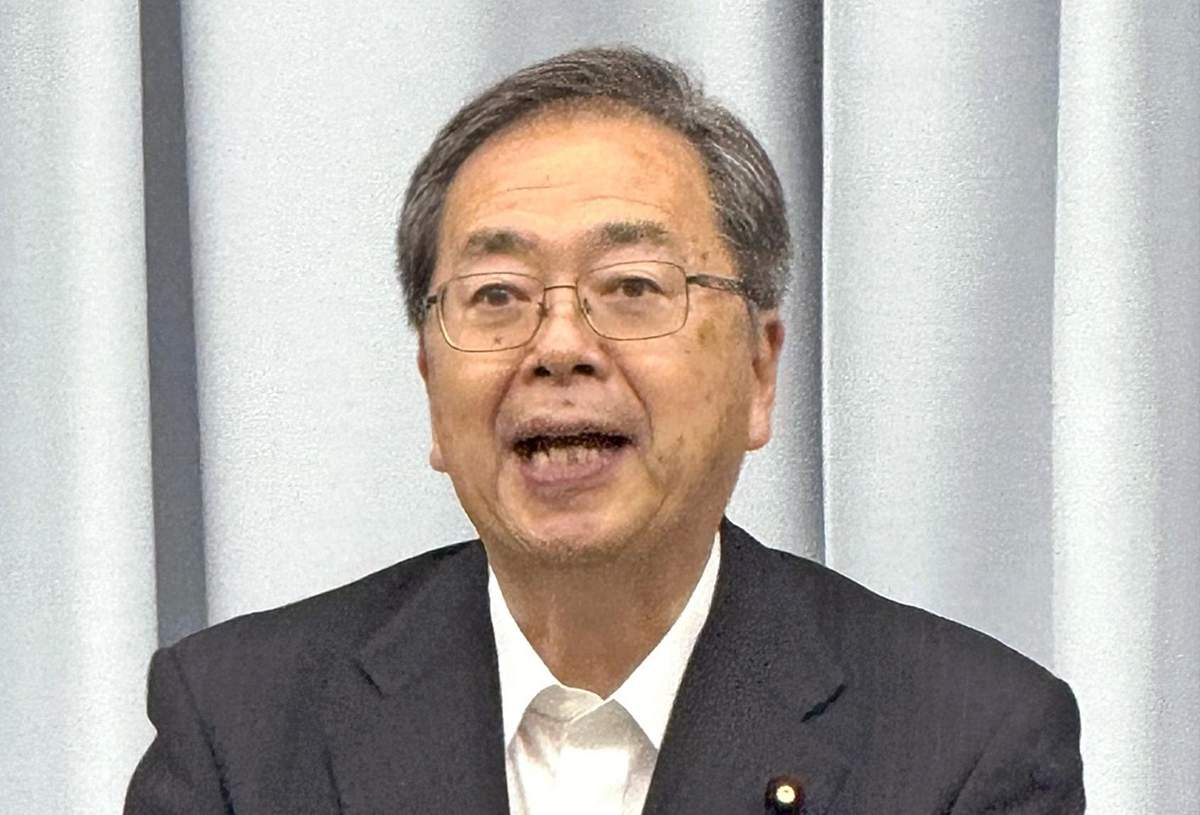
Komeito leader Tetsuo Saito speaks in Tokyo on Aug. 1.
17:35 JST, August 11, 2025
TOKYO (Jiji Press) — Komeito, which has been part of Japan’s ruling coalition for years, is struggling, especially following its crushing defeat in last month’s election for the House of Councillors, the upper chamber of parliament.
There are even calls for the party to give up on fielding candidates in constituencies and instead focus on the proportional representation system.
Komeito leader Tetsuo Saito pledged to promote reform to rebuild the party in a meeting with local chapter representatives on Aug. 1 to review the results of the Upper House election.
“In order to achieve party revitalization, we will advance reform and make every effort to establish an unshakable foundation to win (elections) in any headwind,” Saito said.
In the election, Komeito lost its seats in three constituencies, while its number of proportional presentation votes dropped to 5.21 million from nearly nine million it collected in the past.
Komeito had set a goal of maintaining its 14 seats up for re-election, but it ended up winning only eight seats, the lowest since the party took its current form in 1998.
Amid the aging of members of Soka Gakkai, a lay Buddhist group that is the party’s main supporter, some have been calling on Komeito to withdraw from costly races in constituencies and put resources into proportional representation.
But Komeito has continued to field candidates in constituencies by upholding its principles of being a party rooted in local communities.
“There is an option to focus on proportional representation in order to gain support nationwide,” a Komeito official said. The proposal for withdrawing from constituencies, which was put forward after the ruling coalition briefly fell from power following its defeat in the 2009 election for the House of Representatives, the lower chamber of parliament, may emerge again, the official said.
The party’s declining tide is also affecting its generational change. Keiichi Ishii resigned as Komeito leader only less than two months after assuming the post, after he was defeated in the Lower House election in October. Many middle-ranking Komeito lawmakers, who were seen as candidates for future party executives, also lost their seats in the election.
Despite the defeat in July’s Upper House election, there are few calls from within the party for Saito to step down because of a lack of personnel.
“Saito is likely to stay on for the time being. Who will replace him?” a Komeito official said.







Most Read
Popular articles in the past 24 hours
-

Tokyo Skytree's Elevator Stops, Trapping 20 People; All Rescued (...
-

China, India Tapping into Promising African Market; Beijing Annou...
-

Japan’s Major Real Estate Firms Expanding Overseas Businesses to ...
-

Ukrainian Ambassador Closely Watching Japan’s Revision of Defense...
-

Emperor Turns 66 Ahead of Disaster Milestones
-

Milano Cortina 2026: There Were Cheers across the Country, after ...
-
Tokyo Skytree to Close on Monday for Safety Checks after 20 Peopl...
-

Luna Sea Drummer Shinya Dies at 56; Powerful Drummer Behind ‘Desi...
Popular articles in the past week
-

Japan PM Takaichi’s Cabinet Resigns en Masse
-

Man Infected with Measles Reportedly Dined at Restaurant in Tokyo...
-

Sanae Takaichi Elected Prime Minister of Japan; Keeps All Cabinet...
-

Japan's Govt to Submit Road Map for Growth Strategy in March, PM ...
-

Bus Carrying 40 Passengers Catches Fire on Chuo Expressway; All E...
-

Milano Cortina 2026: Figure Skaters Riku Miura, Ryuichi Kihara Pa...
-

Japan, U.S. Name 3 Inaugural Investment Projects; Reached Agreeme...
-

U.S. Firm to Build Training Hub in Fukushima N-plant for Debris R...
Popular articles in the past month
-
Japan PM Takaichi’s Cabinet Resigns en Masse
-

Japan Institute to Use Domestic Commercial Optical Lattice Clock ...
-

Israeli Ambassador to Japan Speaks about Japan’s Role in the Reco...
-
Man Infected with Measles Reportedly Dined at Restaurant in Tokyo...
-

Videos Plagiarized, Reposted with False Subtitles Claiming ‘Ryuky...
-

Man Infected with Measles May Have Come in Contact with Many Peop...
-

Prudential Life Insurance Plans to Fully Compensate for Damages C...
-

Woman with Measles Visited Hospital in Tokyo Multiple Times Befor...
Top Articles in Politics
-
Japan PM Takaichi’s Cabinet Resigns en Masse
-
Sanae Takaichi Elected Prime Minister of Japan; Keeps All Cabinet Appointees from Previous Term
-
Japan’s Govt to Submit Road Map for Growth Strategy in March, PM Takaichi to Announce in Upcoming Policy Speech
-

LDP Wins Historic Landslide Victory
-

LDP Wins Landslide Victory, Secures Single-party Majority; Ruling Coalition with JIP Poised to Secure Over 300 seats (UPDATE 1)
JN ACCESS RANKING
-
Japan PM Takaichi’s Cabinet Resigns en Masse
-
Japan Institute to Use Domestic Commercial Optical Lattice Clock to Set Japan Standard Time
-
Israeli Ambassador to Japan Speaks about Japan’s Role in the Reconstruction of Gaza
-
Man Infected with Measles Reportedly Dined at Restaurant in Tokyo Station
-
Videos Plagiarized, Reposted with False Subtitles Claiming ‘Ryukyu Belongs to China’; Anti-China False Information Also Posted in Japan