
Health Ministry Introducing System to Assist with Organ Donations; Institutions Inexperienced in Brain-Dead Donations Get Help
12:35 JST, February 10, 2025
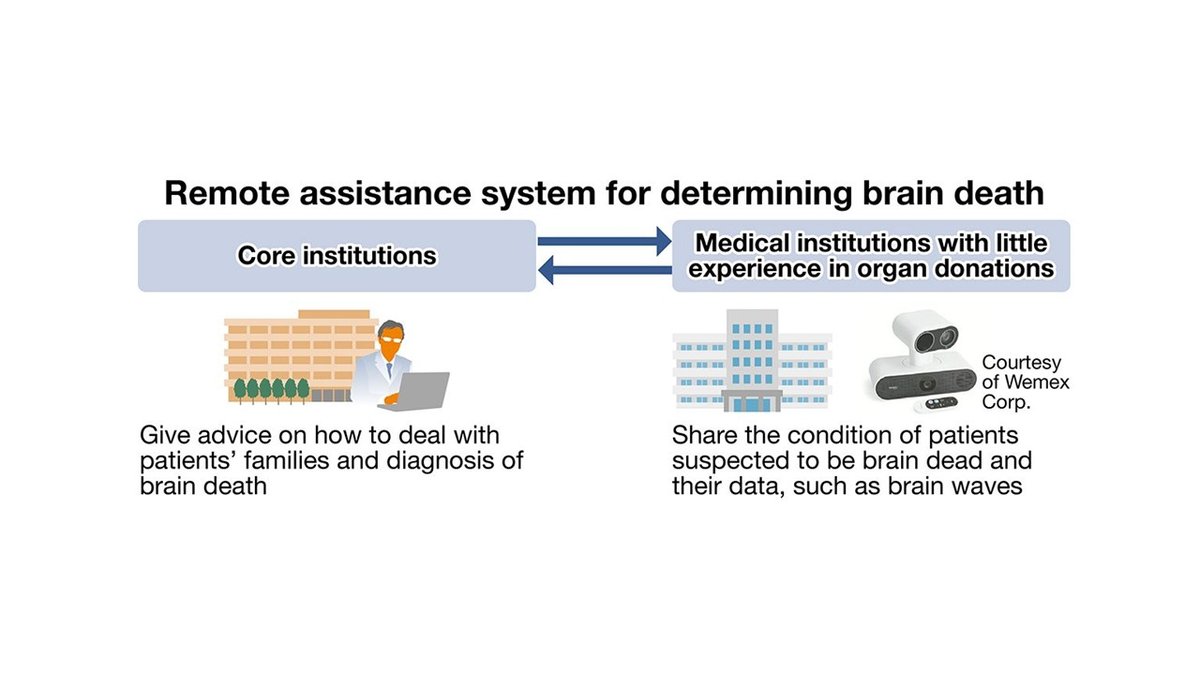
The Health, Labor and Welfare Ministry this year started rolling out an online system to enable about 70 institutions with minimal experience in the processes behind organ donations from brain-dead patients to connect with core medical institutions that have abundant experience.
The initiative seeks to help the inexperienced institutions with declaring patients as brain dead and is part of an effort to increase the number of organ donations in the country.
The inexperienced institutions tend not to know how to provide explanations to a patient’s family or how to diagnose brain death.
The new system will make it possible for doctors at a core facility to provide advice while checking in on the situation at an inexperienced institution. The ministry aims to streamline the process of declaring a patient brain-dead and ultimately increase the number of organ donations.
The ministry appropriated ¥520 million as related expenses in the supplementary budget, which was approved in December.
Of the about 900 medical institutions where organ donations from brain-dead patients are possible, only around 300 have experience in the process, according to the ministry. Some institutions reportedly have hesitancy with regard to organ donations, as they lack the know-how needed to deal with patients’ family members and diagnose brain death.
To help improve the situation, the ministry will provide the about 70 medical institutions, which are short staffed and inexperienced, with devices equipped with speakers and high-definition cameras that enable images to remotely be made 70 times larger.
In case there are patients suspected to be brain dead at the medical institutions set to receive the government assistance, the institutions will be connected online with doctors at core institutions in their region, such as university hospitals, enabling them to immediately share the patients’ situation and physical data, including brain waves.
Doctors at core institutions will give advice on the necessary procedures, from brain death diagnosis to organ removal, while checking the images and data sent via the system to help in decision making. The system will also be used to determine whether removed organs are suitable for transplants.
Organ donation is performed when a medical institution presents it to a patient’s family as one option for terminal care and obtains their consent. The process takes place after the patient has lost all function of their brain and been pronounced brain dead with no possibility of recovery.
Medical institutions need to be careful that the patient’s family members have understood that the patient has no prospects of recovery. The institutions should not proactively recommend organ donations to the family members.
Procedures for doctors to diagnose brain death are strictly stipulated under the Organ Transplant Law. Doctors need to double-check various signs, such as whether the patient is in a deep comatose state and that their pupils have permanently dilated.









Most Read
Popular articles in the past 24 hours
-

Director Naomi Kawase's New Film Explores Heart Transplants in Ja...
-

Milano Cortina 2026: Japan’s Mari Fukada Wins Gold in Women’s Sno...
-

Japan’s Nikkei Stock Average Rises on Tech Rally and Takaichi's S...
-

Japanese Man Living in Iraq Suspected of Illegally Entering U.S. ...
-

Takaichi Expected to Express Desire for Constitutional Revision P...
-

Milano Cortina 2026: Snowboarding Star Fukada Wins Gold in Hard-F...
-

Mark Zuckerberg Quizzed on Kids' Instagram Use in Social Media Tr...
-

Milano Cortina 2026: Russian Flag and Anthem Set to Return at Nex...
Popular articles in the past week
-

Japan PM Takaichi’s Cabinet Resigns en Masse
-

Man Infected with Measles Reportedly Dined at Restaurant in Tokyo...
-

Videos Plagiarized, Reposted with False Subtitles Claiming ‘Ryuky...
-

Sanae Takaichi Elected 105th Prime Minister of Japan; Keeps All C...
-

Japan's Govt to Submit Road Map for Growth Strategy in March, PM ...
-

Milano Cortina 2026: Figure Skaters Riku Miura, Ryuichi Kihara Pa...
-

Tokyo’s New Record-Breaking Fountain Named ‘Tokyo Aqua Symphony’
-

Bus Carrying 40 Passengers Catches Fire on Chuo Expressway; All E...
Popular articles in the past month
-
Japan PM Takaichi’s Cabinet Resigns en Masse
-

Japan Institute to Use Domestic Commercial Optical Lattice Clock ...
-

Israeli Ambassador to Japan Speaks about Japan’s Role in the Reco...
-
Man Infected with Measles Reportedly Dined at Restaurant in Tokyo...
-

Man Infected with Measles May Have Come in Contact with Many Peop...
-

Prudential Life Insurance Plans to Fully Compensate for Damages C...
-
Videos Plagiarized, Reposted with False Subtitles Claiming ‘Ryuky...
-

Woman with Measles Visited Hospital in Tokyo Multiple Times Befor...
Top Articles in Science & Nature
-
Japan Institute to Use Domestic Commercial Optical Lattice Clock to Set Japan Standard Time
-

Japan to Face Shortfall of 3.39 Million Workers in AI, Robotics in 2040; Clerical Workers Seen to Be in Surplus
-

Record 700 Startups to Gather at SusHi Tech Tokyo in April; Event Will Center on Themes Like Artificial Intelligence and Robotics
-

Japan to Ban Use of Power Banks on Airplanes
JN ACCESS RANKING
-
Japan PM Takaichi’s Cabinet Resigns en Masse
-
Japan Institute to Use Domestic Commercial Optical Lattice Clock to Set Japan Standard Time
-
Israeli Ambassador to Japan Speaks about Japan’s Role in the Reconstruction of Gaza
-
Man Infected with Measles Reportedly Dined at Restaurant in Tokyo Station
-
Man Infected with Measles May Have Come in Contact with Many People in Tokyo, Went to Store, Restaurant Around When Symptoms Emerged