
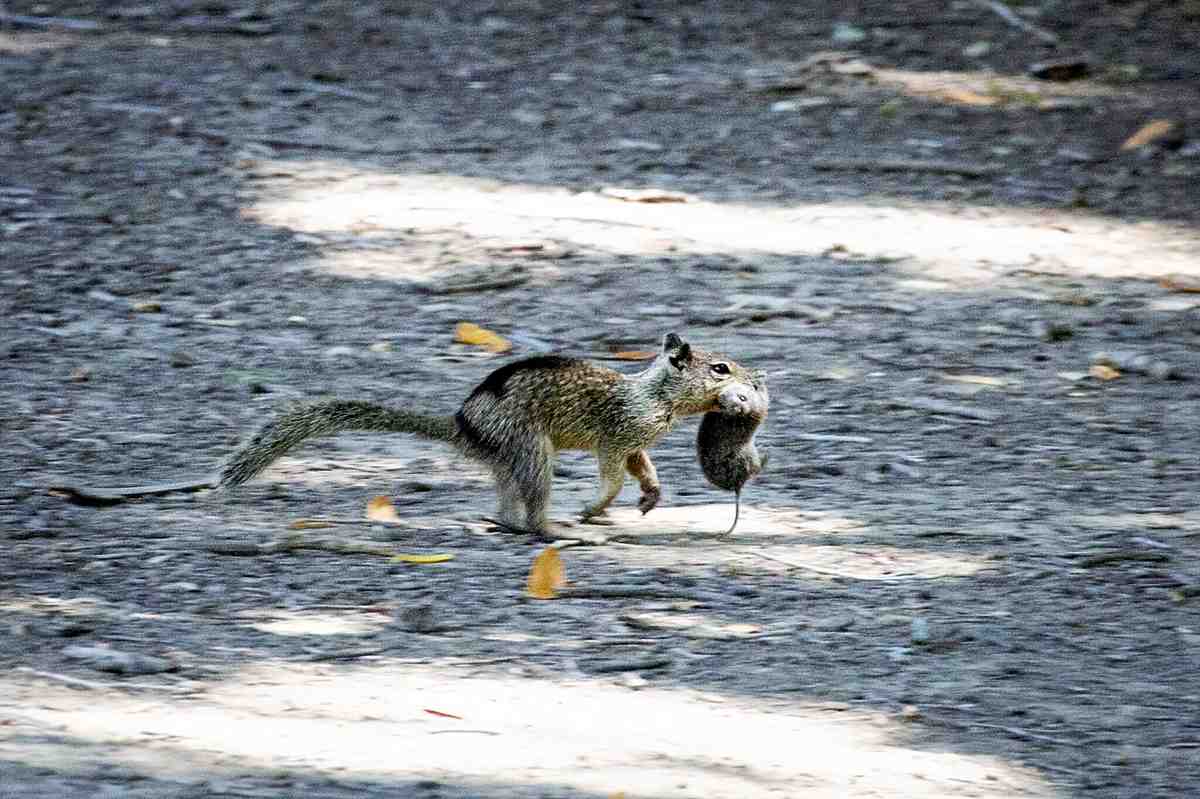
A ground squirrel is seen eating a vole in Davis, Calif., in this photo obtained on Dec. 18.
13:06 JST, January 4, 2025
WASHINGTON (AFP-Jiji) — Squirrels might look like adorable, nut-hoarding furballs, but some are ruthless predators that hunt, tear apart and devour voles.
That’s the startling finding of a new study published on Dec. 18 in the Journal of Ethology — the first to document widespread carnivorous behavior in these seemingly innocent creatures.
“There is always something new to learn and wild animals continue to surprise us,” lead author Jennifer E. Smith, an associate professor of biology at the University of Wisconsin-Eau Claire told AFP.
“In a changing world with many technological advances, there is no replacement for direct observation of natural history, including watching the squirrels and birds that often visit our backyards.”
The observations were made this summer, during the 12th year of a long-term study conducted at Briones Regional Park in Contra Costa County, Calif.
Between June and July, researchers recorded 74 interactions involving California ground squirrels and voles, with 42% of them involving active hunting of their fellow rodents.
Coauthor Sonja Wild, a postdoctoral researcher at the University of California, Davis, admitted she was initially skeptical of the reports brought to her by undergraduate students who first witnessed the behavior.
“I could barely believe my eyes,” said Wild. But “once we started looking, we saw it everywhere.”
It was previously known that as many as 30 species of squirrels opportunistically consume meat, ranging from small fish to birds. However, it was unclear whether this behavior stemmed from scavenging or active predation.
The new study is the first to confirm that hunting is, in fact, a common behavior.
Researchers observed squirrels crouching low to the ground before ambushing their prey, though more often, they chased voles, pounced, and delivered a neck bite followed by vigorous shaking.
The study also found that the squirrels’ carnivorous behavior peaked during the first two weeks of July, coinciding with a surge in vole populations reported by citizen scientists on the iNaturalist app.
Other animals, such as raccoons, coyotes and spotted hyenas, have been known to adapt their hunting strategies in response to human-induced changes in their environments.
“In a changing world, it can be daunting to consider all of the challenges that human presence, habitat loss and climate change impose on animals,” said Smith.
“Our study offers an exciting silver lining, demonstrating the incredible flexibility that some animals possess.”
Several questions still remain unanswered.
Researchers hope to investigate how widespread hunting behavior is among squirrel species, whether it is passed down from parents to pups and how it affects their broader ecosystems.








Most Read
Popular articles in the past 24 hours
-

Business Hotels Expanding into Regional Areas in Japan, Aiming to...
-

Milano Cortina 2026: Japan Sees Leap in Olympic Performance Throu...
-

Milano Cortina 2026: Japan's Satoshi Furuno Places 4th in Men's S...
-

Fiji Defense Minister Hopes Japan Will Support Stabilization of P...
-

6 Injured at Naked Festival in Japan’s Okayama Prefecture; Police...
-

Milano Cortina 2026: Speed Skater Takagi Finishes 6th in the 1,50...
-

Milano Cortina 2026: Malinin Highlights Dangers of Social Media i...
-

3rd Japan Pacific Islands Defense Dialogue to Begin in Tokyo on S...
Popular articles in the past week
-

Japan PM Takaichi’s Cabinet Resigns en Masse
-

Man Infected with Measles Reportedly Dined at Restaurant in Tokyo...
-

Sanae Takaichi Elected Prime Minister of Japan; Keeps All Cabinet...
-

Japan's Govt to Submit Road Map for Growth Strategy in March, PM ...
-

Bus Carrying 40 Passengers Catches Fire on Chuo Expressway; All E...
-

Milano Cortina 2026: Figure Skaters Riku Miura, Ryuichi Kihara Pa...
-

Japan, U.S. Name 3 Inaugural Investment Projects; Reached Agreeme...
-

U.S. Firm to Build Training Hub in Fukushima N-plant for Debris R...
Popular articles in the past month
-
Japan PM Takaichi’s Cabinet Resigns en Masse
-

Japan Institute to Use Domestic Commercial Optical Lattice Clock ...
-

Israeli Ambassador to Japan Speaks about Japan’s Role in the Reco...
-
Man Infected with Measles Reportedly Dined at Restaurant in Tokyo...
-

Videos Plagiarized, Reposted with False Subtitles Claiming ‘Ryuky...
-

Man Infected with Measles May Have Come in Contact with Many Peop...
-

Prudential Life Insurance Plans to Fully Compensate for Damages C...
-

Woman with Measles Visited Hospital in Tokyo Multiple Times Befor...
Top Articles in Science & Nature
-
Japan Institute to Use Domestic Commercial Optical Lattice Clock to Set Japan Standard Time
-

Japan to Face Shortfall of 3.39 Million Workers in AI, Robotics in 2040; Clerical Workers Seen to Be in Surplus
-

Record 700 Startups to Gather at SusHi Tech Tokyo in April; Event Will Center on Themes Like Artificial Intelligence and Robotics
-

iPS Treatments Pass Key Milestone, but Broader Applications Far from Guaranteed
-

iPS Cell Products for Parkinson’s, Heart Disease OK’d for Commercialization by Japan Health Ministry Panel
JN ACCESS RANKING
-
Japan PM Takaichi’s Cabinet Resigns en Masse
-
Japan Institute to Use Domestic Commercial Optical Lattice Clock to Set Japan Standard Time
-
Israeli Ambassador to Japan Speaks about Japan’s Role in the Reconstruction of Gaza
-
Man Infected with Measles Reportedly Dined at Restaurant in Tokyo Station
-
Videos Plagiarized, Reposted with False Subtitles Claiming ‘Ryukyu Belongs to China’; Anti-China False Information Also Posted in Japan