
SDF 70 yrs on — Expanding Roles / ASDF Expands Mission to Space; Collaborates with Private Sector as China, Russia Take Aim at Satellites
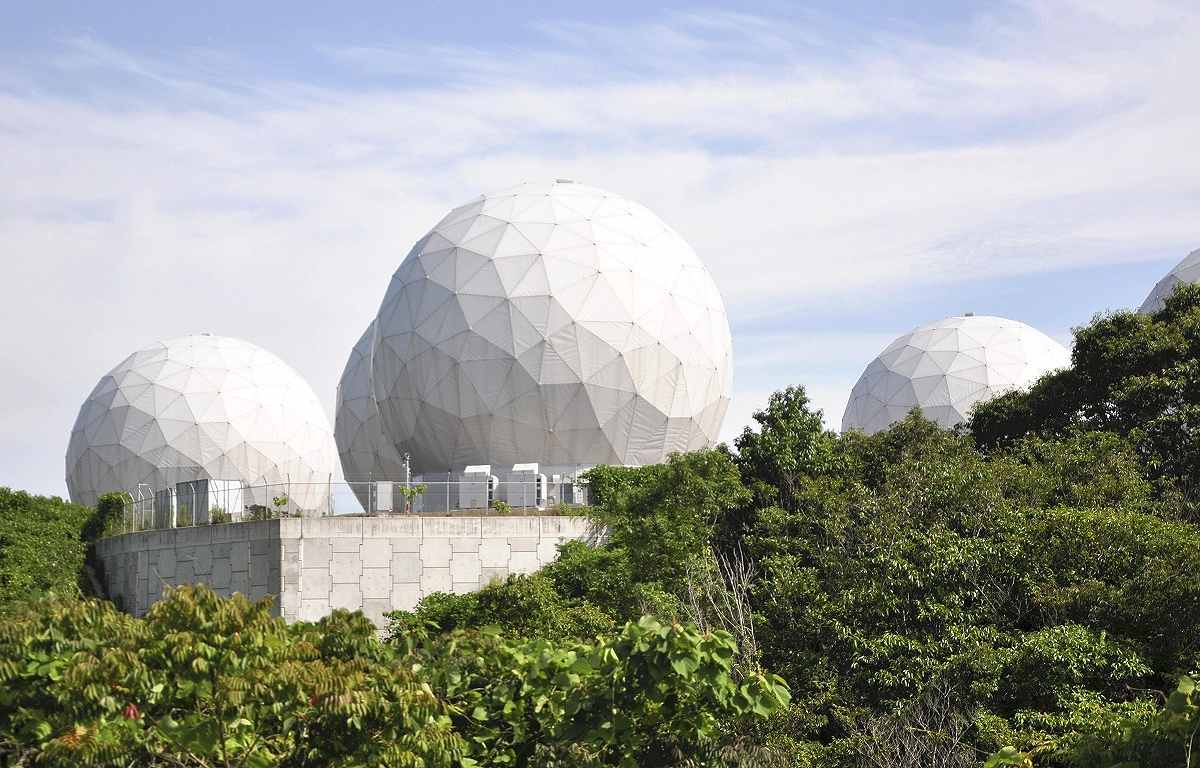
The Space Situational Awareness (SSA) radar, which the Air Self-Defense Force plans to put into operation this fiscal year, is seen in Sanyo-Onoda, Yamaguchi Prefecture, on June 21.
1:00 JST, July 14, 2024
In the 70 years since the Self-Defense Forces were established on July 1, 1954, Japan’s security environment has changed drastically, with the breakup of the Soviet Union and the rise of China. This is the third and final article in a series on the growing role of the SDF.
***
Along a national highway in Yamaguchi Prefecture, a group of giant white spheres look out over the surrounding forest.
They are Space Situational Awareness (SSA) radar installations of the Air Self-Defense Force (ASDF) to be used for monitoring satellites orbiting the Earth. Located in the city of Sanyo-Onoda, they are expected to be put into operation this fiscal year.
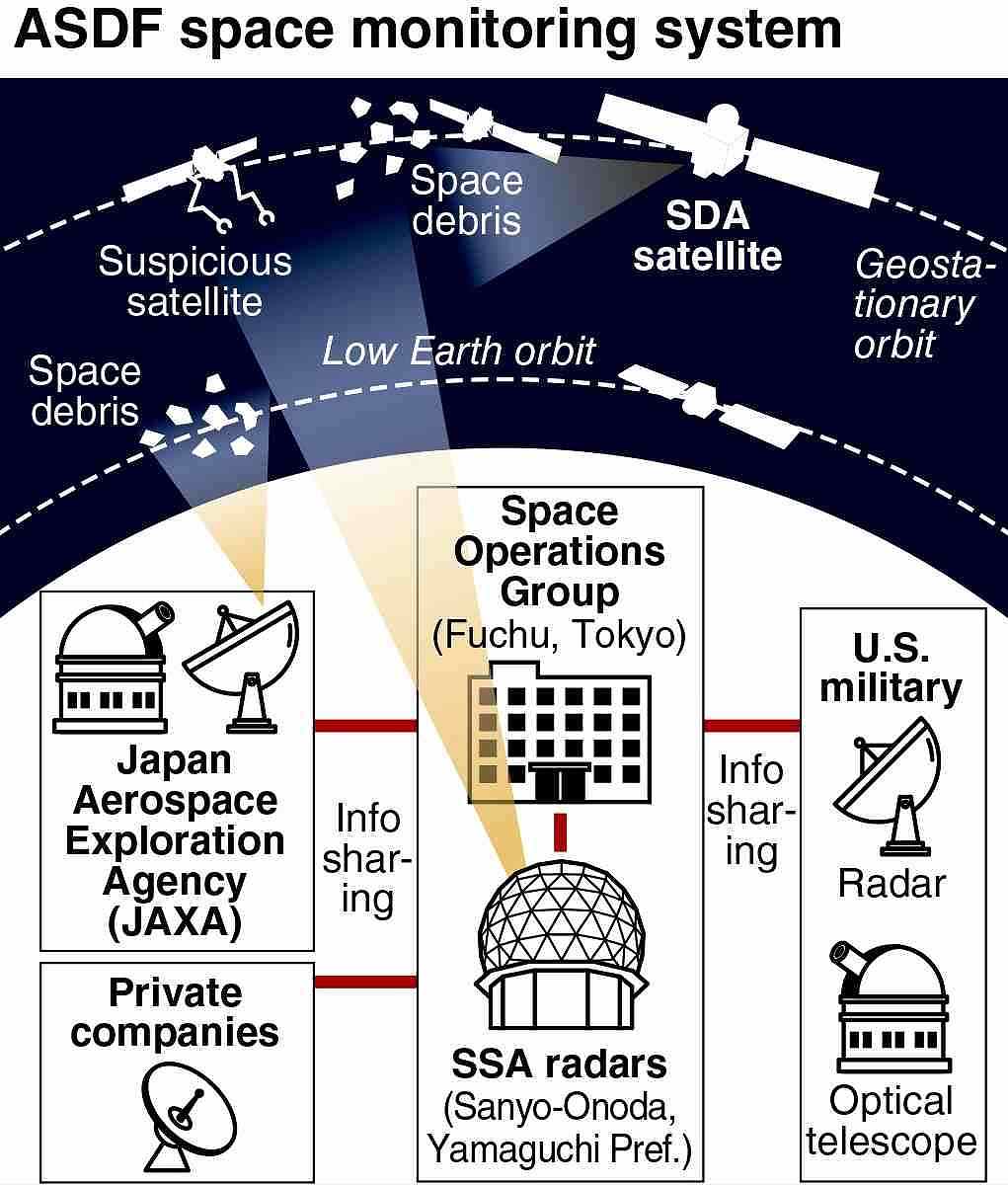
The radar installations will track satellites in geostationary orbit about 36,000 kilometers above the Earth, as well as space debris that could potentially collide with the satellites. It will also keep an eye out for “killer satellites” designed to attack those of other countries.
U.S. early-warning satellites use highly sensitive sensors to monitor heat sources on Earth. When one detects emissions from a missile launch, it immediately alerts the United States and Japan, allowing Aegis ships or other defense systems to prepare for interception.
Satellites support a wide range of functions, including communication relays, reconnaissance through image capture, and the Global Positioning System (GPS). If a Japanese or U.S. satellite is attacked by a killer satellite using a robotic arm or by jamming its signals, it could severely impact the operations of the Self-Defense Forces and affect the daily lives of citizens.
In 2020, the ASDF established its first space unit, the Space Operations Squadron, staffed with about 20 personnel. Two years later, it was elevated to become the Space Operations Group, which will be expanded to 320 personnel within this fiscal year.
In fiscal 2026, the government plans to launch a Space Domain Awareness (SDA) satellite to handle surveillance from space, and the ASDF will be renamed the “Aerospace” Self-Defense Force by fiscal year 2027.
Tests of satellite attacks
The expansion of the ASDF’s mission into space can be traced to countries like China enhancing their ability to interfere with other nations’ space systems.
China is advancing in the development of killer satellites and has been repeatedly conducting experiments to bring its satellites closer together.
At the end of 2019, China’s experimental SJ-17 satellite successfully approached a Chinese TV broadcast satellite in geostationary orbit. It repeatedly did the same thing with other satellites the year before and after, sometimes coming within a kilometer.
“Both Chinese and Russian satellites have approached Japanese satellites,” a senior Japanese government official said. The two countries have also conducted tests of demolishing satellites with missiles.
The National Security Strategy, which was revised in 2022, notes that Japan will aim to develop capabilities to disrupt the command, control, and communication systems of adversaries. The government will consider developing satellites capable of interfering with foreign military satellites in times of conflict.
Dual use of technologies
The ASDF’s Space Collaboration and Innovation Office is located on the 15th floor of a skyscraper in Tokyo’s Toranomon district. Two or three staff members wearing civilian clothes are stationed there full-time and exchange ideas with corporate representatives and others.
The office was established in October last year with the aim of using private-sector technology for defense purposes. In its first six months, the office had dealings with over 120 companies and organizations.
Companies have made a wide-range of proposals, such as for a system for detecting objects re-entering the atmosphere, which is useful for detecting ballistic missiles, or for technology on quantum cryptography communications, which enhances communication security. The ASDF has countered with ideas for demonstration tests using its facilities.
“There are countless companies with excellent technologies and ideas,” an ASDF member in charge said. “The discussions here will contribute to coming up with strategic concepts in the future.”
It is now difficult to separate technology in terms of civilian or defense use. In 2019, the Japan Aerospace Exploration Agency’s asteroid explorer Hayabusa2 successfully collected samples from beneath the surface of the asteroid Ryugu. The technology used to pierce the surface with a metal projectile shared traits with the military technology known as an explosively formed projectile (EFP).
The utilization of space by the SDF, as well as the dual application of technology for both civilian and defense purposes, was once a potentially contentious political issue. The 70-year history of the ASDF reflects the heightened tension in the security environment and a corresponding shift in public awareness.






Most Read
Popular articles in the past 24 hours
-
Inspection via Micro-Drones Begins at Fukushima No. 1 Nuclear Pla...
-
Japan's DPFP to Join Natl Council Considering Tax Cut Measures
-

Samurai Japan Beats Taiwan in its First World Baseball Classic Ga...
-

Excited Baseball Fans Gather at Tokyo Dome Ahead of Japan's Openi...
-

Shohei Ohtani Ignites Team Spirit for Samurai Japan's World Baseb...
-
Japan Govt Survey Finds Just 10% of Workers Want Working Hours to...
-
Heckling, Once a Fixture of Diet Debate in Japan, Abates in the F...
-
Japan Asked U.S. Not to Disadvantage Tokyo under New Tariff Rules
Popular articles in the past week
-
South Korea Tightens Rules on Foreigners Buying Homes in Seoul Me...
-

Ibaraki Pref.'s 1st Foreign Bus Driver Hired in Tsukuba
-
2 Unpublished Early Novellas by Japan's Kenzaburo Oe Discovered, ...
-
Strait of Hormuz Closure Shakes Markets; Prolonged Closure Could ...
-
Amid Strait of Hormuz Blockade, Shipping Companies Scramble to Ge...
-

Iran Situation: Japan Must Exert Diplomatic Efforts without Merel...
-
Measles Patient Visited Hospital in Bunkyo Ward, Tokyo, Metropoli...
-
North Korea Unveils Image of Kim Jong Un's Teenage Daughter Firi...
Popular articles in the past month
-

Producer Behind Pop Group XG Arrested for Cocaine Possession
-

Japan PM Takaichi’s Cabinet Resigns en Masse
-

Man Infected with Measles Reportedly Dined at Restaurant in Tokyo...
-

Videos Plagiarized, Reposted with False Subtitles Claiming ‘Ryuky...
-

Prudential Life Insurance Plans to Fully Compensate for Damages C...
-

Woman with Measles Visited Hospital in Tokyo Multiple Times Befor...
-

iPS Treatments Pass Key Milestone, but Broader Applications Far f...
-

Sanae Takaichi Elected Prime Minister of Japan; Keeps All Cabinet...
Top Articles in Society
-
Producer Behind Pop Group XG Arrested for Cocaine Possession
-
Man Infected with Measles Reportedly Dined at Restaurant in Tokyo Station
-
Woman with Measles Visited Hospital in Tokyo Multiple Times Before Being Diagnosed with Disease
-

Bus Carrying 40 Passengers Catches Fire on Chuo Expressway; All Evacuate Safely
-
Tokyo Skytree’s Elevator Stops, Trapping 20 People; All Rescued (Update 1)
JN ACCESS RANKING
-
Producer Behind Pop Group XG Arrested for Cocaine Possession
-
Japan PM Takaichi’s Cabinet Resigns en Masse
-
Man Infected with Measles Reportedly Dined at Restaurant in Tokyo Station
-
Videos Plagiarized, Reposted with False Subtitles Claiming ‘Ryukyu Belongs to China’; Anti-China False Information Also Posted in Japan
-
Prudential Life Insurance Plans to Fully Compensate for Damages Caused by Fraudulent Actions Without Waiting for Third-Party Committee Review