
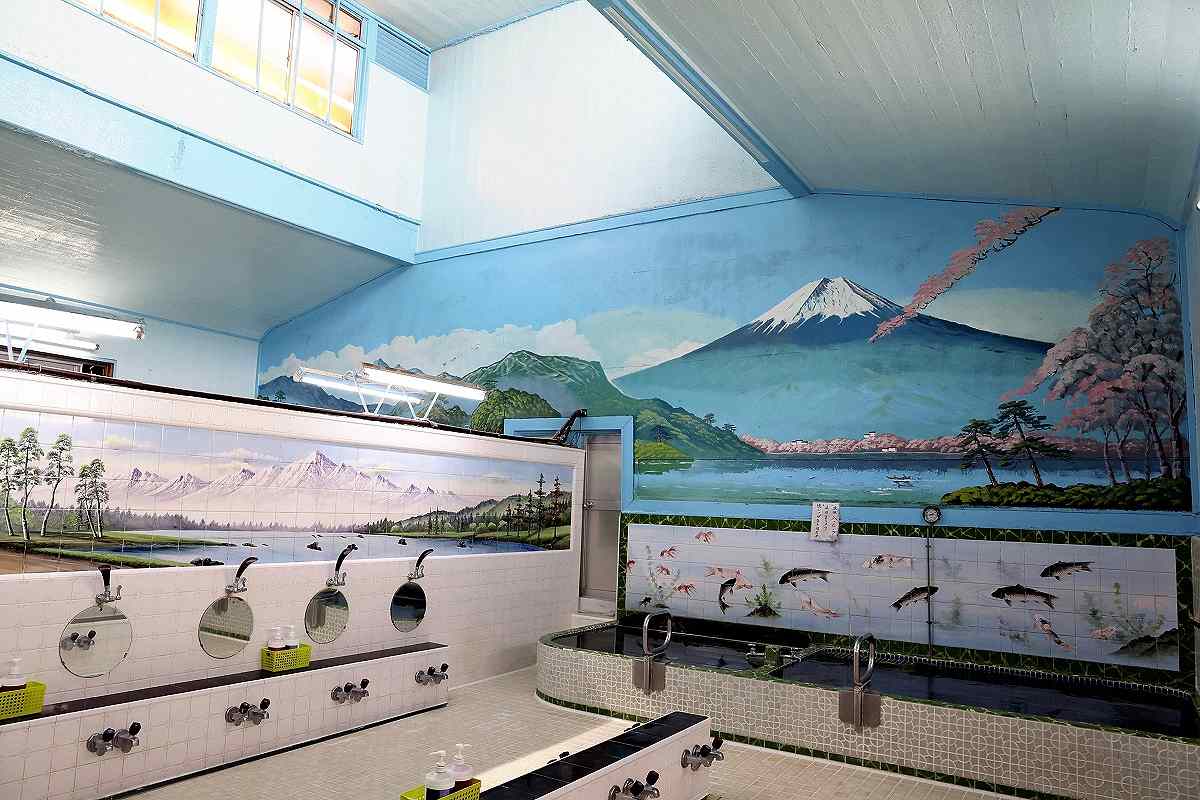
A large painting of Mt. Fuji is a popular feature of the Atami-yu public bathhouse in Shinjuku Ward, Tokyo.
1:00 JST, September 30, 2023
The Atami-yu public bathhouse in Shinjuku Ward, Tokyo, has been helping people unwind for more than 70 years.
The Kagurazaka-based facility was once a central part of the local kagai district, which served as a base for geisha entertainers.
Atami-yu features a gable roof, which was a common feature in sento — public bathhouses — during the Showa period (1926-1989).
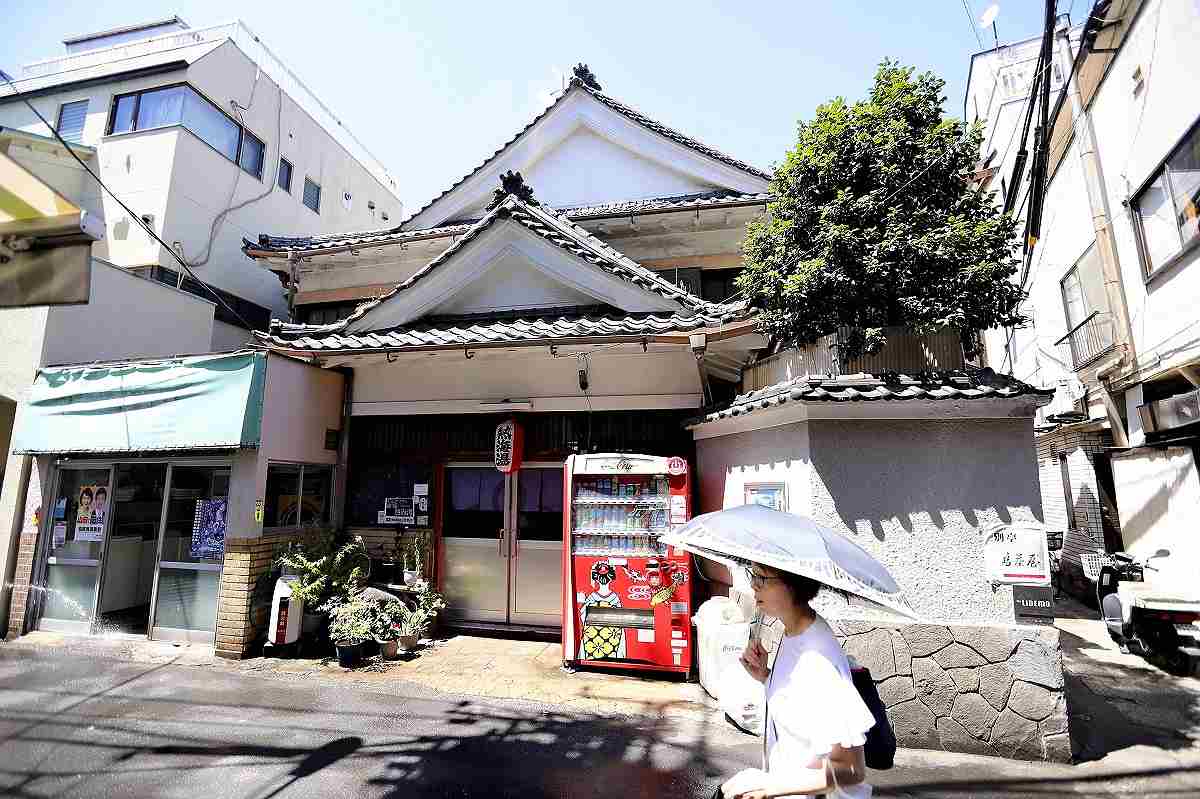
The building has a large tiled roof.
Upon passing through the noren curtains at the entrance, visitors remove their shoes and head toward the men’s or women’s changing rooms, which are separated by a 2-meter-high wall.
Patrons are greeted by the bathhouse’s second-generation owner Hiroshi Yoshida, 80, or his wife Akemi, 71, who sit at the bandai front desk when the facility opens at 2:45 p.m.
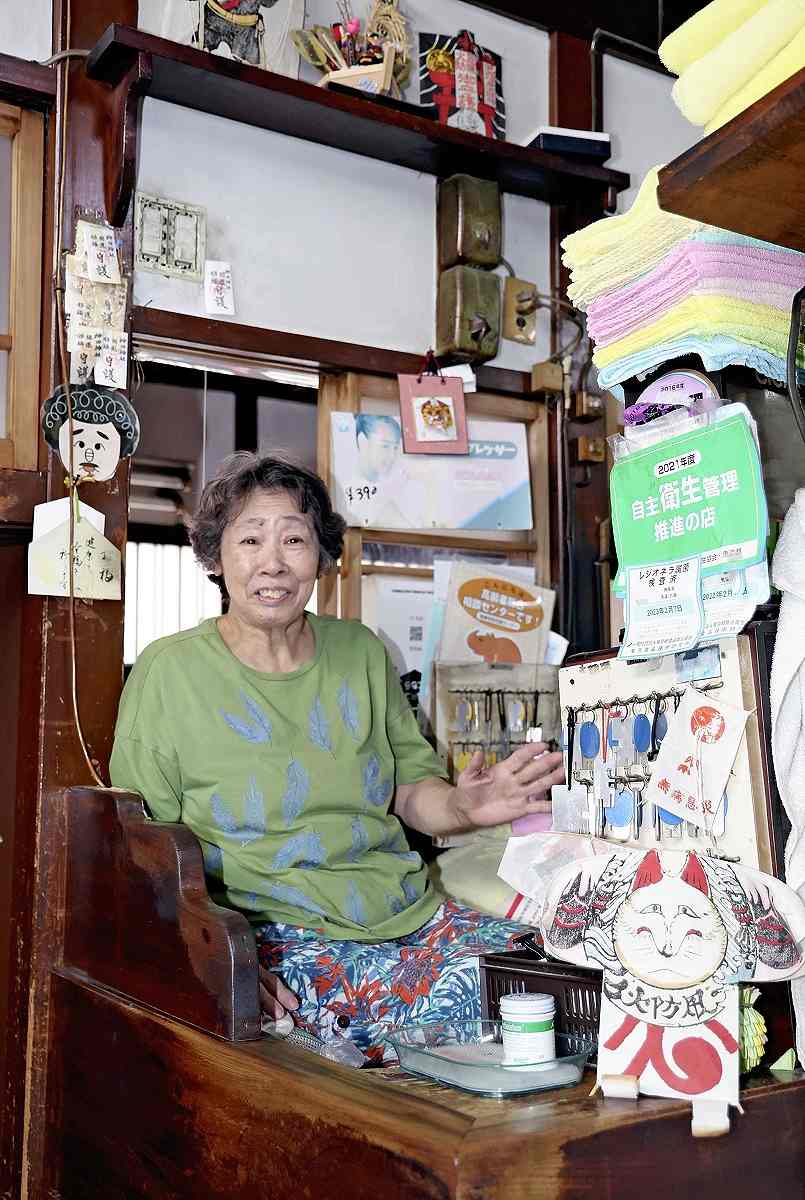
Akemi Yoshida welcomes customers at a bandai front desk.
When Atami-yu — named after a well-known hot spring resort in Shizuoka Prefecture — first started operating, Kagurazaka geisha would visit the bathhouse twice a day. They would take a bath before applying makeup for work and do so to remove their makeup after work. Locals, too, frequently patronized the bathhouse. However, around the time of the 1964 Tokyo Olympics, the facility began to see a decline in business, as more and more homes were outfitted with baths.
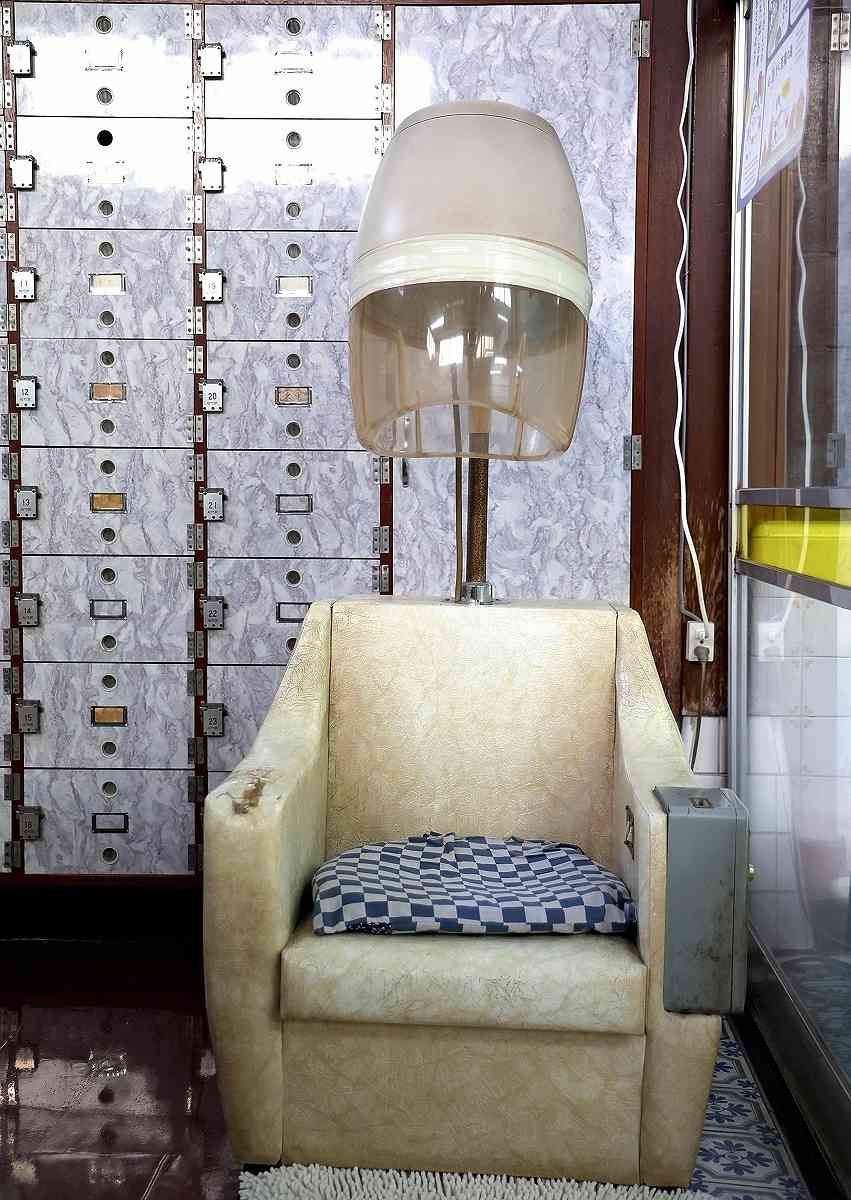
An old-fashioned hair dryer is seen in the women’s changing room.
Today, Atami-yu is frequented by local employees, students and overseas tourists, among others, while some people visit despite having bathtubs at home.
“I don’t ask people personal questions,” Akemi said with a smile. “Every day can be dramatic. Customers enjoy interacting with each other, but we have occasional trouble, too.”
Cypress wood is a main component of the building, which is characterized by a stately grid-style ceiling and thick beams. Cypress is said to be long-lasting and resistant to rot.
The building’s floors are polished to a shine, and while it is difficult to describe the facility as “spacious,” it is certainly comfortable.
“We carefully clean the changing rooms and bathrooms daily, so our guests feel good here,” Hiroshi said.
The temperature of the two bathtubs is tweaked according to the season, sitting at around 41 C and 42 C, respectively, during the summer months. A large painting of Mt. Fuji adorns one of the facility’s walls, giving rise to thoughts of both the past and the future for those relaxing in the baths’ welcoming waters.
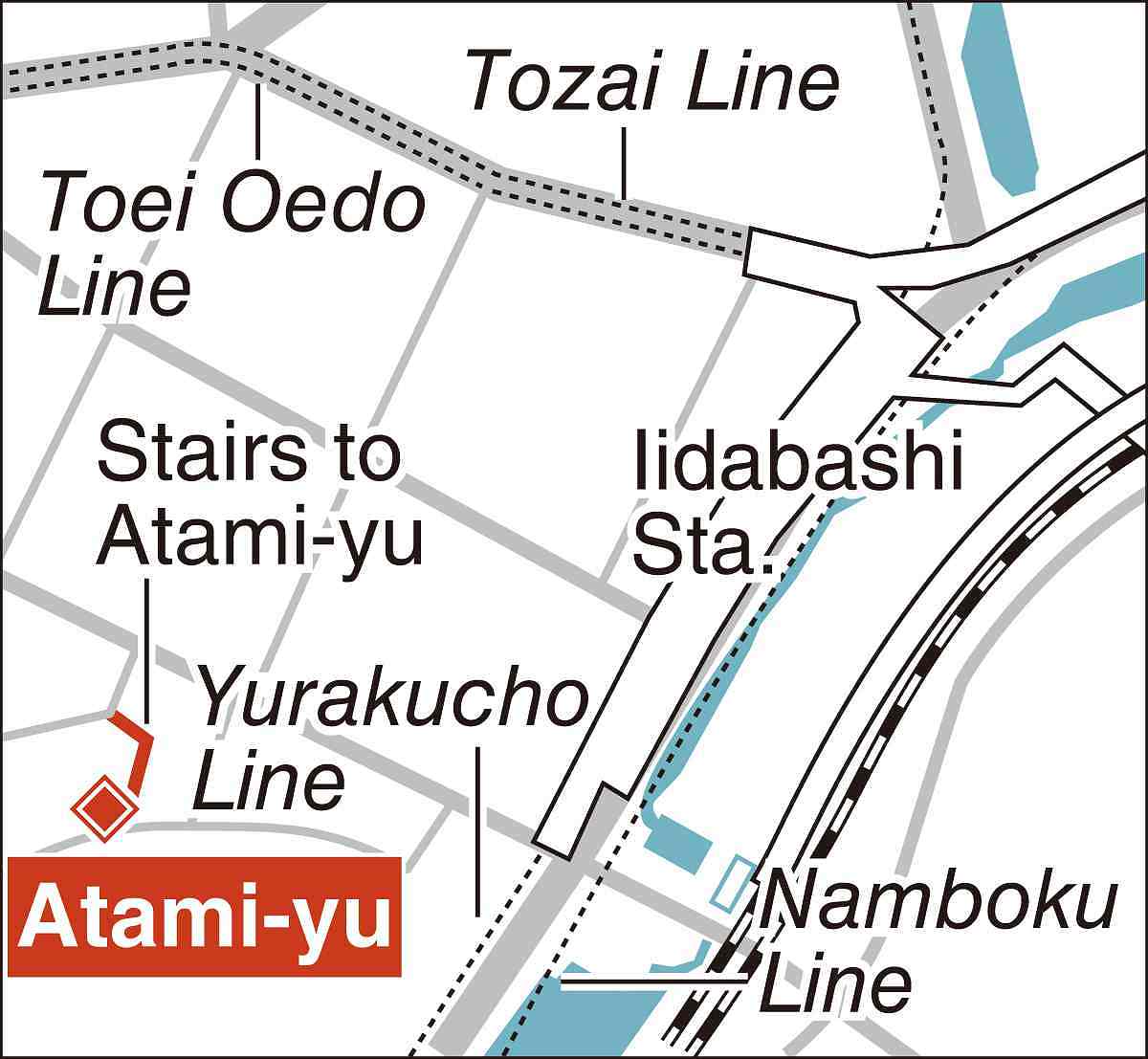
Atami-yu
Address: 3-6 Kagurazaka, Shinjuku Ward, Tokyo
Access: A 3-minute walk from Iidabashi Station on the Tokyo Metro Yurakucho and Namboku lines
Hours: 2:45 p.m. to midnight. Closed on Saturdays.
Fees: ¥520 for ages 12 and older; ¥200 for children ages 6 to 11; and ¥100 for children ages 5 or younger. Lockers can be rented for ¥500 per month.


Related Tags



Most Read
Popular articles in the past 24 hours
-
Tokyo Skytree's Elevator Stops, Trapping 20 People; All Rescued (...
-

China, India Tapping into Promising African Market; Beijing Annou...
-

Japan’s Major Real Estate Firms Expanding Overseas Businesses to ...
-

Ukrainian Ambassador Closely Watching Japan’s Revision of Defense...
-

Emperor Turns 66 Ahead of Disaster Milestones
-

Milano Cortina 2026: Sakamoto Serves as Flag Bearer; Japan Earns ...
-

Milano Cortina 2026: There Were Cheers across the Country, after ...
-
Tokyo Skytree to Close on Monday for Safety Checks after 20 Peopl...
Popular articles in the past week
-

Japan PM Takaichi’s Cabinet Resigns en Masse
-

Man Infected with Measles Reportedly Dined at Restaurant in Tokyo...
-

Sanae Takaichi Elected Prime Minister of Japan; Keeps All Cabinet...
-

Japan's Govt to Submit Road Map for Growth Strategy in March, PM ...
-

Bus Carrying 40 Passengers Catches Fire on Chuo Expressway; All E...
-

Milano Cortina 2026: Figure Skaters Riku Miura, Ryuichi Kihara Pa...
-

Japan, U.S. Name 3 Inaugural Investment Projects; Reached Agreeme...
-
U.S. Firm to Build Training Hub in Fukushima N-plant for Debris R...
Popular articles in the past month
-
Japan PM Takaichi’s Cabinet Resigns en Masse
-

Japan Institute to Use Domestic Commercial Optical Lattice Clock ...
-

Israeli Ambassador to Japan Speaks about Japan’s Role in the Reco...
-
Man Infected with Measles Reportedly Dined at Restaurant in Tokyo...
-

Videos Plagiarized, Reposted with False Subtitles Claiming ‘Ryuky...
-

Man Infected with Measles May Have Come in Contact with Many Peop...
-

Prudential Life Insurance Plans to Fully Compensate for Damages C...
-
Woman with Measles Visited Hospital in Tokyo Multiple Times Befor...
Top Articles in Features
-

Tokyo’s New Record-Breaking Fountain Named ‘Tokyo Aqua Symphony’
-
Sapporo Snow Festival Opens with 210 Snow and Ice Sculptures at 3 Venues in Hokkaido, Features Huge Dogu
-

Tourists Flock to Ice Dome Lodge at Resort in Hokkaido, Japan; Facility Invites Visitors to Sleep on Beds Made of Ice
-

High-Hydration Bread on the Rise, Seeing Increase in Specialty Shops, Recipe Searches
-
Heirs to Kyoto Talent: Craftsman Works to Keep Tradition of ‘Kinran’ Brocade Alive Through Initiatives, New Creations
JN ACCESS RANKING
-
Japan PM Takaichi’s Cabinet Resigns en Masse
-
Japan Institute to Use Domestic Commercial Optical Lattice Clock to Set Japan Standard Time
-
Israeli Ambassador to Japan Speaks about Japan’s Role in the Reconstruction of Gaza
-
Man Infected with Measles Reportedly Dined at Restaurant in Tokyo Station
-
Videos Plagiarized, Reposted with False Subtitles Claiming ‘Ryukyu Belongs to China’; Anti-China False Information Also Posted in Japan