
16:09 JST, April 6, 2023
A damaged Russian Soyuz MS-22 capsule landed back on Earth on March 28, three months after coolant began leaking from the craft while it was docked at the International Space Station (ISS).
The module completed the almost two-hour return from the ISS without a crew, landing in the Kazakh steppe on the afternoon of March 28, a few hundred kilometers from the Baikonur cosmodrome, home to Russia’s space launches.
A significant coolant leak was discovered in the capsule last December — caused by a 0.8-millimeter hole in its outer skin.
A tiny meteorite is likely to have pierced the structure while it was docked, experts said. Images captured from the exterior of the ISS showed coolant fluid spewing into space, while Roscosmos said temperatures at one point rose to 30 C inside the capsule.
The leaks prompted Roscosmos and NASA to rearrange their schedules and postpone space walks.
Russia sent a back-up capsule — the MS-23 — to the ISS in February and decided to bring the damaged MS-22 back to Earth without a crew.
The Two Russian cosmonauts and a U.S. astronaut who were due to return to Earth in March will now stay on the ISS until September.
Roscosmos said the capsule returned on March 28 with 218 kilograms of cargo, including the results of scientific experiments and equipment from the station that would be analyzed on Earth or reused in future missions.
Washington and Moscow have maintained cooperation in space despite relations hitting their lowest in decades, with astronauts stationed together at the ISS, and also ferried back and forth jointly.
Russia has said it will quit the ISS and launch its own independent space station at some time in the future.





Most Read
Popular articles in the past 24 hours
-
Business Hotels Expanding into Regional Areas in Japan, Aiming to...
-
Milano Cortina 2026: Japan Sees Leap in Olympic Performance Throu...
-

6 Injured at Naked Festival in Japan’s Okayama Prefecture; Police...
-

Fiji Defense Minister Hopes Japan Will Support Stabilization of P...
-

Milano Cortina 2026: Malinin Highlights Dangers of Social Media i...
-

Space One Delays Launch of No. 3 Kairos Rocket; Company to Announ...
-

3rd Japan Pacific Islands Defense Dialogue to Begin in Tokyo on S...
-

Reciprocal Tariffs Ruled Illegal: Judiciary Would Not Tolerate Pr...
Popular articles in the past week
-

Japan PM Takaichi’s Cabinet Resigns en Masse
-

Man Infected with Measles Reportedly Dined at Restaurant in Tokyo...
-

Sanae Takaichi Elected Prime Minister of Japan; Keeps All Cabinet...
-

Japan's Govt to Submit Road Map for Growth Strategy in March, PM ...
-

Bus Carrying 40 Passengers Catches Fire on Chuo Expressway; All E...
-

Milano Cortina 2026: Figure Skaters Riku Miura, Ryuichi Kihara Pa...
-

Japan, U.S. Name 3 Inaugural Investment Projects; Reached Agreeme...
-

U.S. Firm to Build Training Hub in Fukushima N-plant for Debris R...
Popular articles in the past month
-
Japan PM Takaichi’s Cabinet Resigns en Masse
-

Japan Institute to Use Domestic Commercial Optical Lattice Clock ...
-

Israeli Ambassador to Japan Speaks about Japan’s Role in the Reco...
-
Man Infected with Measles Reportedly Dined at Restaurant in Tokyo...
-

Videos Plagiarized, Reposted with False Subtitles Claiming ‘Ryuky...
-

Man Infected with Measles May Have Come in Contact with Many Peop...
-

Prudential Life Insurance Plans to Fully Compensate for Damages C...
-

Woman with Measles Visited Hospital in Tokyo Multiple Times Befor...
Top Articles in Science & Nature
-
Japan Institute to Use Domestic Commercial Optical Lattice Clock to Set Japan Standard Time
-
Japan to Face Shortfall of 3.39 Million Workers in AI, Robotics in 2040; Clerical Workers Seen to Be in Surplus
-
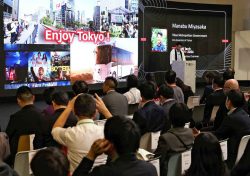
Record 700 Startups to Gather at SusHi Tech Tokyo in April; Event Will Center on Themes Like Artificial Intelligence and Robotics
-

iPS Treatments Pass Key Milestone, but Broader Applications Far from Guaranteed
-
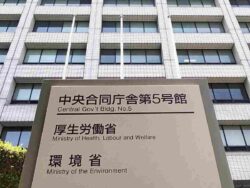
iPS Cell Products for Parkinson’s, Heart Disease OK’d for Commercialization by Japan Health Ministry Panel
JN ACCESS RANKING
-
Japan PM Takaichi’s Cabinet Resigns en Masse
-
Japan Institute to Use Domestic Commercial Optical Lattice Clock to Set Japan Standard Time
-
Israeli Ambassador to Japan Speaks about Japan’s Role in the Reconstruction of Gaza
-
Man Infected with Measles Reportedly Dined at Restaurant in Tokyo Station
-
Videos Plagiarized, Reposted with False Subtitles Claiming ‘Ryukyu Belongs to China’; Anti-China False Information Also Posted in Japan