
Defendant in Killing of Former Prime Minister Shinzo Abe Felt ‘Troubled’ by Abe’s Video Message to Unification Church Group
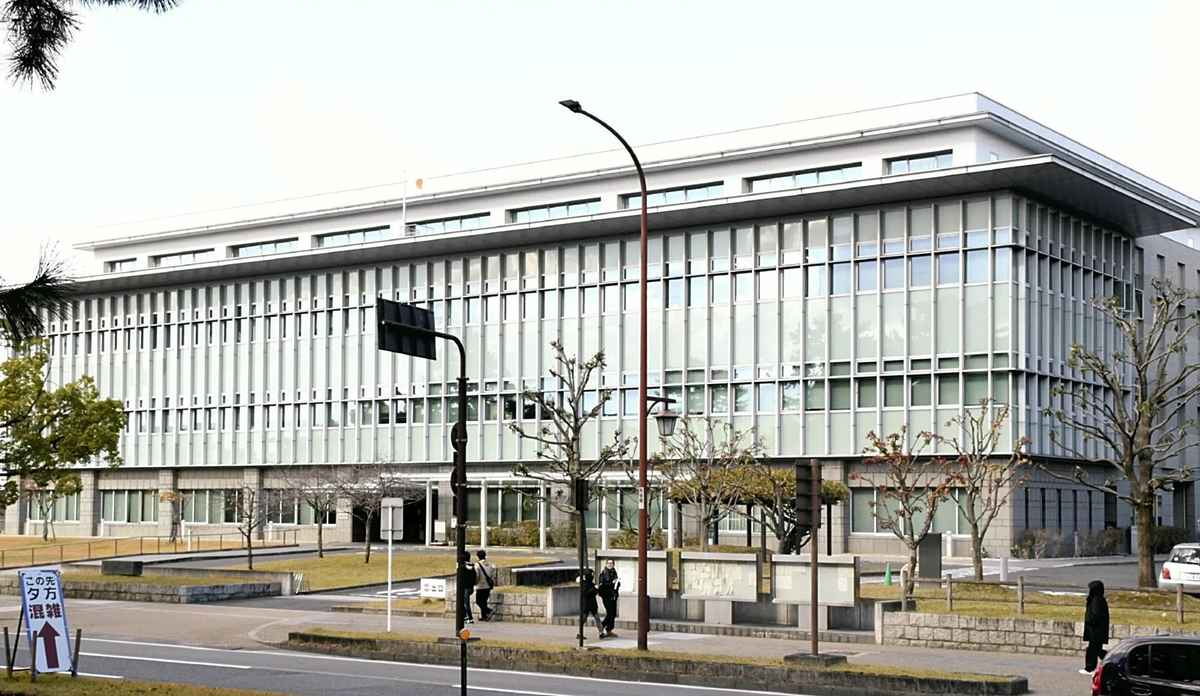
Nara district court
17:40 JST, November 26, 2025
Tetsuya Yamagami, 45, who is on trial over the killing of former Prime Minister Shinzo Abe in Nara City in July 2022, testified in Tuesday’s questioning in court that he felt a sense of crisis about a video message that Abe sent to an organization related to the Family Federation for World Peace and Unification, a religious organization also known as the Unification Church.
Yamagami, who has pleaded guilty to shooting Abe to death while the former prime minister was making an election campaign speech, has been on trial for murder and other charges. The 11th court proceeding in his case was held in the Nara District Court. It was the second session to involve questioning of the defendant.
Regarding the video message Abe sent to the organization in 2021, Yamagami said that he felt “hopelessness and a sense of crisis. I was extremely frustrated and could never accept it.”
He also revealed that it was in July 2022 when he decided to target Abe, just before the incident occurred.
Suicide of elder brother
Yamagami appeared in court for his questioning on Tuesday dressed as he had for his first session of questioning on Nov. 20, in a black sweatshirt and beige pants.
On Tuesday, both his defense lawyer and the prosecutor asked Yamagami questions. Yamagami spoke in a low voice about his elder brother’s suicide and his feelings before the killing incident.
Yamagami said his elder brother held antipathy toward their mother, who had not stopped donating money to the Unification Church, and that the brother committed suicide in 2015 by jumping from a high place.
Yamagami said that when he saw his brother’s dead body at a police station, he felt strongly shocked thinking, “I could not save him.”
Yamagami also revealed that he coldly shunned his brother in a telephone conversation before the brother committed suicide.
Remembering a T-shirt stained with a great deal of his brother’s blood, Yamagami said that it “symbolizes my sin.”
Yamagami thought their mother believed that his brother’s soul was happily resting in heaven thanks to her monetary donations, and he felt “angrier than ever before.”
Unable to carry out attacks
Yamagami also gave details about his unrealized plans to attack senior members of the Unification Church.
Around 2005, when Yamagami himself attempted suicide, he began planning to attack senior members of the church. Around 2006 or 2007 when a senior member visited Osaka, Yamagami said he went near a site of the visit carrying a knife and tear gas spray.
When the church held an event at the Saitama Super Arena in Saitama City in 2018, Yamagami planned to attack members there, but he gave up on the plan thinking, “It was reckless because the venue is so large.”
Just after that, Yamagami went to a gym in Okayama Prefecture that a senior member of the Unification Church visited, carrying a knife and tear gas spray, but he did not carry out the planned attack after seeing the security conditions.
In October 2019, Yamagami again planned to attack the Unification Church by using handmade Molotov cocktails. Though he went to an airport in Aichi Prefecture, he could not even find the target and abandoned the Molotov cocktails in the sea.
From around 2021, Yamagami began considering an attack using a handmade gun. He explained why by saying he felt “psychological resistance to stabbing with a knife. If I could keep a distance from the target, the psychological burden would disappear.”
Changing target
Later, Yamagami gradually changed his target from Unification Church members to Abe. He said he heard followers of the church saying that Abe “is on our side.”
Yamagami searched for information on the internet and came to believe that ties with the Unification Church had continued since Abe’s father Shintaro Abe and his grandfather Nobusuke Kishi were active politicians.
Yamagami felt that many politicians the second Abe administration (2012-20) had participated in Unification Church events. Yamagami said he regarded the situation as “not good.”
In addition, about Abe’s video message in which he showed a respect to senior members of the former Unification Church, Yamagami said: “Because he served as prime minister for very long time, I thought the religious organization would be legitimated in society. For my side having suffered from damages caused by the religious organization, I felt that I was more troubled than angry.”
About the handmade gun used to shoot Abe, Yamagami said that he went to a mountain in Nara to test-fire it on more than 10 occasions and that he test-fired the gun 25 to 30 times in total.
He also said that he began targeting Abe in July 2022. Neither his lawyer nor the prosecutor asked questions about why he switched his target to Abe.
According to sources familiar with the trial, one lay judge’s physical condition became problematic and the lay judge was replaced by an alternate member from Tuesday. Questioning of the defendant will continue on Dec. 2-4.
At the first session of the trial, Yamagami pleaded guilty to the murder charge.
From now on in the trial, the focus of attention is expected to be how the defendant’s unhappy personal background affected the incident and how that factor will be reflected in this sentencing.






Most Read
Popular articles in the past 24 hours
-

Ransomware Attacks Hitting Japan's Small, Midsize Firms
-
German Journalist Traces Footsteps of Great-Grandfather Who Was P...
-

10 Foreign Tourists Sustain Injuries After Fire at Capsule Hotel ...
-

World Baseball Classic: Venezuela Beats Japan in Nail-biting Back...
-

Rapid Services Resume on JR Chuo Line; Suspension Caused by Accid...
-

Rapid Services on JR Chuo Line Suspended; Accident at Kokubunji S...
-

World Baseball Classic: Venezuela Beats Japan in Back-and-Forth Q...
-

World Baseball Classic: Red Sox’s Abreu Hits 3-run Homer, Giving ...
Popular articles in the past week
-

Japan Figure Skating Legend Yuzuru Hanyu Is Proud Disaster Surviv...
-
15 Measles Patients Confirmed in Tokyo in Past 6 Days; 1 May Have...
-
Massive Sewer Pipe Found Jutting Out of Highway in Osaka
-
Japan Govt to Tighten Requirements to Receive Permanent Residency...
-
Power Outage Forces About 980 Passengers in Yokohama to Walk to T...
-
JR Tokai Breaks Ground on Yamanashi Maglev Station; Will Be Part ...
-

Parents in Japan to Get Instagram Notifications When Teens Repeat...
-
'World's Oldest Bio-Business' Is Japan's Seed Koji Retailing, Mol...
Popular articles in the past month
-

Producer Behind Pop Group XG Arrested for Cocaine Possession
-

Japan PM Takaichi’s Cabinet Resigns en Masse
-

Man Infected with Measles Reportedly Dined at Restaurant in Tokyo...
-
Japan Figure Skating Legend Yuzuru Hanyu Is Proud Disaster Surviv...
-

iPS Treatments Pass Key Milestone, but Broader Applications Far f...
-

Sanae Takaichi Elected Prime Minister of Japan; Keeps All Cabinet...
-

South Korea Tightens Rules on Foreigners Buying Homes in Seoul Me...
-

Nepal Bus Crash Kills 19 People, Injures 25 Including One Japanes...
Top Articles in Society
-
Producer Behind Pop Group XG Arrested for Cocaine Possession
-
Man Infected with Measles Reportedly Dined at Restaurant in Tokyo Station
-
15 Measles Patients Confirmed in Tokyo in Past 6 Days; 1 May Have Come into Contact with Many in Shibuya
-

Bus Carrying 40 Passengers Catches Fire on Chuo Expressway; All Evacuate Safely
-

Ibaraki Pref.’s 1st Foreign Bus Driver Hired in Tsukuba
JN ACCESS RANKING
-
Producer Behind Pop Group XG Arrested for Cocaine Possession
-
Japan PM Takaichi’s Cabinet Resigns en Masse
-
Man Infected with Measles Reportedly Dined at Restaurant in Tokyo Station
-
Japan Figure Skating Legend Yuzuru Hanyu Is Proud Disaster Survivor and Gold Medalist, Vows to Continue Support Efforts
-
iPS Treatments Pass Key Milestone, but Broader Applications Far from Guaranteed