
2025 Expo Osaka: Digitally Re-Created Hiroshima Artifacts Displayed at Expo; Artists’ Sculptures Link Past Tragedy to Vision for Future
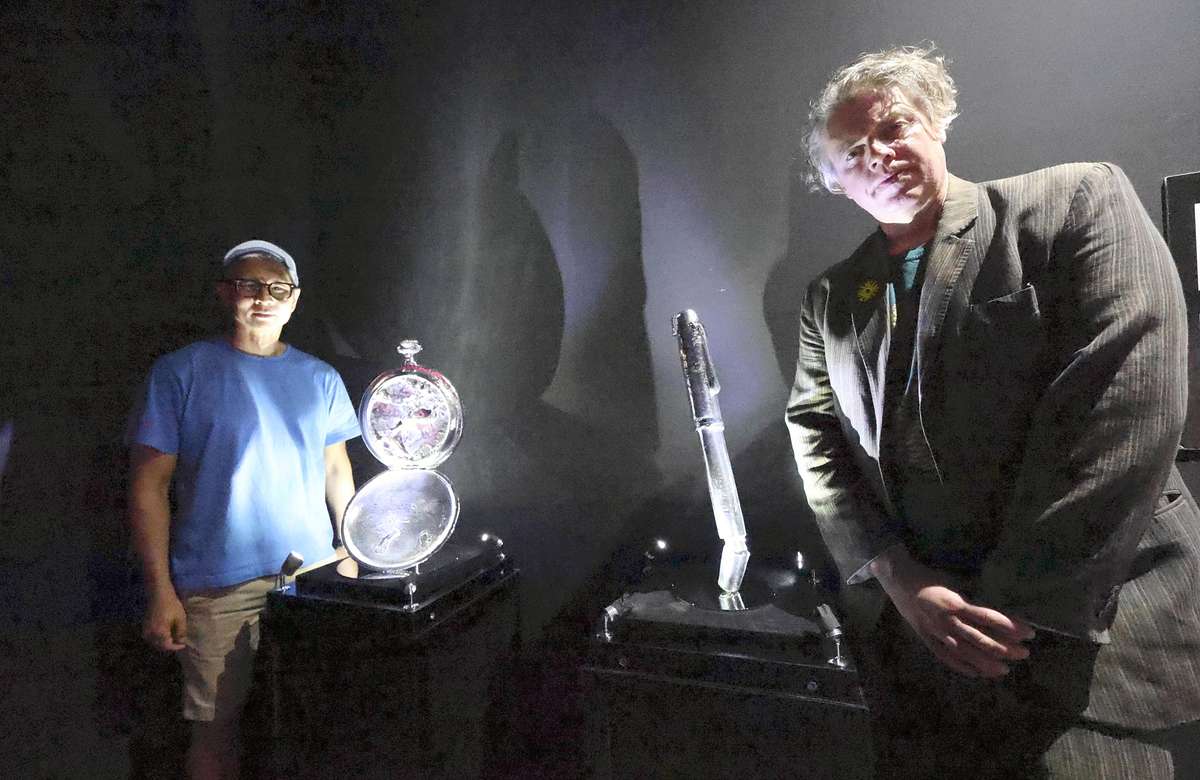
Akira Fujimoto, left, and Cannon Hersey stand by their artwork at the 2025 Osaka–Kansai Expo in Konohana Ward, Osaka, on Tuesday.
17:40 JST, July 20, 2025
Digitally crafted re-creations of items that belonged to victims of the Hiroshima atomic bombing are on display at the 2025 Osaka–Kansai Expo.
A pocket watch 30 centimeters wide, 30 centimeters deep and 60 centimeters high, and a fountain pen 20 centimeters wide, 20 centimeters deep and 60 centimeters high, were created by New York–based artist Cannon Hersey, 48, and Tokyo-based artist Akira Fujimoto, 49. Hersey is the grandson of Pulitzer Prize-winning author John Hersey, whose 1946 book “Hiroshima” revealed the devastation to the world.
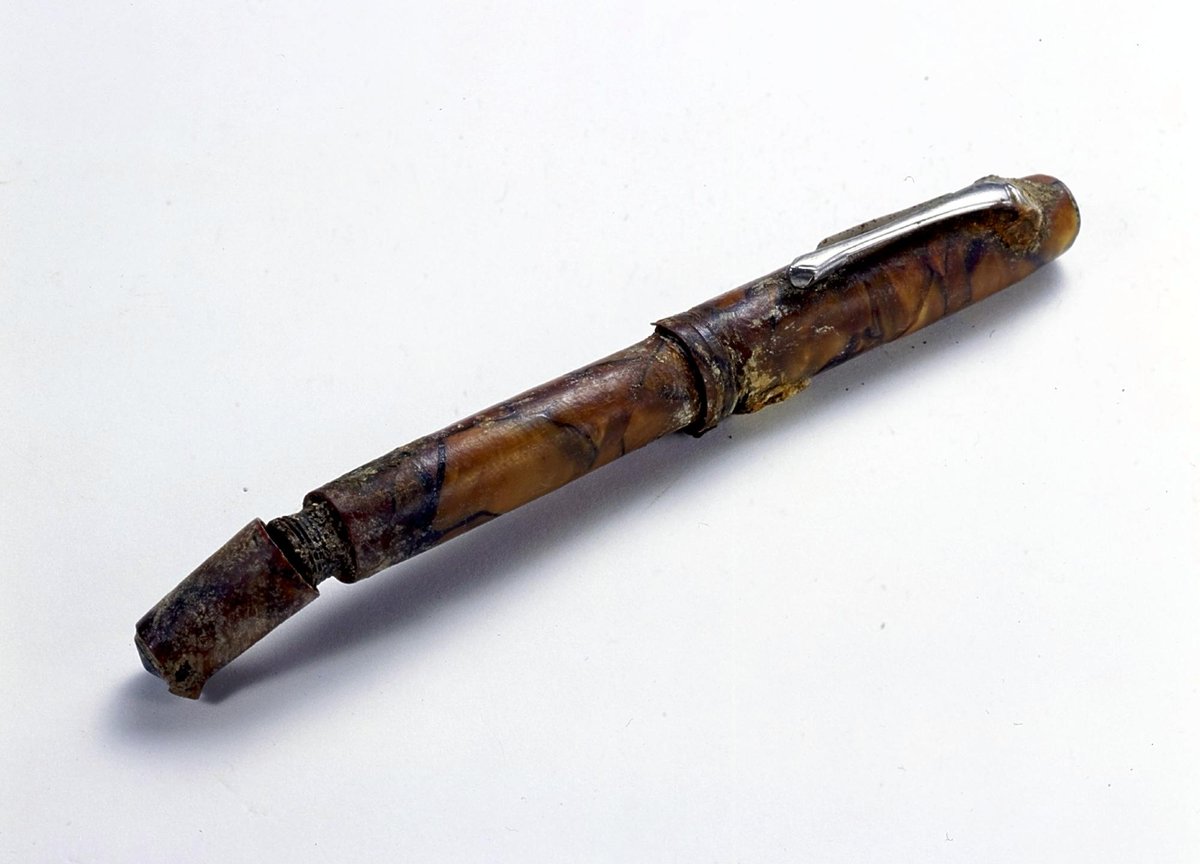
Owner unknown, fountain pen
Hersey and Fujimoto believe that the Expo’s vision of the future cannot be separated from the past, and they hope the installation will help keep memories of the bombing alive.
Since 2019, the pair have produced artwork using 3-D data from artifacts held by the Hiroshima Peace Memorial Museum. Pasona Group Inc. proposed a new commission last autumn for its pavilion at the Expo, and Hersey accepted, saying it would be meaningful to exhibit at an event visited by so many people.
The artifacts were photographed at high resolution early this year, and 3D data were used in a Toyama Prefecture studio to craft the sculptures. Aluminum casts made from 3D-printed molds were hand-polished to reproduce fine details, and each piece was enlarged for easier viewing.
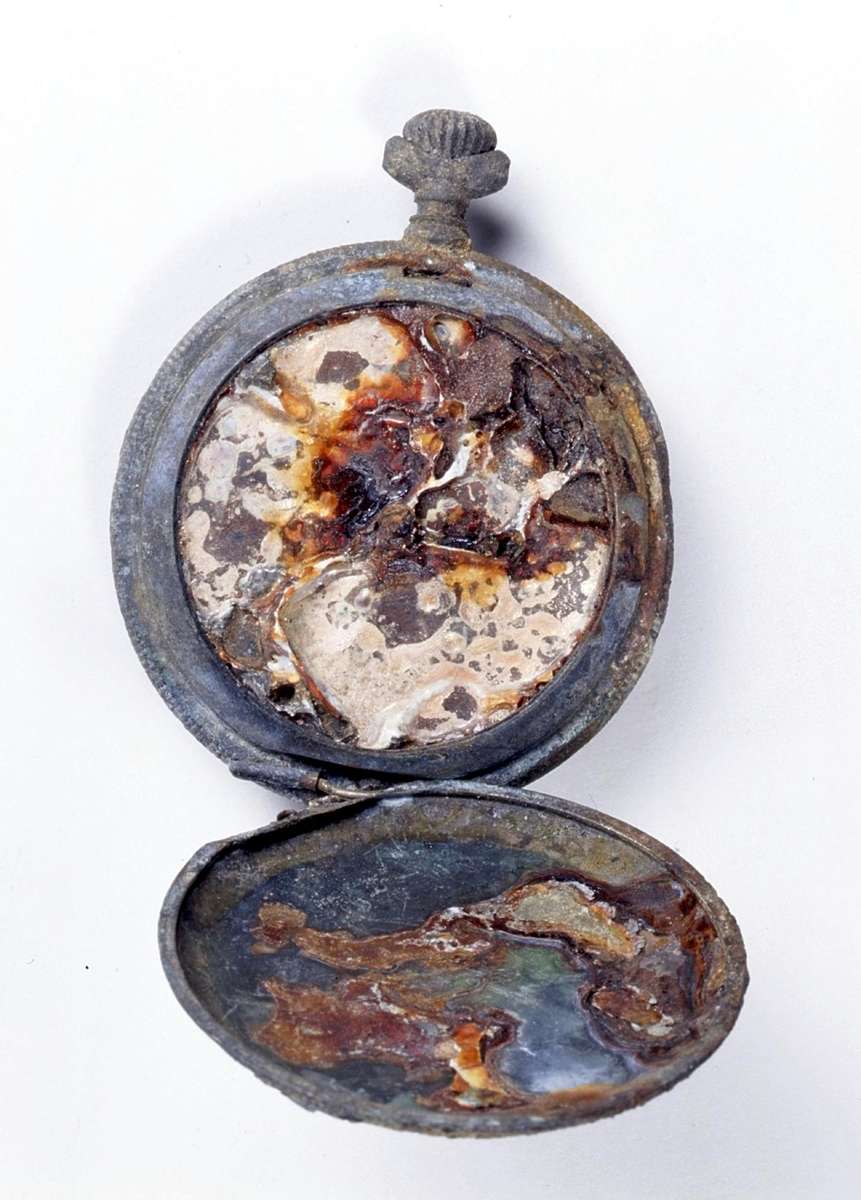
Owner unknown, pocket watch
The pocket watch’s hands are frozen at 8:15 a.m. — the moment the bomb was dropped — and its dial is melted inward. The fountain pen, discovered in Noboricho near the hypocenter, has a snapped nib, vividly conveying the force of the blast.
Fujimoto chose the pocket watch because “the atomic bombing can be said to have stopped the flow of time; by seeing the hands fixed at 8:15, people can sense the time that was lost.”
Hersey selected the fountain pen as a symbol capable of influencing society.
The artists visited the Pasona pavilion for the first time on Tuesday. Hersey remarked that without understanding the past, a better future cannot be created.
“Visitors from all over the world will come to the Expo,” said Yoshifumi Ishida, director of the Hiroshima Peace Memorial Museum. “These highly precise works give people a meaningful opportunity to consider and empathize with the damage caused by the atomic bomb.”
After the Expo ends in October, the sculptures will be exhibited in Hiroshima City. The Pasona pavilion — whose displays also include life-science innovations such as sheet-shaped cardiac muscle grown from iPS cells — accepts advance reservations, though visitors may also enter by lining up on-site.


Related Tags





Most Read
Popular articles in the past 24 hours
-
‘King Kazu’ Discusses His Connection to Fukushima
-
JR Tokai Breaks Ground on Yamanashi Maglev Station; Will Be Part ...
-
The Japan News / Weekly Edition (3/13-3/19)
-

White House Takes First Step toward Permanent Fix for Illegal Tar...
-

Honda Expects Up to 690 B. Yen in Net Loss for FY 2025
-
Japan Big Firms’ Biz Sentiment Remains Positive in Jan.-March
-

South Korea, Japan Finance Ministers to Hold Bilateral Meeting on...
-
Raise Interest Rate, Stop Yen’s Fall to Stabilize Prices
Popular articles in the past week
-

Japan Figure Skating Legend Yuzuru Hanyu Is Proud Disaster Surviv...
-

Nippon Life Insurance's U.S. Arm Sues OpenAI Over Legal Assistanc...
-
Govt to Utilize ODA for Ensuring Economic Security; Securing Ener...
-
Massive Sewer Pipe Found Jutting Out of Highway in Osaka
-
Beckoning Cats Get Makeover to Fit Modern Lifestyles with Sleek D...
-
Japan Govt Survey Finds Just 10% of Workers Want Working Hours to...
-
Japan's 2nd Round of U.S. Investments May Be Worth Over $100 Bill...
-
Japan Govt to Tighten Requirements to Receive Permanent Residency...
Popular articles in the past month
-

Producer Behind Pop Group XG Arrested for Cocaine Possession
-

Japan PM Takaichi’s Cabinet Resigns en Masse
-

Man Infected with Measles Reportedly Dined at Restaurant in Tokyo...
-

Videos Plagiarized, Reposted with False Subtitles Claiming ‘Ryuky...
-
Japan Figure Skating Legend Yuzuru Hanyu Is Proud Disaster Surviv...
-

iPS Treatments Pass Key Milestone, but Broader Applications Far f...
-

Sanae Takaichi Elected Prime Minister of Japan; Keeps All Cabinet...
-

Nepal Bus Crash Kills 19 People, Injures 25 Including One Japanes...
Top Articles in Society
-
Producer Behind Pop Group XG Arrested for Cocaine Possession
-
Man Infected with Measles Reportedly Dined at Restaurant in Tokyo Station
-

Bus Carrying 40 Passengers Catches Fire on Chuo Expressway; All Evacuate Safely
-

Ibaraki Pref.’s 1st Foreign Bus Driver Hired in Tsukuba
-
Tokyo Skytree’s Elevator Stops, Trapping 20 People; All Rescued (Update 1)
JN ACCESS RANKING
-
Producer Behind Pop Group XG Arrested for Cocaine Possession
-
Japan PM Takaichi’s Cabinet Resigns en Masse
-
Man Infected with Measles Reportedly Dined at Restaurant in Tokyo Station
-
Videos Plagiarized, Reposted with False Subtitles Claiming ‘Ryukyu Belongs to China’; Anti-China False Information Also Posted in Japan
-
Japan Figure Skating Legend Yuzuru Hanyu Is Proud Disaster Survivor and Gold Medalist, Vows to Continue Support Efforts