
Japan to Continue Urging China to Lift Fishery Ban; Prepared for Talks Over Treated Water to Be Prolonged
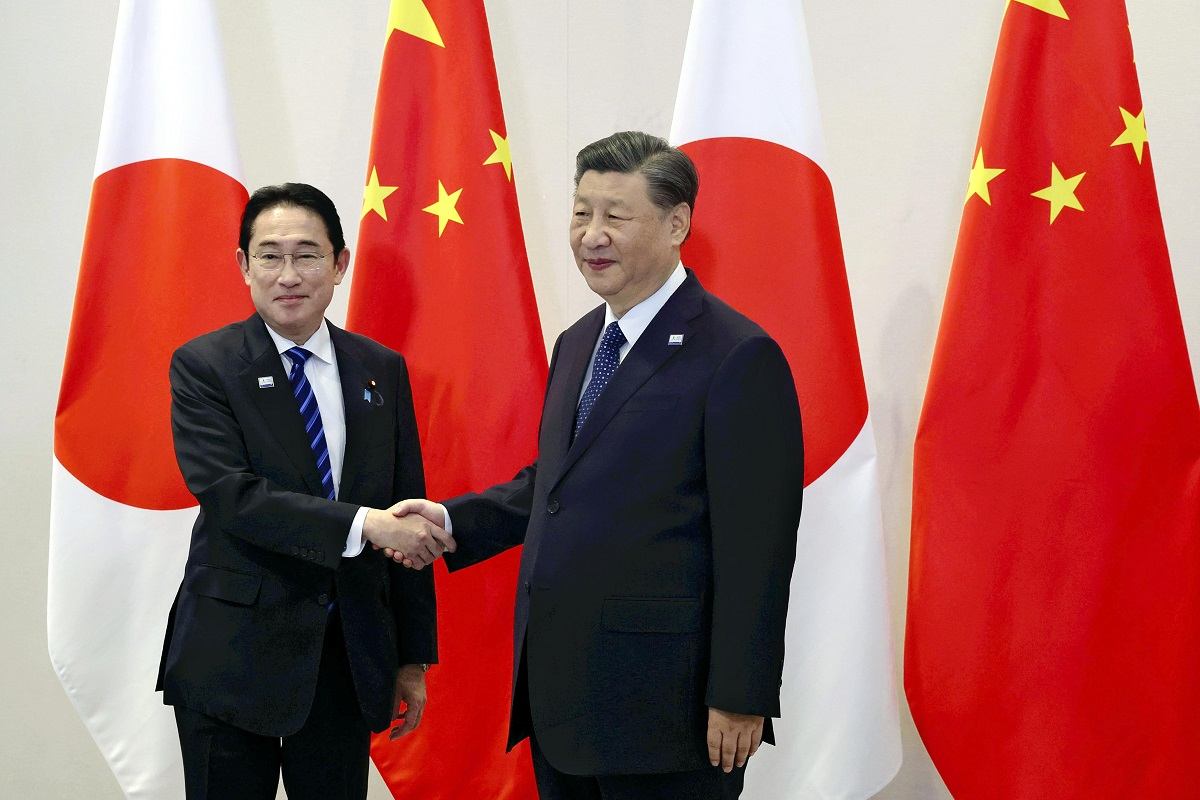
Prime Minister Fumio Kishida, left, and Chinese President Xi Jinping shake hands at the beginning of the Japan-China summit in San Francisco in November.
21:00 JST, February 25, 2024
The Japanese government intends to continue urging China to lift its ban on imports of Japanese fisheries products, while monitoring the progress of talks between Japanese and Chinese experts on the release of treated water from the Fukushima No. 1 nuclear power plant.
Since there is little prospect that China will soften its stance any time soon, Japan is preparing for the discussions to be prolonged as it continues efforts to provide thorough explanations to other countries.
The talks were realized at the request of Prime Minister Fumio Kishida during the Japan-China summit in November. The first meeting was held online in January and attended by representatives from Tokyo Electric Power Company Holdings, Inc. and government officials from both countries, in addition to experts.
According to Tokyo, dialogues between experts from both countries had already taken place before that. The meeting in January had both Tokyo and Beijing expanding its participants.
Although there were no signs of compromise on issues such as how to monitor treated water, Japan is focusing on China’s willingness to engage in dialogue. Until recently, China was all out in protesting the release of the water, but Japan has seen possible signs of change. When Beijing had a director-general-level meeting with Tokyo on Feb. 2, it maintained a strict stance but also announced that both sides agreed to continue communicating.
In response to China’s ban on Japanese fisheries products, some within the ruling Liberal Democratic Party and other officials initially called for filing a lawsuit with the World Trade Organization. However, the government “deemed it would be better to continue dialogues for the time being than to resort to excessive confrontation,” a senior official said.
As the talks continue, Beijing may ask Tokyo for concessions to save face. However, Tokyo does not intend to meet demands that are not based on scientific evidence, some believe that negotiations will be prolonged
At a ministerial meeting of the Pacific Islands Leaders Meeting (PALM), held this month in Fiji’s capital of Suva, Foreign Minister Yoko Kamikawa devoted much of her time to seeking understanding from participating countries on the issue of treated water. She also confirmed that the topic will be a “standing agenda item” to be discussed again at the PALM summit scheduled in July.







Most Read
Popular articles in the past 24 hours
-
Milano Cortina 2026: Japanese Gold Medalist Figure Skater Miura S...
-

Yokohama to Test Out Renewable-Powered Offshore Floating Data Cen...
-
Japan’s Takaichi Speaks on New U.S. Tariff in Upper House, Says P...
-

Ishinomaki Man Plush Toy Offers Hope to Children in Times of Disa...
-
Japan Authorities Begin On-site Inspection of Japanese Microsoft ...
-

Nikkei Average Rewrites All-Time Closing High
-
Japan's Takaichi Lets LDP Lawmakers Choose Gifts for Election Suc...
-

Japan’s PM Takaichi Responds Carefully in Diet Q&A Session, Fends...
Popular articles in the past week
-

Producer Behind Pop Group XG Arrested for Cocaine Possession
-

iPS Treatments Pass Key Milestone, but Broader Applications Far f...
-
Japan, U.S. Name 3 Inaugural Investment Projects; Reached Agreeme...
-

Tokyo Skytree's Elevator Stops, Trapping 20 People; All Rescued (...
-

Japan’s Major Real Estate Firms Expanding Overseas Businesses to ...
-
Milano Cortina 2026: Japanese Gold Medalist Figure Skater Miura S...
-

Baby Monkey Punch Captures Hearts at Chiba Pref. Zoo, on Social M...
-

Milano Cortina 2026: Japanese Figure Skater Kaori Sakamoto’...
Popular articles in the past month
-
Producer Behind Pop Group XG Arrested for Cocaine Possession
-

Japan PM Takaichi’s Cabinet Resigns en Masse
-

Japan Institute to Use Domestic Commercial Optical Lattice Clock ...
-

Man Infected with Measles Reportedly Dined at Restaurant in Tokyo...
-

Israeli Ambassador to Japan Speaks about Japan’s Role in the Reco...
-

Videos Plagiarized, Reposted with False Subtitles Claiming ‘Ryuky...
-

Man Infected with Measles May Have Come in Contact with Many Peop...
-

Prudential Life Insurance Plans to Fully Compensate for Damages C...
Top Articles in Society
-
Producer Behind Pop Group XG Arrested for Cocaine Possession
-
Man Infected with Measles Reportedly Dined at Restaurant in Tokyo Station
-
Man Infected with Measles May Have Come in Contact with Many People in Tokyo, Went to Store, Restaurant Around When Symptoms Emerged
-

Woman with Measles Visited Hospital in Tokyo Multiple Times Before Being Diagnosed with Disease
-
Australian Woman Dies After Mishap on Ski Lift in Nagano Prefecture
JN ACCESS RANKING
-
Producer Behind Pop Group XG Arrested for Cocaine Possession
-
Japan PM Takaichi’s Cabinet Resigns en Masse
-
Man Infected with Measles Reportedly Dined at Restaurant in Tokyo Station
-
Israeli Ambassador to Japan Speaks about Japan’s Role in the Reconstruction of Gaza
-
Videos Plagiarized, Reposted with False Subtitles Claiming ‘Ryukyu Belongs to China’; Anti-China False Information Also Posted in Japan