
Chinese Ban on Japanese Seafood Felt in Other Industries; Kao Cosmetic Sales in China Drop 30% in October-December
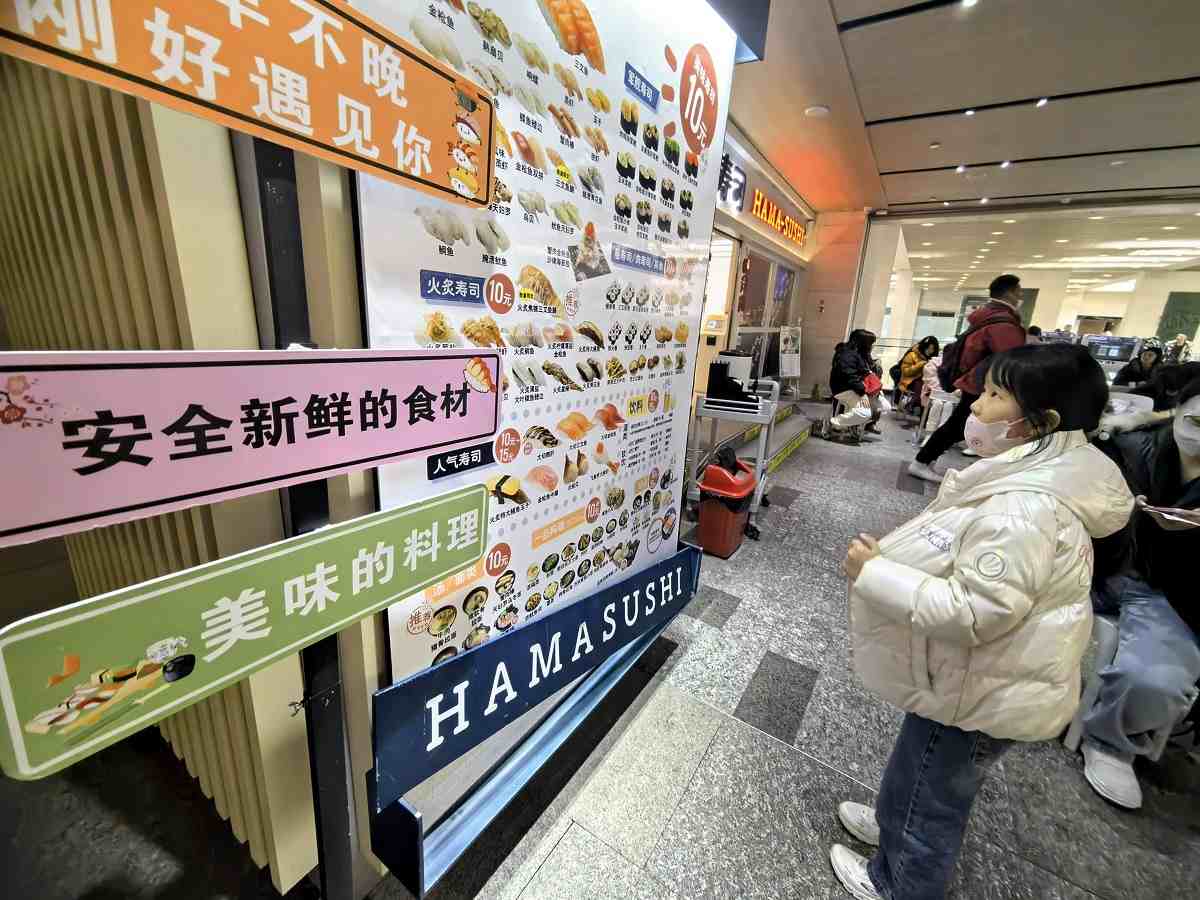
The Hamasushi restaurant in Tianjin, China, proclaims that it serves “safe, fresh foodstuffs,” a common sales pitch for the high quality of Japanese food. However, it has stopped using Japan-produced rice and other items.
14:48 JST, February 25, 2024
Six months after Tokyo Electric Power Company Holdings, Inc. began releasing treated water from the Fukushima No. 1 nuclear power plant into the sea, concerns over foodstuffs from Japan are still widespread in China, which is strongly opposed to the water release and has stopped importing Japanese marine products.
According to the Global Fishing Watch, which provides a picture of human activity at sea through positioning data from fishing vessels, many Chinese fishing boats have continued operating on the high seas outside of Japan’s exclusive economic zones, including in the North Pacific, even after Japan began releasing treated water.
For instance, a 1,100-ton fishing vessel owned by a company in Fujian Province fished off the city of Nemuro, Hokkaido, from autumn to early December last year before returning to the province.
This sea area is a fishing ground for Pacific saury, where boats from Japan and other countries also operate.
Even within the same area, the fish landed by Japanese boats are treated as “Japan-produced,” meaning they cannot be exported to China. However, if the fish caught there are landed in China, they can be sold in that country as “China-produced.”
Chinese ships stopped showing up in the area after the end of the saury fishing season. According to an executive of Japan’s national cooperative association of Pacific saury net fishery, Chinese fishing boats operated as they did the previous year, before the release of the treated water.
Cosmetics industry also hit
The value of Japanese marine product exports in 2022 surged 28.5 % from the previous year, but rose only 0.7% to ¥390.1 billion in 2023. Exports to the United States and other countries went up, but exports to mainland China have dropped to almost zero since September last year, marking a decline of 29.9% for the entire year.
The import ban on marine products is impacting other industries as well.
Hamasushi, a major conveyer belt sushi restaurant chain, stopped using Japan-produced foodstuffs at a restaurant in Tianjin and ingredients and turned to Chinese rice and soy sauce instead. Most of such foodstuffs are not subject to import bans if they come from outside 10 Japanese prefectures, including Fukushima, but the chain made the decision based on instructions by local authorities.
“The rice feels a bit different, but I feel more secure for the sake of our child,” said a 45-year-old company employee who came to the restaurant with his family on Saturday.
Some Japanese rice wholesalers have stopped exporting polished rice to China. “In addition to reduced demand in China, [rice] might also be halted at regional customs,” a source said.
Chinese import bans on marine products are also affecting cosmetics, which contain a lot of water.
Kao Corp.’s cosmetics sales in China between October and December last year dropped 30% from the same period in the previous year.
“The impact is more serious than expected. Chinese people’s thinking has changed,” said Kao senior official Toru Nishiguchi. He anticipates that sales will not recover until June or later.








Most Read
Popular articles in the past 24 hours
-

Milano Cortina 2026: Japanese Gold Medalist Figure Skater Miura S...
-

Yokohama to Test Out Renewable-Powered Offshore Floating Data Cen...
-

Ishinomaki Man Plush Toy Offers Hope to Children in Times of Disa...
-
Japan Authorities Begin On-site Inspection of Japanese Microsoft ...
-
Nikkei Tops 59,000 for First Time
-

Japan Eyes Introducing Prescreening System for Foreign Travelers,...
-

Dodgers' Roki Sasaki Erratic in First Spring Training Outing, Giv...
-

Microsoft Japan Raided by Antitrust Watchdog for Allegedly Blocki...
Popular articles in the past week
-

Producer Behind Pop Group XG Arrested for Cocaine Possession
-

iPS Treatments Pass Key Milestone, but Broader Applications Far f...
-

Japan, U.S. Name 3 Inaugural Investment Projects; Reached Agreeme...
-

Tokyo Skytree's Elevator Stops, Trapping 20 People; All Rescued (...
-

Japan’s Major Real Estate Firms Expanding Overseas Businesses to ...
-
Milano Cortina 2026: Japanese Gold Medalist Figure Skater Miura S...
-

Baby Monkey Punch Captures Hearts at Chiba Pref. Zoo, on Social M...
-

Nepal Bus Crash Kills 19 People, Injures 25 Including One Japanes...
Popular articles in the past month
-
Producer Behind Pop Group XG Arrested for Cocaine Possession
-

Japan PM Takaichi’s Cabinet Resigns en Masse
-

Japan Institute to Use Domestic Commercial Optical Lattice Clock ...
-

Man Infected with Measles Reportedly Dined at Restaurant in Tokyo...
-

Israeli Ambassador to Japan Speaks about Japan’s Role in the Reco...
-

Videos Plagiarized, Reposted with False Subtitles Claiming ‘Ryuky...
-

Man Infected with Measles May Have Come in Contact with Many Peop...
-

Prudential Life Insurance Plans to Fully Compensate for Damages C...
Top Articles in Society
-
Producer Behind Pop Group XG Arrested for Cocaine Possession
-
Man Infected with Measles Reportedly Dined at Restaurant in Tokyo Station
-
Man Infected with Measles May Have Come in Contact with Many People in Tokyo, Went to Store, Restaurant Around When Symptoms Emerged
-

Woman with Measles Visited Hospital in Tokyo Multiple Times Before Being Diagnosed with Disease
-
Australian Woman Dies After Mishap on Ski Lift in Nagano Prefecture
JN ACCESS RANKING
-
Producer Behind Pop Group XG Arrested for Cocaine Possession
-
Japan PM Takaichi’s Cabinet Resigns en Masse
-
Man Infected with Measles Reportedly Dined at Restaurant in Tokyo Station
-
Israeli Ambassador to Japan Speaks about Japan’s Role in the Reconstruction of Gaza
-
Videos Plagiarized, Reposted with False Subtitles Claiming ‘Ryukyu Belongs to China’; Anti-China False Information Also Posted in Japan