
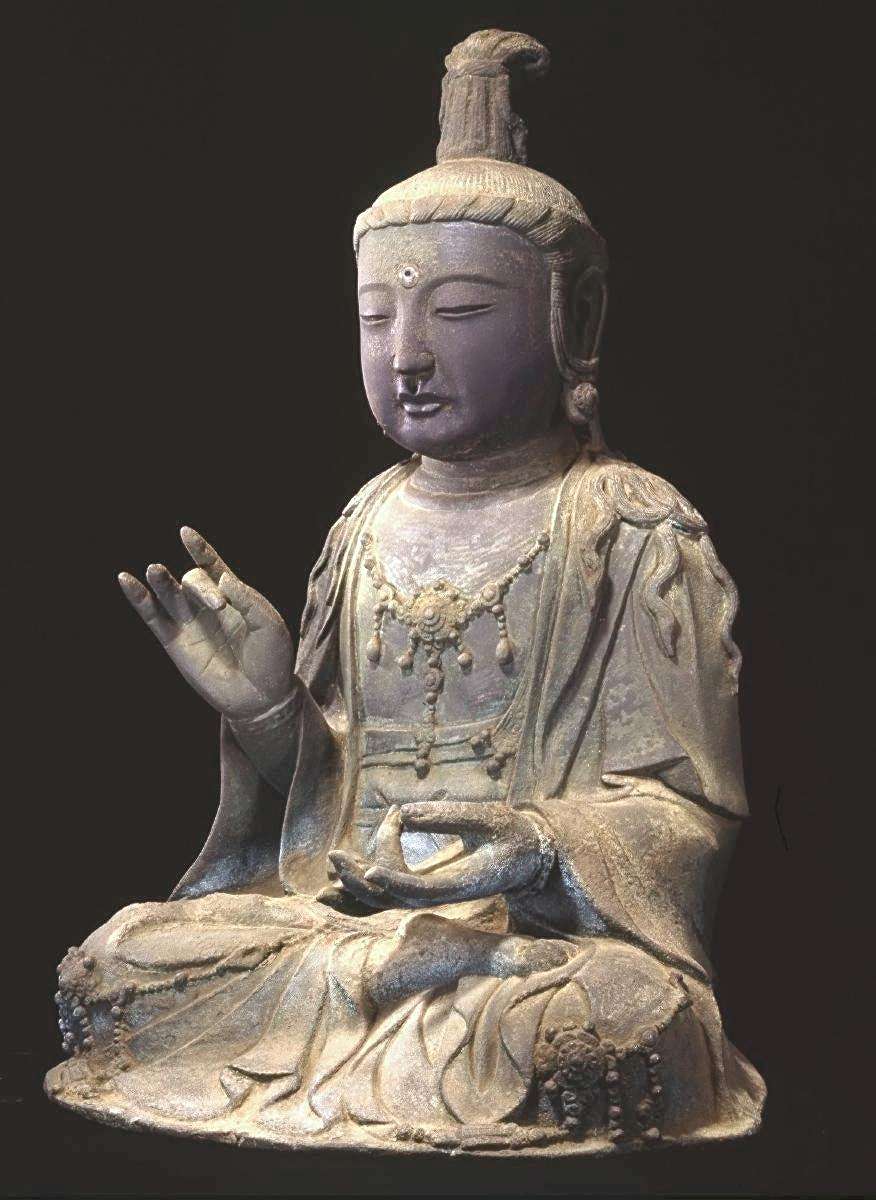
A Buddhist statue that was stolen from Kannonji Temple on Tsushima Island, Nagasaki Prefecture
17:05 JST, October 26, 2023
SEOUL (Jiji Press) — South Korea’s Supreme Court on Thursday ruled that a Buddhist statue stolen from a Japanese temple in 2012 belongs to the temple, dismissing an appeal for ownership filed by a South Korean temple.
The ownership of the statue went to Kannonji Temple on the island of Tsushima in Nagasaki Prefecture by acquisitive prescription in 1973, the top court said, concluding that Buseok Temple in the South Korean city of Seosan lost the ownership.
Buseok Temple filed the appeal after its claims of ownership was dismissed by Daejeon High Court in a reversal from a lower court ruling that recognized the South Korean temple’s ownership.
The Supreme Court, however, ruled that Buseok Temple is the same as the temple that created the statue in the 14th century, denying the high court’s decision that there were not enough documents to prove that they are identical.
The statue was stolen from Kannonji Temple and smuggled into South Korea by a South Korean group of thieves. The Japanese government has been asking for the return of the statue, which is a designated cultural property of Nagasaki.





Most Read
Popular articles in the past 24 hours
-

Nippon Life Insurance's U.S. Arm Sues OpenAI Over Legal Assistanc...
-
Japan Asked U.S. Not to Disadvantage Tokyo under New Tariff Rules
-

Milano Cortina Paralympics Open: Games Represent a Wish for Inclu...
-
Sake Mash Brewed Aboard ISS Returns to Japan; Final Product Alrea...
-
Japan to Send SDF Jet to Maldives for Iran Evacuations; Planes to...
-
Japan’s Takaichi Avoids Comment on Legality of U.S.-Israeli Strik...
-

Ohtani Helps Get Samurai Japan Off to Stellar Start in WBC Opener...
-
Yamamoto's High School Coach Discovered His Pitching Talent; Dodg...
Popular articles in the past week
-
South Korea Tightens Rules on Foreigners Buying Homes in Seoul Me...
-

Ibaraki Pref.'s 1st Foreign Bus Driver Hired in Tsukuba
-
Amid Strait of Hormuz Blockade, Shipping Companies Scramble to Ge...
-
2 Unpublished Early Novellas by Japan's Kenzaburo Oe Discovered, ...
-
Strait of Hormuz Closure Shakes Markets; Prolonged Closure Could ...
-

Iran Situation: Japan Must Exert Diplomatic Efforts without Merel...
-
Measles Patient Visited Hospital in Bunkyo Ward, Tokyo, Metropoli...
-
Japanese Shipping Giants Halt Strait of Hormuz Transit as Iran Co...
Popular articles in the past month
-

Producer Behind Pop Group XG Arrested for Cocaine Possession
-

Japan PM Takaichi’s Cabinet Resigns en Masse
-

Man Infected with Measles Reportedly Dined at Restaurant in Tokyo...
-

Videos Plagiarized, Reposted with False Subtitles Claiming ‘Ryuky...
-

Prudential Life Insurance Plans to Fully Compensate for Damages C...
-

Woman with Measles Visited Hospital in Tokyo Multiple Times Befor...
-

iPS Treatments Pass Key Milestone, but Broader Applications Far f...
-

Sanae Takaichi Elected Prime Minister of Japan; Keeps All Cabinet...
Top Articles in Society
-
Producer Behind Pop Group XG Arrested for Cocaine Possession
-
Man Infected with Measles Reportedly Dined at Restaurant in Tokyo Station
-
Woman with Measles Visited Hospital in Tokyo Multiple Times Before Being Diagnosed with Disease
-

Bus Carrying 40 Passengers Catches Fire on Chuo Expressway; All Evacuate Safely
-
Tokyo Skytree’s Elevator Stops, Trapping 20 People; All Rescued (Update 1)
JN ACCESS RANKING
-
Producer Behind Pop Group XG Arrested for Cocaine Possession
-
Japan PM Takaichi’s Cabinet Resigns en Masse
-
Man Infected with Measles Reportedly Dined at Restaurant in Tokyo Station
-
Videos Plagiarized, Reposted with False Subtitles Claiming ‘Ryukyu Belongs to China’; Anti-China False Information Also Posted in Japan
-
Prudential Life Insurance Plans to Fully Compensate for Damages Caused by Fraudulent Actions Without Waiting for Third-Party Committee Review