
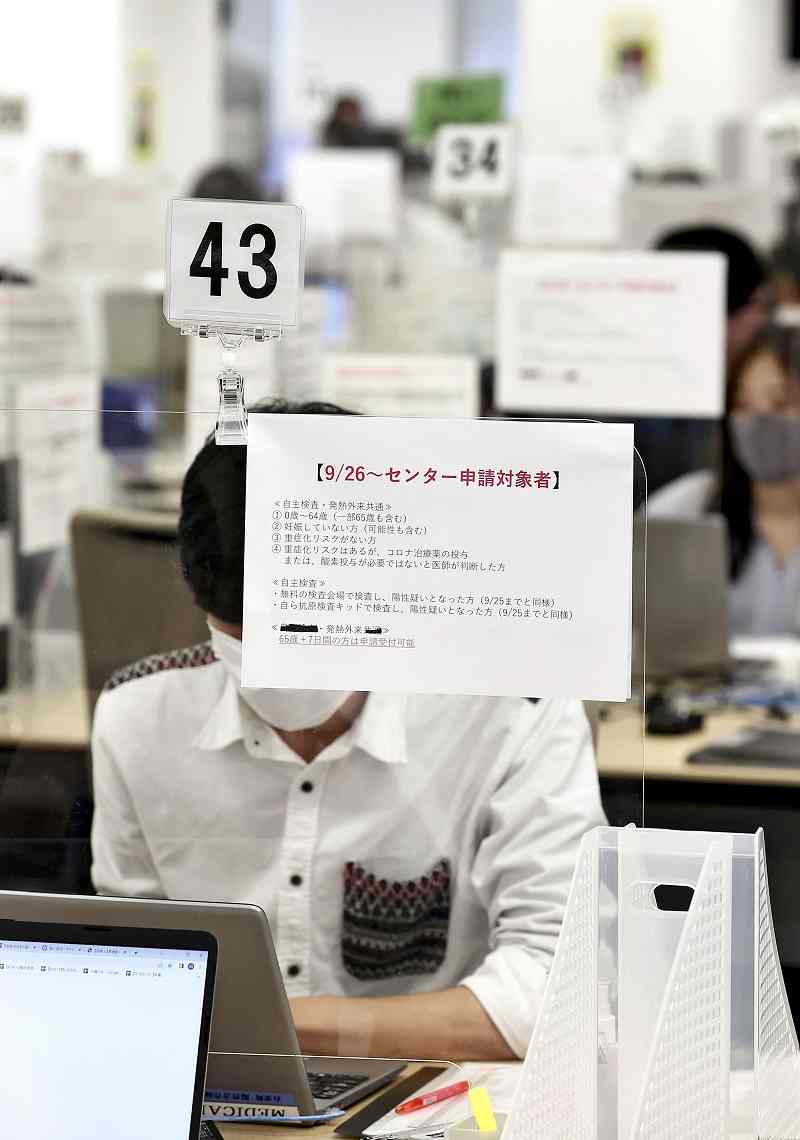
A Tokyo metropolitan government center that receives infection reports from low-risk COVID-19 patients to monitor their condition
16:14 JST, January 15, 2023
Operations at public health centers have been relatively calm amid the eighth wave of the coronavirus pandemic when compared with previous waves, which used to strain operations with each surge of cases.
Revising the previous system, which kept track of data on all infected people, to a new approach of limiting the scope of tracking information only on those 65 and older and other high-risk people has played a major role in this trend. The shift has reduced the significant number of cases that public health centers have to address over COVID-19.
“The burden on our public health center has become definitely lighter than the caseloads up to the seventh wave, when the phone calls and faxes never stopped,” an official at the public health center in Edogawa Ward, Tokyo, said.
The health center used to handle 2,000 infection reports a day at the peak of the seventh wave. However, the number has dropped to only about 200 in the eighth wave.
The center has also switched the method of monitoring health conditions of those recuperating at home from telephone-based checks to communicating with a short message service. These efforts enable the health center to handle health observation and coordination for hospitalization for those at high risk of serious deterioration, even though they have no extra staff to support their tasks. They used to have up to 70 extra temporary assistant staffers.
However, there are new challenges in the eighth wave, including coordination for hospitalizations of low-risk patients, who are not subject to reporting to health centers but suddenly get ill seriously, and responding to elderly patients who are unfamiliar with short message services.
If the categorization of COVID-19 under the Infectious Diseases Law is lowered to “Category V,” the same category as seasonal influenza, medical institutions will be responsible for coordinating hospitalization and treating patients when their conditions deteriorate in principle. However, this may delay addressing patients recuperating at home.
The health center urged the government to design a solid system to avoid any confusion among public health centers and medical institutions.








Most Read
Popular articles in the past 24 hours
-
Milano Cortina 2026: Japanese Gold Medalist Figure Skater Miura S...
-

Yokohama to Test Out Renewable-Powered Offshore Floating Data Cen...
-

Ishinomaki Man Plush Toy Offers Hope to Children in Times of Disa...
-
Japan Authorities Begin On-site Inspection of Japanese Microsoft ...
-

Nikkei Tops 59,000 for First Time
-

Microsoft Japan Raided by Antitrust Watchdog for Allegedly Blocki...
-
Japan Eyes Introducing Prescreening System for Foreign Travelers,...
-

Dodgers' Roki Sasaki Erratic in First Spring Training Outing, Giv...
Popular articles in the past week
-

Producer Behind Pop Group XG Arrested for Cocaine Possession
-

iPS Treatments Pass Key Milestone, but Broader Applications Far f...
-

Japan, U.S. Name 3 Inaugural Investment Projects; Reached Agreeme...
-

Tokyo Skytree's Elevator Stops, Trapping 20 People; All Rescued (...
-

Japan’s Major Real Estate Firms Expanding Overseas Businesses to ...
-
Milano Cortina 2026: Japanese Gold Medalist Figure Skater Miura S...
-

Baby Monkey Punch Captures Hearts at Chiba Pref. Zoo, on Social M...
-

Nepal Bus Crash Kills 19 People, Injures 25 Including One Japanes...
Popular articles in the past month
-
Producer Behind Pop Group XG Arrested for Cocaine Possession
-

Japan PM Takaichi’s Cabinet Resigns en Masse
-

Japan Institute to Use Domestic Commercial Optical Lattice Clock ...
-

Man Infected with Measles Reportedly Dined at Restaurant in Tokyo...
-

Israeli Ambassador to Japan Speaks about Japan’s Role in the Reco...
-

Videos Plagiarized, Reposted with False Subtitles Claiming ‘Ryuky...
-

Man Infected with Measles May Have Come in Contact with Many Peop...
-

Prudential Life Insurance Plans to Fully Compensate for Damages C...
Top Articles in Society
-
Producer Behind Pop Group XG Arrested for Cocaine Possession
-
Man Infected with Measles Reportedly Dined at Restaurant in Tokyo Station
-
Man Infected with Measles May Have Come in Contact with Many People in Tokyo, Went to Store, Restaurant Around When Symptoms Emerged
-

Woman with Measles Visited Hospital in Tokyo Multiple Times Before Being Diagnosed with Disease
-

Australian Woman Dies After Mishap on Ski Lift in Nagano Prefecture
JN ACCESS RANKING
-
Producer Behind Pop Group XG Arrested for Cocaine Possession
-
Japan PM Takaichi’s Cabinet Resigns en Masse
-
Man Infected with Measles Reportedly Dined at Restaurant in Tokyo Station
-
Israeli Ambassador to Japan Speaks about Japan’s Role in the Reconstruction of Gaza
-
Videos Plagiarized, Reposted with False Subtitles Claiming ‘Ryukyu Belongs to China’; Anti-China False Information Also Posted in Japan