
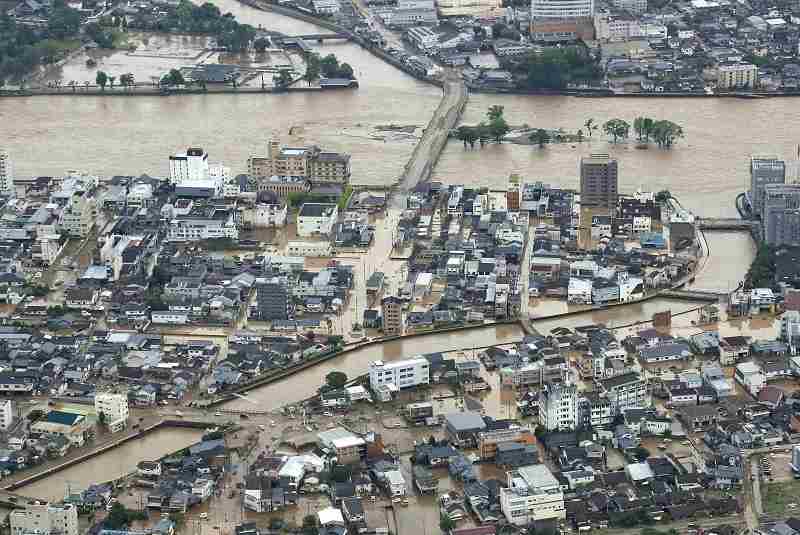
Heavy damage from the flooding of the Kuma River is seen in Hitoyoshi, Kumamoto Prefecture, on July 4, 2020.
14:30 JST, May 30, 2022
The frequency of torrential downpours in July increased 3.8 fold over the 45-year period up to 2020, the Meteorological Research Institute (MRI) has announced.
The MRI believes that global warming and other factors have caused elongated bands of precipitation, which bring heavy rain, to occur more often.
The institute examined cases involving rainfall of 130 millimeters or more within three hours — situations in which an elongated precipitation band is likely to have occurred — analyzing them as concentrated downpours.
It looked at data collected nationwide by the Automated Meteorological Data Acquisition System from 1976 to 2020, and found that the frequency of concentrated downpours increased 120% for one-year periods and 280% for the end of the rainy season in July.
A series of disasters caused by torrential downpours have occurred in July in recent years. Elongated bands of precipitation were observed in connection with heavy rains in western Japan in 2018, and with the heavy rain in the Kyushu region in 2020.
“The risk of heavy rain has increased even in areas where torrential rains did not occur in the past. We urge people to be aware of the danger,” said Teruyuki Kato, director of the MRI’s Typhoon and Severe Weather Research department.



Most Read
Popular articles in the past 24 hours
-

Warning Issued After Fake Social Media Account Impersonating Nobe...
-

G7 Foreign Ministers Meet for Talks in Munich, Discussing Situati...
-

Milano Cortina 2026: Miho Takagi Won Bronze in Women’s 500-...
-

High-Hydration Bread on the Rise, Seeing Increase in Specialty Sh...
-

Reform of Retrial System: Diet Must Thoroughly Discuss Remedies f...
-

Sony's Entertainment Focus Becomes Even Clearer; Shift Away from ...
-

Milano Cortina 2026: Japan’s Ikuma Horishima Wins Silver in...
-

Milano Cortina 2026: Ren Nikaido Takes ‘Disappointing’ Silver in ...
Popular articles in the past week
-

Prudential Life Insurance Plans to Fully Compensate for Damages C...
-

Woman with Measles Visited Hospital in Tokyo Multiple Times Befor...
-

Woman with No Overseas Travel History Infected with Measles in Na...
-

Measles Patient Flew Between Tokyo, Hokkaido in Late January; Lik...
-

Videos Plagiarized, Reposted with False Subtitles Claiming ‘Ryuky...
-

Milano Cortina 2026: Kokomo Murase Comes Out on Top After Overcom...
-
CRA Leadership Election Will Center on Party Rebuilding; Lower Ho...
-
Crime in Japan Ticks Up for 4th Straight Year
Popular articles in the past month
-

Japan Institute to Use Domestic Commercial Optical Lattice Clock ...
-

Israeli Ambassador to Japan Speaks about Japan’s Role in the Reco...
-

Man Infected with Measles May Have Come in Contact with Many Peop...
-

China Eyes Rare Earth Foothold in Malaysia to Maintain Dominance,...
-
Prudential Life Insurance Plans to Fully Compensate for Damages C...
-
Woman with Measles Visited Hospital in Tokyo Multiple Times Befor...
-
Australian Woman Dies After Mishap on Ski Lift in Nagano Prefectu...
-
Foreign Snowboarder in Serious Condition After Hanging in Midair ...
Top Articles in Society
-
Man Infected with Measles May Have Come in Contact with Many People in Tokyo, Went to Store, Restaurant Around When Symptoms Emerged
-
Woman with Measles Visited Hospital in Tokyo Multiple Times Before Being Diagnosed with Disease
-
Australian Woman Dies After Mishap on Ski Lift in Nagano Prefecture
-
Foreign Snowboarder in Serious Condition After Hanging in Midair from Chairlift in Nagano Prefecture
-
Record-Breaking Snow Cripples Public Transport in Hokkaido; 7,000 People Stay Overnight at New Chitose Airport
JN ACCESS RANKING
-
Japan Institute to Use Domestic Commercial Optical Lattice Clock to Set Japan Standard Time
-
Israeli Ambassador to Japan Speaks about Japan’s Role in the Reconstruction of Gaza
-
Man Infected with Measles May Have Come in Contact with Many People in Tokyo, Went to Store, Restaurant Around When Symptoms Emerged
-
Prudential Life Insurance Plans to Fully Compensate for Damages Caused by Fraudulent Actions Without Waiting for Third-Party Committee Review
-
Woman with Measles Visited Hospital in Tokyo Multiple Times Before Being Diagnosed with Disease