
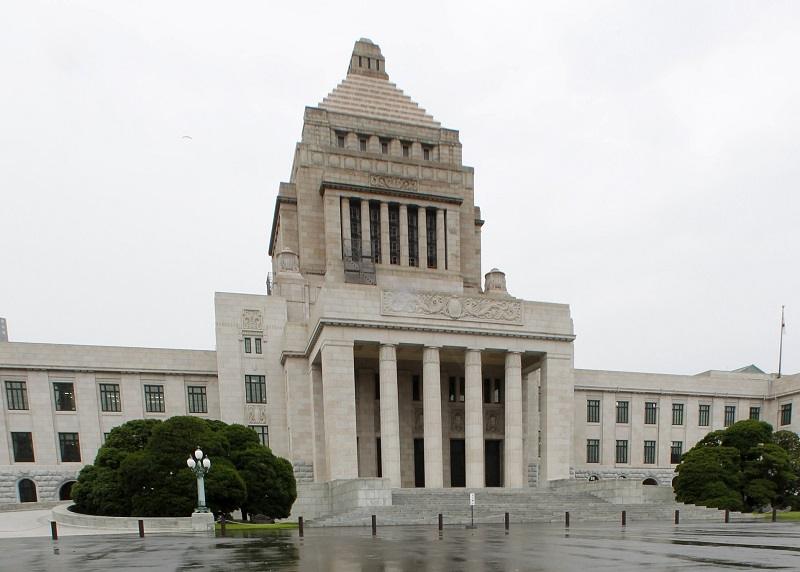
The Diet building is pictured behind a road marking in Tokyo July 12, 2010.
16:56 JST, August 14, 2021
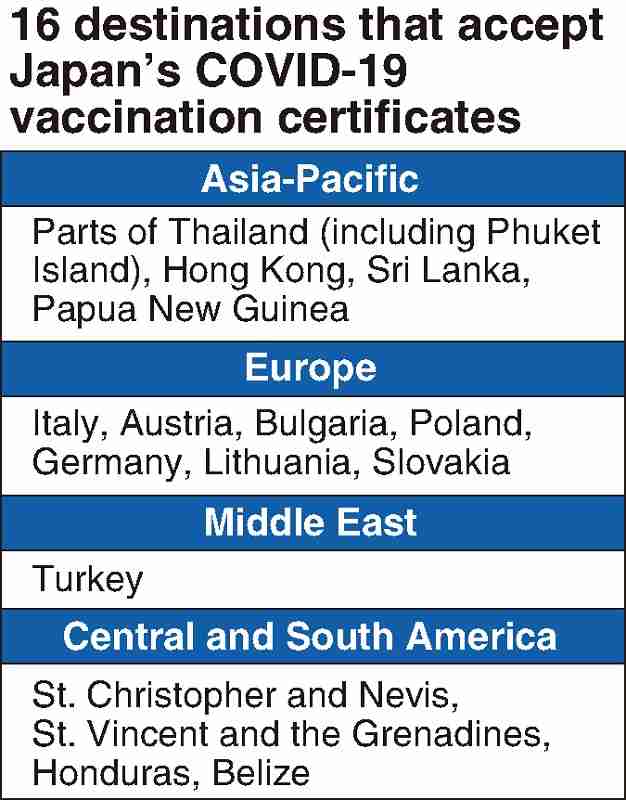
Only 15 countries and one region, as of Friday, were accepting COVID-19 vaccination certificates issued by the Japanese government. This is because many governments have responded reluctantly to Japan for its strict border control measures that in principle ban the new entry of foreign travelers.
According to the Japan National Tourism Organization, the United States was the most popular destination for Japanese travelers in 2018 before the global pandemic, with about 3.5 million people visiting the country. It was followed by South Korea, China, Taiwan and Thailand.
Among the top 10 most popular countries and regions, only three destinations — Thailand, Hong Kong and Germany — accept Japanese vaccination certificates.
Currently, more than 70 countries and regions, including France and Indonesia, have established preferential measures for holders of vaccination certificates, such as exemption from quarantines and virus testing upon arrival, or shortening of quarantines.
The Japanese government is negotiating with these countries and regions to approve Japanese certificates. However, many of them are said to be reluctant to accept Japan’s certificates, stressing the importance of reciprocity. In other words, they cannot respond to Japan’s request unless the Japanese government also allows the entry of vaccinated travelers from their sides.
The Japanese government hopes to consider easing the restrictions on the entry of vaccinated travelers. However, infections continue to spread across the nation, and under these circumstances, “it is difficult to even discuss the matter,” according to a person close to the government.
Local governments started accepting applications for certificates on July 26, but there seems to be a mismatch between supply and demand.
For instance, Tokyo’s Shinagawa Ward had received about 1,280 applications for certificates by Thursday. However, applicants’ planned destinations include the United States, Britain, France and many other destinations that do not accept Japanese certificates. Regardless of their intended destinations, however, certificates are issued for those who apply.
Many people are believed to have applied for certificates for future use.
“The purpose of the use of certificates is not subject to screening, so everyone — including those who don’t even have a plan to go abroad — can apply,” said a senior Foreign Ministry official.






Most Read
Popular articles in the past 24 hours
-
Business Hotels Expanding into Regional Areas in Japan, Aiming to...
-
6 Injured at Naked Festival in Japan’s Okayama Prefecture; Police...
-

Fiji Defense Minister Hopes Japan Will Support Stabilization of P...
-

Space One Delays Launch of No. 3 Kairos Rocket; Company to Announ...
-

Milano Cortina 2026: Malinin Highlights Dangers of Social Media i...
-

Reciprocal Tariffs Ruled Illegal: Judiciary Would Not Tolerate Pr...
-

Japanese Film, Anymart, Wins Critics’ Award at International Film...
-

3rd Japan Pacific Islands Defense Dialogue to Begin in Tokyo on S...
Popular articles in the past week
-

Japan PM Takaichi’s Cabinet Resigns en Masse
-

Man Infected with Measles Reportedly Dined at Restaurant in Tokyo...
-

Sanae Takaichi Elected Prime Minister of Japan; Keeps All Cabinet...
-

Japan's Govt to Submit Road Map for Growth Strategy in March, PM ...
-

Bus Carrying 40 Passengers Catches Fire on Chuo Expressway; All E...
-

Milano Cortina 2026: Figure Skaters Riku Miura, Ryuichi Kihara Pa...
-

Japan, U.S. Name 3 Inaugural Investment Projects; Reached Agreeme...
-

U.S. Firm to Build Training Hub in Fukushima N-plant for Debris R...
Popular articles in the past month
-
Japan PM Takaichi’s Cabinet Resigns en Masse
-

Japan Institute to Use Domestic Commercial Optical Lattice Clock ...
-

Israeli Ambassador to Japan Speaks about Japan’s Role in the Reco...
-
Man Infected with Measles Reportedly Dined at Restaurant in Tokyo...
-

Videos Plagiarized, Reposted with False Subtitles Claiming ‘Ryuky...
-

Man Infected with Measles May Have Come in Contact with Many Peop...
-

Prudential Life Insurance Plans to Fully Compensate for Damages C...
-

Woman with Measles Visited Hospital in Tokyo Multiple Times Befor...
Top Articles in Society
-
Man Infected with Measles Reportedly Dined at Restaurant in Tokyo Station
-
Man Infected with Measles May Have Come in Contact with Many People in Tokyo, Went to Store, Restaurant Around When Symptoms Emerged
-
Woman with Measles Visited Hospital in Tokyo Multiple Times Before Being Diagnosed with Disease
-
Australian Woman Dies After Mishap on Ski Lift in Nagano Prefecture
-
Foreign Snowboarder in Serious Condition After Hanging in Midair from Chairlift in Nagano Prefecture
JN ACCESS RANKING
-
Japan PM Takaichi’s Cabinet Resigns en Masse
-
Japan Institute to Use Domestic Commercial Optical Lattice Clock to Set Japan Standard Time
-
Israeli Ambassador to Japan Speaks about Japan’s Role in the Reconstruction of Gaza
-
Man Infected with Measles Reportedly Dined at Restaurant in Tokyo Station
-
Videos Plagiarized, Reposted with False Subtitles Claiming ‘Ryukyu Belongs to China’; Anti-China False Information Also Posted in Japan