

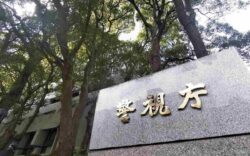
Fukuoka District Court
10:34 JST, June 6, 2024
FUKUOKA (Jiji Press) — A Japanese court Wednesday turned down a request for a retrial over the 1992 murder of two girls in Fukuoka Prefecture, for which a death row convict had been executed.
Fukuoka District Court thus denied the second retrial request over the so-called Iizuka incident, in which two primary school first graders in the Fukuoka city of Iizuka were killed. Michitoshi Kuma was ruled guilty of the murder and put to death in 2008 at age 70.
The defense is set to appeal against the latest decision. So far, no decision has been made in Japan to grant a retrial of a convict already executed.
During court examinations of the retrial petition, the defense claimed it had new evidence, including fresh eyewitness accounts denying Kuma’s involvement. But the court concluded that the accounts are not credible.
According to the defense, a female witness changed her testimony that she saw the two girls at the scene where the two were allegedly abducted on their way to school in the morning of the day the incident occurred.
In the new testimony, the witness said she saw the girls “on a different day,” claiming that an investigating organization made an interrogation report with contents different from her memory.
The defense also submitted testimony from a man saying that he saw a different man driving a car with the two girls aboard on a bypass in Iizuka close to the time when the bodies were discarded.
Handing down the decision, Presiding Judge Shinichi Suzuki said the interrogation report on the female witness was made when uncertainties remained in the investigations, adding that he cannot see any motive or need for the investigating body to make a report contradicting her memory.
Suzuki also rejected the testimony of the man, stating that his clear memory of the faces of the unfamiliar two girls sounds unnatural.
Despite the assertion of his innocence, Kuma’s death sentence became final based on DNA test results and eyewitness accounts.
In the first request for a retrial bereaved family members filed in 2009, a year after Kuma was executed, the focal point was the credibility of the DNA test results.
The testing was conducted around the same period with the same method as that adopted for the so-called Ashikaga incident, over which a guilty ruling on the 1990 murder of a girl in Ashikaga, Tochigi Prefecture, was overturned in a retrial based on fresh DNA test results.
In 2014, Fukuoka District Court dismissed the first request, saying that there could be seen no reasonable doubt about the guilty ruling even after a comprehensive examination of circumstantial facts excluding DNA test results.
Fukuoka High Court upheld the decision, which was made final by the Supreme Court in 2021.







Most Read
Popular articles in the past 24 hours
-

German Journalist Traces Footsteps of Great-Grandfather Who Was P...
-

10 Foreign Tourists Sustain Injuries After Fire at Capsule Hotel ...
-

World Baseball Classic: Venezuela Beats Japan in Nail-biting Back...
-

Rapid Services Resume on JR Chuo Line; Suspension Caused by Accid...
-

Rapid Services on JR Chuo Line Suspended; Accident at Kokubunji S...
-

World Baseball Classic: Venezuela Beats Japan in Back-and-Forth Q...
-

World Baseball Classic: Red Sox’s Abreu Hits 3-run Homer, Giving ...
-

Zelenskiy Says Ukraine Wants Money, Technology in Return for Midd...
Popular articles in the past week
-

Japan Figure Skating Legend Yuzuru Hanyu Is Proud Disaster Surviv...
-
15 Measles Patients Confirmed in Tokyo in Past 6 Days; 1 May Have...
-

Massive Sewer Pipe Found Jutting Out of Highway in Osaka
-

Japan Govt to Tighten Requirements to Receive Permanent Residency...
-

Power Outage Forces About 980 Passengers in Yokohama to Walk to T...
-

JR Tokai Breaks Ground on Yamanashi Maglev Station; Will Be Part ...
-

Parents in Japan to Get Instagram Notifications When Teens Repeat...
-

'World's Oldest Bio-Business' Is Japan's Seed Koji Retailing, Mol...
Popular articles in the past month
-

Producer Behind Pop Group XG Arrested for Cocaine Possession
-

Japan PM Takaichi’s Cabinet Resigns en Masse
-

Man Infected with Measles Reportedly Dined at Restaurant in Tokyo...
-
Japan Figure Skating Legend Yuzuru Hanyu Is Proud Disaster Surviv...
-

iPS Treatments Pass Key Milestone, but Broader Applications Far f...
-

Sanae Takaichi Elected Prime Minister of Japan; Keeps All Cabinet...
-

South Korea Tightens Rules on Foreigners Buying Homes in Seoul Me...
-

Nepal Bus Crash Kills 19 People, Injures 25 Including One Japanes...
Top Articles in Society
-
Producer Behind Pop Group XG Arrested for Cocaine Possession
-
Man Infected with Measles Reportedly Dined at Restaurant in Tokyo Station
-
15 Measles Patients Confirmed in Tokyo in Past 6 Days; 1 May Have Come into Contact with Many in Shibuya
-

Bus Carrying 40 Passengers Catches Fire on Chuo Expressway; All Evacuate Safely
-

Ibaraki Pref.’s 1st Foreign Bus Driver Hired in Tsukuba
JN ACCESS RANKING
-
Producer Behind Pop Group XG Arrested for Cocaine Possession
-
Japan PM Takaichi’s Cabinet Resigns en Masse
-
Man Infected with Measles Reportedly Dined at Restaurant in Tokyo Station
-
Japan Figure Skating Legend Yuzuru Hanyu Is Proud Disaster Survivor and Gold Medalist, Vows to Continue Support Efforts
-
iPS Treatments Pass Key Milestone, but Broader Applications Far from Guaranteed