
Alleged Crime Boss Charged by U.S. for Attempted Trafficking of Weapons-grade Nuclear Material
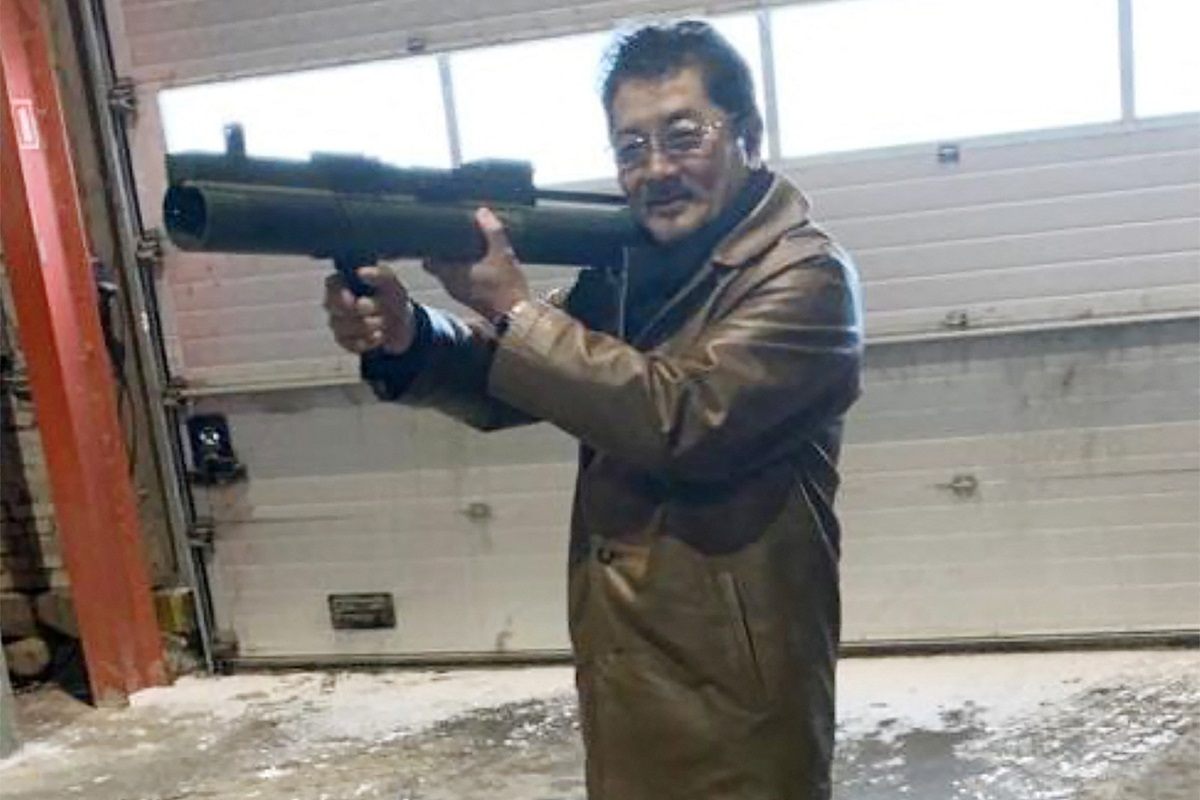
Takeshi Ebisawa poses with a rocket launcher during a meeting with an informant and two undercover Danish police officers at a warehouse in Copenhagen, Denmark February 3, 2021, in a photograph from a Drug Enforcement Administration (DEA) criminal complaint.
16:05 JST, February 22, 2024
The U.S. Justice Department announced Wednesday that it had indicted Japanese national Takeshi Ebisawa and a Thai national for allegedly attempting to traffic uranium and plutonium, materials that could be used to build nuclear weapons.
Ebisawa, 60, allegedly had been trying since 2020 to make a deal with an undercover Drug Enforcement Administration agent to sell uranium to an Iranian general, according to the DOJ announcement and other documents. He had proposed that an insurgent group in Myanmar sell the uranium through him to fund a weapons purchase.
U.S. authorities analyzed a sample that Ebisawa used for the deal, and confirmed it contained uranium, thorium and plutonium.
Prior to this case, Ebisawa was indicted for attempting to broker a deal between a Myanmar insurgent group and a weapons and illegal drugs dealer in April 2022. The U.S. authority describes Ebisawa as “a leader of the Japanese Yakuza crime syndicate.”






Most Read
Popular articles in the past 24 hours
-

German Journalist Traces Footsteps of Great-Grandfather Who Was P...
-

10 Foreign Tourists Sustain Injuries After Fire at Capsule Hotel ...
-

World Baseball Classic: Venezuela Beats Japan in Nail-biting Back...
-
Rapid Services Resume on JR Chuo Line; Suspension Caused by Accid...
-
Rapid Services on JR Chuo Line Suspended; Accident at Kokubunji S...
-

Zelenskiy Says Ukraine Wants Money, Technology in Return for Midd...
-

World Baseball Classic: Venezuela Beats Japan in Back-and-Forth Q...
-

World Baseball Classic: Red Sox’s Abreu Hits 3-run Homer, Giving ...
Popular articles in the past week
-

Japan Figure Skating Legend Yuzuru Hanyu Is Proud Disaster Surviv...
-
15 Measles Patients Confirmed in Tokyo in Past 6 Days; 1 May Have...
-
Massive Sewer Pipe Found Jutting Out of Highway in Osaka
-
Japan Govt to Tighten Requirements to Receive Permanent Residency...
-
Power Outage Forces About 980 Passengers in Yokohama to Walk to T...
-
JR Tokai Breaks Ground on Yamanashi Maglev Station; Will Be Part ...
-

Parents in Japan to Get Instagram Notifications When Teens Repeat...
-
'World's Oldest Bio-Business' Is Japan's Seed Koji Retailing, Mol...
Popular articles in the past month
-

Producer Behind Pop Group XG Arrested for Cocaine Possession
-

Japan PM Takaichi’s Cabinet Resigns en Masse
-

Man Infected with Measles Reportedly Dined at Restaurant in Tokyo...
-
Japan Figure Skating Legend Yuzuru Hanyu Is Proud Disaster Surviv...
-

iPS Treatments Pass Key Milestone, but Broader Applications Far f...
-

Sanae Takaichi Elected Prime Minister of Japan; Keeps All Cabinet...
-

South Korea Tightens Rules on Foreigners Buying Homes in Seoul Me...
-

Nepal Bus Crash Kills 19 People, Injures 25 Including One Japanes...
Top Articles in Society
-
Producer Behind Pop Group XG Arrested for Cocaine Possession
-
Man Infected with Measles Reportedly Dined at Restaurant in Tokyo Station
-
15 Measles Patients Confirmed in Tokyo in Past 6 Days; 1 May Have Come into Contact with Many in Shibuya
-

Bus Carrying 40 Passengers Catches Fire on Chuo Expressway; All Evacuate Safely
-

Ibaraki Pref.’s 1st Foreign Bus Driver Hired in Tsukuba
JN ACCESS RANKING
-
Producer Behind Pop Group XG Arrested for Cocaine Possession
-
Japan PM Takaichi’s Cabinet Resigns en Masse
-
Man Infected with Measles Reportedly Dined at Restaurant in Tokyo Station
-
Japan Figure Skating Legend Yuzuru Hanyu Is Proud Disaster Survivor and Gold Medalist, Vows to Continue Support Efforts
-
iPS Treatments Pass Key Milestone, but Broader Applications Far from Guaranteed