
Nuclear Fusion Reactor Completion Targeted for 2038; Developer Aiming for 100,000-Kilowatt Generation
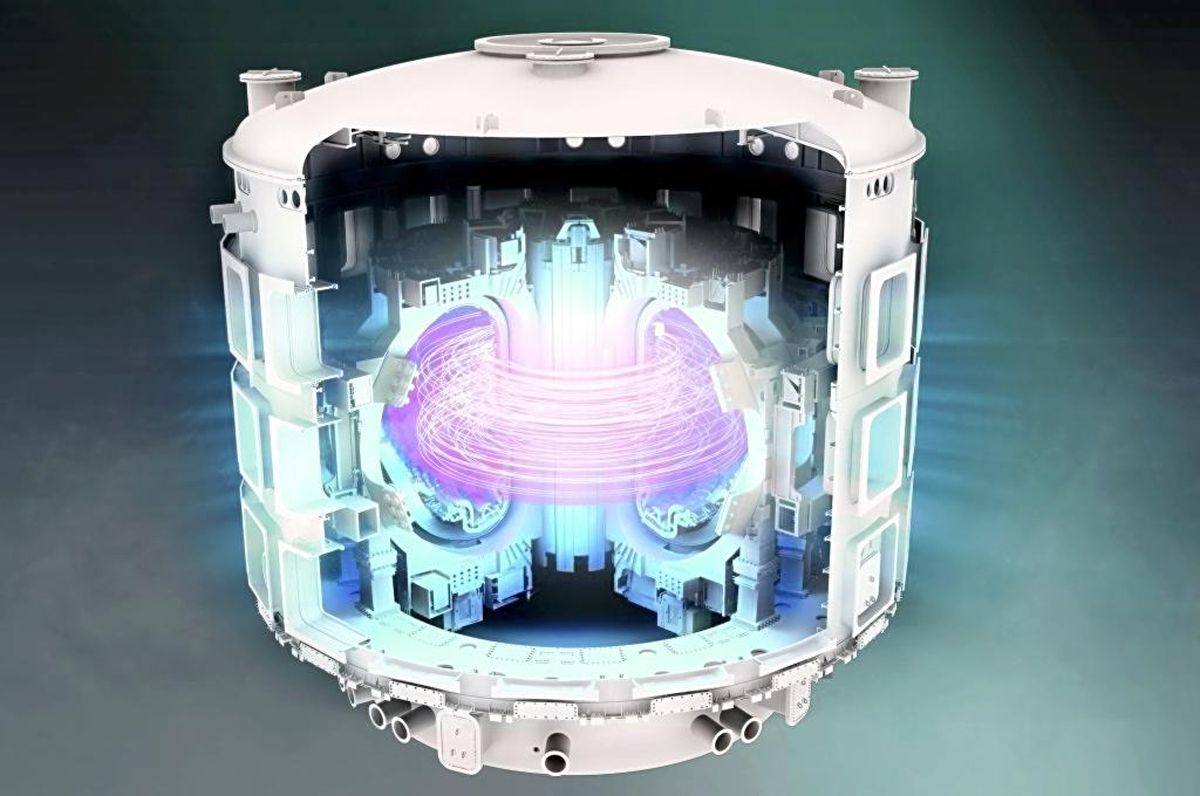
A rendering of a nuclear fusion reactor
7:00 JST, March 16, 2026
The National Institute for Quantum Science and Technology (QST) plans to start constructing a prototype reactor for fusion power generation in the late 2020s, with 2038 the target for completion, according to its design outline seen by The Yomiuri Shimbun.
With the plan now compiled, progress in fusion power generation is likely to accelerate.
Nuclear fusion, a process that occurs in the Sun, happens when atomic nuclei fuse to generate a large amount of energy. One gram of fuel obtained through nuclear fusion is said to be equivalent to eight tons of petroleum. Furthermore, nuclear fusion power generation produces no high-level radioactive waste or carbon dioxide.
So far, nuclear fusion has not been practically applied, and competition to develop the technology is intensifying both domestically and internationally.
The government’s goal is to test fusion power generation in the 2030s.
When it is built, the prototype reactor will measure about 30 meters in both diameter and height, the same size as the International Thermonuclear Experimental Reactor (ITER), which Japan, the United States, Europe and others are currently constructing in France.
Under the QST’s initial plan, a reactor was designed to be 1.4 times the size of the ITER and scheduled to be commercialized around the 2050s. However, it has been downsized to bring the timeline forward.
There are three phases in the development of the prototype reactor: testing power generation integrating the fusion reactor and power generation facilities; testing technology to breed tritium — the fuel — in the reactor; and testing the reactor’s stable operations.
One year after completing the prototype, the QST aims to successfully generate power for several minutes, with a net output of about 10,000 kilowatts. It then aims to increase that output to about 100,000 kilowatts when the reactor reaches stable operations.
The outline also includes an overview of the reactor’s maintenance facilities, containment building and safety equipment. The site is expected to have an area of at least about 1 square kilometer.
The administration of Prime Minster Sanae Takaichi has positioned nuclear fusion as one of 17 priority investment areas in its growth strategy. Local governments are also becoming increasingly interested in this project, with the Ibaraki and Aomori prefectural governments last year expressing interest in hosting the prototype reactor.





Most Read
Popular articles in the past 24 hours
-

10 Foreign Tourists Sustain Injuries After Fire at Capsule Hotel ...
-

World Baseball Classic: Venezuela Beats Japan in Nail-biting Back...
-

Zelenskiy Says Ukraine Wants Money, Technology in Return for Midd...
-

Rapid Services Resume on JR Chuo Line; Suspension Caused by Accid...
-

Rapid Services on JR Chuo Line Suspended; Accident at Kokubunji S...
-

World Baseball Classic: Venezuela Beats Japan in Back-and-Forth Q...
-

World Baseball Classic: Red Sox’s Abreu Hits 3-run Homer, Giving ...
-

Rich Local Ingredients Make Nagato Oden Popular Dish
Popular articles in the past week
-

Japan Figure Skating Legend Yuzuru Hanyu Is Proud Disaster Surviv...
-
15 Measles Patients Confirmed in Tokyo in Past 6 Days; 1 May Have...
-
Massive Sewer Pipe Found Jutting Out of Highway in Osaka
-

Japan Govt to Tighten Requirements to Receive Permanent Residency...
-
Power Outage Forces About 980 Passengers in Yokohama to Walk to T...
-
JR Tokai Breaks Ground on Yamanashi Maglev Station; Will Be Part ...
-

Parents in Japan to Get Instagram Notifications When Teens Repeat...
-
'World's Oldest Bio-Business' Is Japan's Seed Koji Retailing, Mol...
Popular articles in the past month
-

Producer Behind Pop Group XG Arrested for Cocaine Possession
-

Japan PM Takaichi’s Cabinet Resigns en Masse
-

Man Infected with Measles Reportedly Dined at Restaurant in Tokyo...
-
Japan Figure Skating Legend Yuzuru Hanyu Is Proud Disaster Surviv...
-

iPS Treatments Pass Key Milestone, but Broader Applications Far f...
-

Sanae Takaichi Elected Prime Minister of Japan; Keeps All Cabinet...
-

South Korea Tightens Rules on Foreigners Buying Homes in Seoul Me...
-

Nepal Bus Crash Kills 19 People, Injures 25 Including One Japanes...
Top Articles in Science & Nature
-
iPS Treatments Pass Key Milestone, but Broader Applications Far from Guaranteed
-
Record 700 Startups to Gather at SusHi Tech Tokyo in April; Event Will Center on Themes Like Artificial Intelligence and Robotics
-
Parents in Japan to Get Instagram Notifications When Teens Repeatedly Search for Suicide Content
-
iPS Cell Products for Parkinson’s, Heart Disease OK’d for Commercialization by Japan Health Ministry Panel
-
Japan to Ban Use of Power Banks on Airplanes
JN ACCESS RANKING
-
Producer Behind Pop Group XG Arrested for Cocaine Possession
-
Japan PM Takaichi’s Cabinet Resigns en Masse
-
Man Infected with Measles Reportedly Dined at Restaurant in Tokyo Station
-
Japan Figure Skating Legend Yuzuru Hanyu Is Proud Disaster Survivor and Gold Medalist, Vows to Continue Support Efforts
-
iPS Treatments Pass Key Milestone, but Broader Applications Far from Guaranteed