
World-Renowned Research Originated from Tekijuku Founded by Physician Koan Ogata in Edo Period
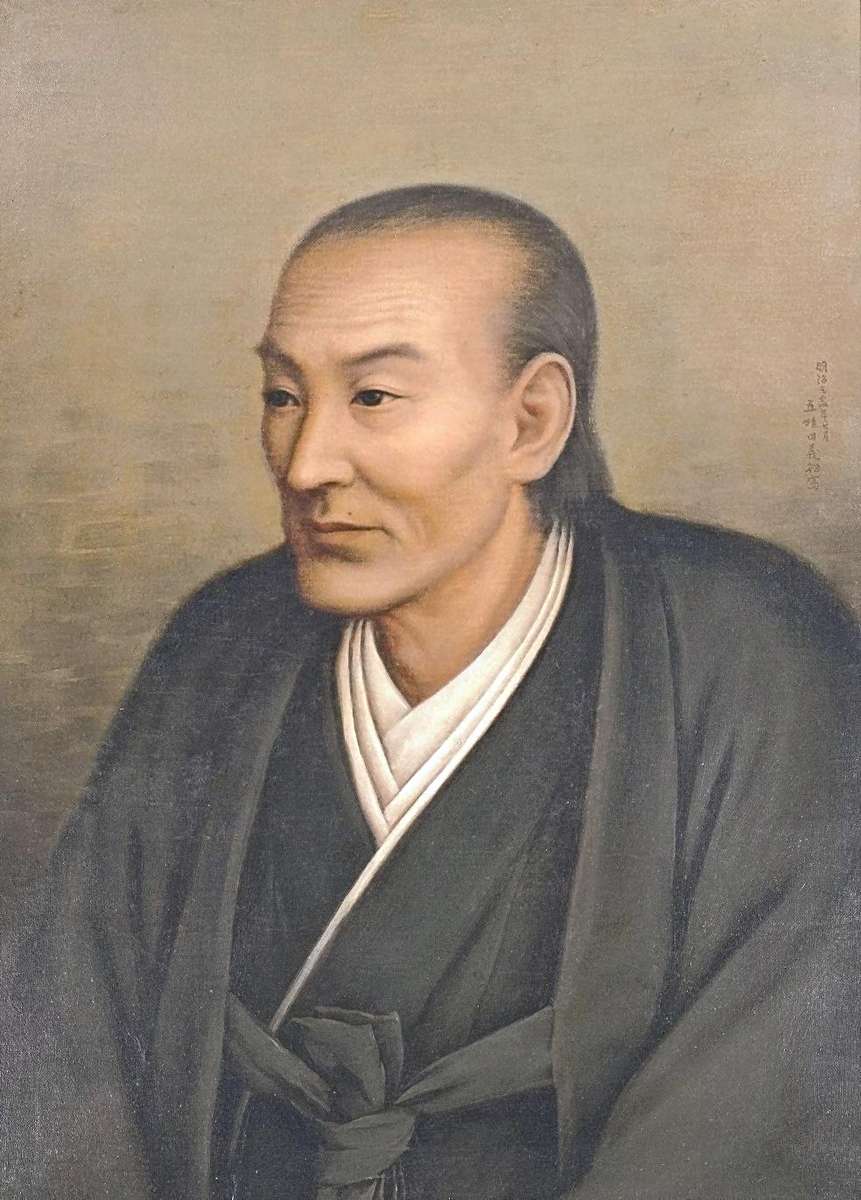
Ogata Koan
16:23 JST, October 7, 2025
Immunology is a field attracting global attention, spanning diverse areas from infectious disease treatments to vaccine development and cancer therapy. It is the specialty of Shimon Sakaguchi, 74, a specially appointed professor at the University of Osaka’s Immunology Frontier Research Center who won the 2025 Nobel Prize in Physiology or Medicine.
The University of Osaka is one of the world’s leading centers in the field of immunology. Behind this lies a long history dating back to Tekijuku, a private school of Western learning founded in the Edo period (1603-1867).
The late Edo-period physician Ogata Koan established Tekijuku and Joto-kan, a medical facility for preventing smallpox through vaccination, in Osaka. Vaccination marked the first step in immunology research in Japan.
Six years after Koan’s death, in 1869, his second son established a temporary hospital with students, which became the precursor to the University of Osaka’s Faculty of Medicine. In 1905, Japan’s first specialized department for pulmonary tuberculosis was established within the department of internal medicine as a research hub for tuberculosis, which was ravaging Osaka Prefecture.
In 1962, Yuichi Yamamura, who would later lay the foundation for Japanese immunology research, took up the position of professor. Tuberculosis symptoms were thought at the time to be caused by bacteria eating away at lung tissue and creating cavities, but Yamamura confirmed through animal experiments that cavities formed even when bacteria were killed by heat, pinpointing the involvement of an immune response. Yamamura, who would eventually serve as the University of Osaka’s president, strengthened research by appointing numerous outstanding young scholars from both inside and outside the university as professors.
Tadamitsu Kishimoto — one of Yamamura’s students who later became president of the university himself — discovered the immune substance Interleukin (IL)-6 that plays a key role in the onset of rheumatoid arthritis. The finding led to groundbreaking therapeutic drug development. Kishimoto highly evaluated Sakaguchi’s research and invited him from Kyoto University when he established the University of Osaka Immunology Frontier Research Center.
First at University of Osaka
Sakaguchi’s Nobel Prize in Physiology or Medicine marks the first Nobel laureate from among University of Osaka faculty members currently on staff. He graduated from Kyoto University’s Faculty of Medicine. He served as Director of the Institute for Frontier Medical Sciences, now the Institute for Life and Medical Sciences, at his alma mater.
In 2007, the University of Osaka Immunology Frontier Research Center was selected for the World Premier International Research Center Initiative by the Education, Culture, Sports, Science and Technology Ministry. Sakaguchi decided to move to the University of Osaka, saying, “What matters is how much I can contribute to human medical treatment.” He became a professor at the University of Osaka in 2011.





Most Read
Popular articles in the past 24 hours
-

Ransomware Attacks Hitting Japan's Small, Midsize Firms
-
German Journalist Traces Footsteps of Great-Grandfather Who Was P...
-

10 Foreign Tourists Sustain Injuries After Fire at Capsule Hotel ...
-

World Baseball Classic: Venezuela Beats Japan in Nail-biting Back...
-

Rapid Services Resume on JR Chuo Line; Suspension Caused by Accid...
-

Rapid Services on JR Chuo Line Suspended; Accident at Kokubunji S...
-

World Baseball Classic: Venezuela Beats Japan in Back-and-Forth Q...
-

World Baseball Classic: Red Sox’s Abreu Hits 3-run Homer, Giving ...
Popular articles in the past week
-
Japan Figure Skating Legend Yuzuru Hanyu Is Proud Disaster Surviv...
-
15 Measles Patients Confirmed in Tokyo in Past 6 Days; 1 May Have...
-

Massive Sewer Pipe Found Jutting Out of Highway in Osaka
-

Japan Govt to Tighten Requirements to Receive Permanent Residency...
-
Power Outage Forces About 980 Passengers in Yokohama to Walk to T...
-
JR Tokai Breaks Ground on Yamanashi Maglev Station; Will Be Part ...
-

Parents in Japan to Get Instagram Notifications When Teens Repeat...
-
'World's Oldest Bio-Business' Is Japan's Seed Koji Retailing, Mol...
Popular articles in the past month
-

Producer Behind Pop Group XG Arrested for Cocaine Possession
-

Japan PM Takaichi’s Cabinet Resigns en Masse
-

Man Infected with Measles Reportedly Dined at Restaurant in Tokyo...
-
Japan Figure Skating Legend Yuzuru Hanyu Is Proud Disaster Surviv...
-

iPS Treatments Pass Key Milestone, but Broader Applications Far f...
-

Sanae Takaichi Elected Prime Minister of Japan; Keeps All Cabinet...
-

South Korea Tightens Rules on Foreigners Buying Homes in Seoul Me...
-

Nepal Bus Crash Kills 19 People, Injures 25 Including One Japanes...
Top Articles in Science & Nature
-
iPS Treatments Pass Key Milestone, but Broader Applications Far from Guaranteed
-
Record 700 Startups to Gather at SusHi Tech Tokyo in April; Event Will Center on Themes Like Artificial Intelligence and Robotics
-
Parents in Japan to Get Instagram Notifications When Teens Repeatedly Search for Suicide Content
-
iPS Cell Products for Parkinson’s, Heart Disease OK’d for Commercialization by Japan Health Ministry Panel
-
Japan to Ban Use of Power Banks on Airplanes
JN ACCESS RANKING
-
Producer Behind Pop Group XG Arrested for Cocaine Possession
-
Japan PM Takaichi’s Cabinet Resigns en Masse
-
Man Infected with Measles Reportedly Dined at Restaurant in Tokyo Station
-
Japan Figure Skating Legend Yuzuru Hanyu Is Proud Disaster Survivor and Gold Medalist, Vows to Continue Support Efforts
-
iPS Treatments Pass Key Milestone, but Broader Applications Far from Guaranteed