
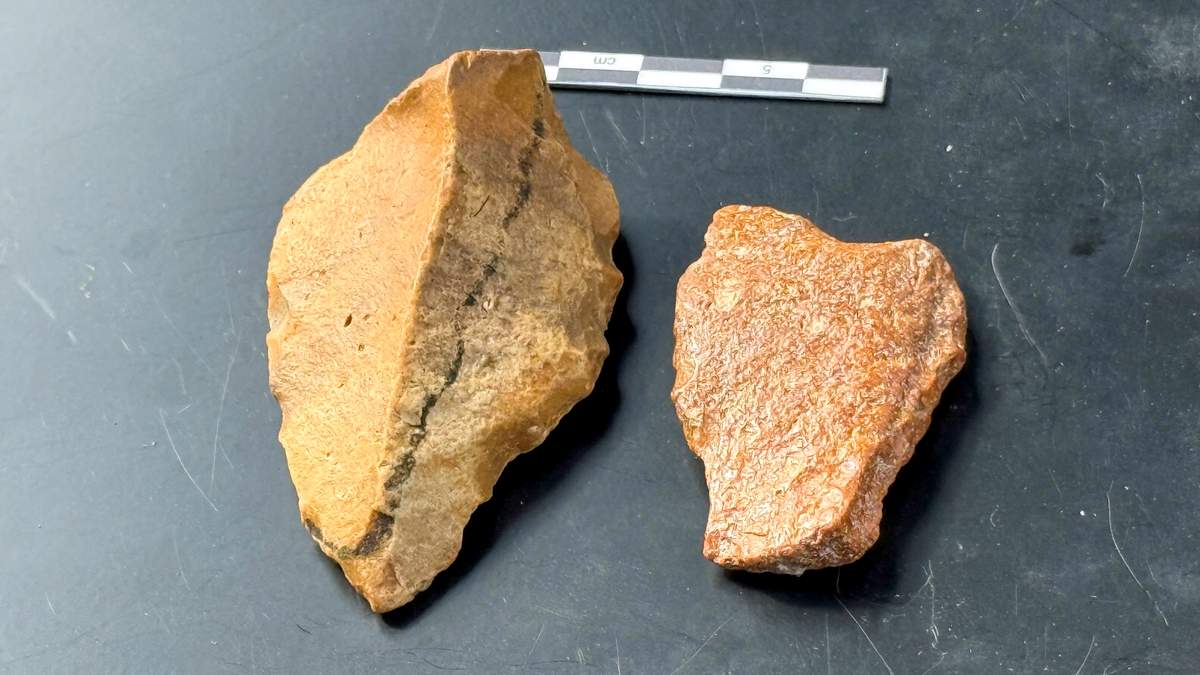
Stone tools are seen at the site in the Wallacea region. Photos were taken in Soppeng, Indonesia, on Aug. 6.
17:10 JST, August 29, 2025
SOPPENG, Indonesia (Reuters) — Scientists have found a series of stone tools on Indonesia’s Sulawesi island they say may be evidence of humans living 1.5 million years ago on islands between Asia and Australia, the earliest known humans in the Wallacea region.
Archaeologists from Australia and Indonesia found the small, chipped tools, used to cut little animals and carve rocks, under the soil in the region of Soppeng in South Sulawesi. Radioactive tracing of these tools and the teeth of animals found around the site were dated at up to 1.48 million years ago.
The findings could transform theories of early human migrations, according to an article the archaeologists published in the journal Nature in August.
The earliest Wallacean humans, pre-historic persons known as Homo Erectus, were thought to have only settled in Indonesia’s Flores island and Philippines’ Luzon island around 1.02 million years ago, as they were thought to be incapable of distant sea travel, proving the significance of the Sulawesi findings in theories of migration.
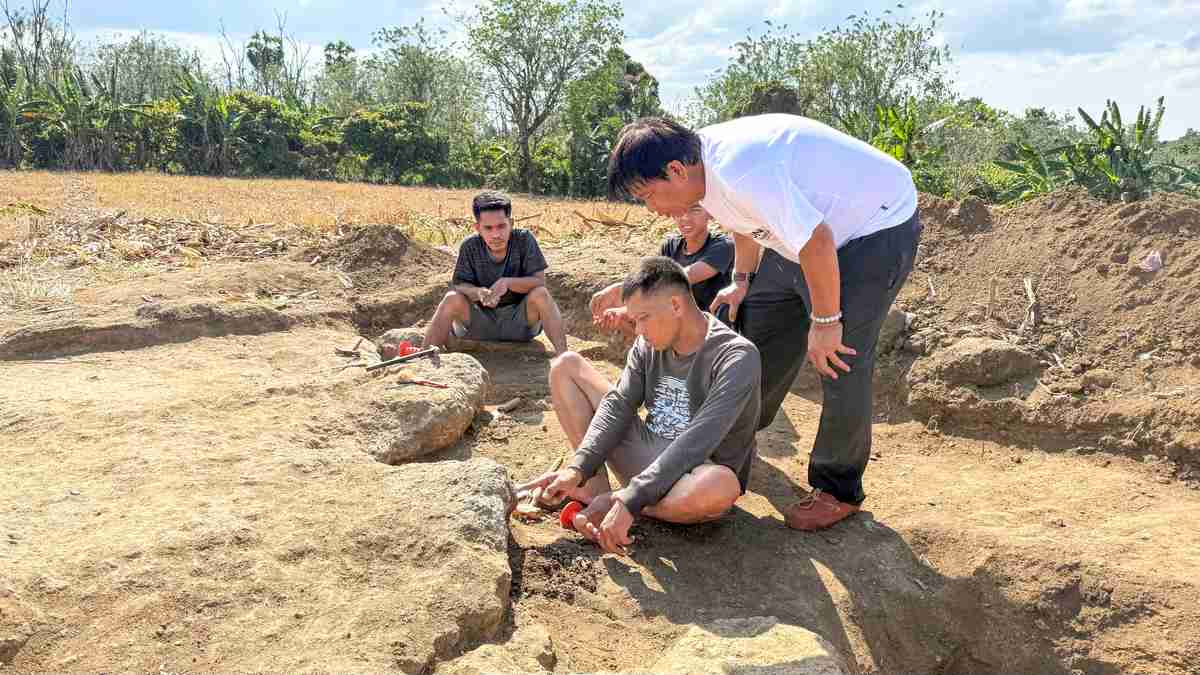
Archaeologists work at the site.
“These were artefacts made by ancient humans who lived on the earth long before the evolution of our species, Homo Sapiens,” said Adam Brumm, lead archaeologist from Griffith University in Queensland, Australia.
“We think Homo Erectus somehow got from the Asian mainland across a significant ocean gap to this island, Sulawesi, at least 1 million years ago,” Brumm said.
Wallacea is a region in Eastern Indonesia including several islands such as Sulawesi, Lombok, Flores, Timor and Sumbawa that lie between Borneo and Java and Australia and New Guinea. The region is named for the naturalist Alfred Russel Wallace, who studied the fauna and flora of the area.






Most Read
Popular articles in the past 24 hours
-

Ransomware Attacks Hitting Japan's Small, Midsize Firms
-

German Journalist Traces Footsteps of Great-Grandfather Who Was P...
-

10 Foreign Tourists Sustain Injuries After Fire at Capsule Hotel ...
-

World Baseball Classic: Venezuela Beats Japan in Nail-biting Back...
-

Rapid Services Resume on JR Chuo Line; Suspension Caused by Accid...
-

Rapid Services on JR Chuo Line Suspended; Accident at Kokubunji S...
-

World Baseball Classic: Venezuela Beats Japan in Back-and-Forth Q...
-

World Baseball Classic: Red Sox’s Abreu Hits 3-run Homer, Giving ...
Popular articles in the past week
-

Japan Figure Skating Legend Yuzuru Hanyu Is Proud Disaster Surviv...
-
15 Measles Patients Confirmed in Tokyo in Past 6 Days; 1 May Have...
-

Massive Sewer Pipe Found Jutting Out of Highway in Osaka
-

Japan Govt to Tighten Requirements to Receive Permanent Residency...
-
Power Outage Forces About 980 Passengers in Yokohama to Walk to T...
-
JR Tokai Breaks Ground on Yamanashi Maglev Station; Will Be Part ...
-

Parents in Japan to Get Instagram Notifications When Teens Repeat...
-
'World's Oldest Bio-Business' Is Japan's Seed Koji Retailing, Mol...
Popular articles in the past month
-

Producer Behind Pop Group XG Arrested for Cocaine Possession
-

Japan PM Takaichi’s Cabinet Resigns en Masse
-

Man Infected with Measles Reportedly Dined at Restaurant in Tokyo...
-
Japan Figure Skating Legend Yuzuru Hanyu Is Proud Disaster Surviv...
-

iPS Treatments Pass Key Milestone, but Broader Applications Far f...
-

Sanae Takaichi Elected Prime Minister of Japan; Keeps All Cabinet...
-

South Korea Tightens Rules on Foreigners Buying Homes in Seoul Me...
-

Nepal Bus Crash Kills 19 People, Injures 25 Including One Japanes...
Top Articles in Science & Nature
-
iPS Treatments Pass Key Milestone, but Broader Applications Far from Guaranteed
-

Record 700 Startups to Gather at SusHi Tech Tokyo in April; Event Will Center on Themes Like Artificial Intelligence and Robotics
-
Parents in Japan to Get Instagram Notifications When Teens Repeatedly Search for Suicide Content
-
iPS Cell Products for Parkinson’s, Heart Disease OK’d for Commercialization by Japan Health Ministry Panel
-

Japan to Ban Use of Power Banks on Airplanes
JN ACCESS RANKING
-
Producer Behind Pop Group XG Arrested for Cocaine Possession
-
Japan PM Takaichi’s Cabinet Resigns en Masse
-
Man Infected with Measles Reportedly Dined at Restaurant in Tokyo Station
-
Japan Figure Skating Legend Yuzuru Hanyu Is Proud Disaster Survivor and Gold Medalist, Vows to Continue Support Efforts
-
iPS Treatments Pass Key Milestone, but Broader Applications Far from Guaranteed