
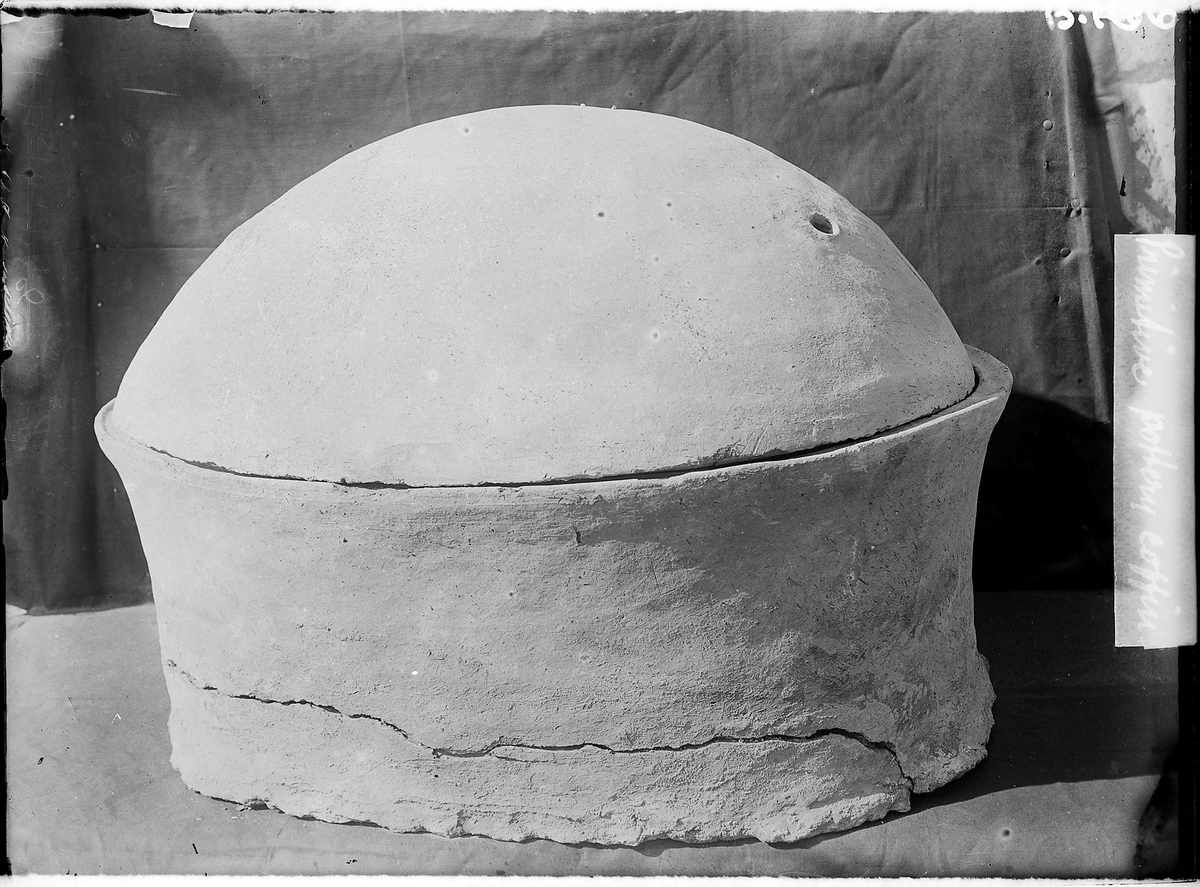
An ancient Egyptian ceramic pot excavated at a site of rock-cut tombs. These photos were taken in Nuwayrat, Egypt, in 1902 when the caves and pot were excavated, and released on July 2.
11:44 JST, July 9, 2025
WASHINGTON (AP) — Ancient DNA has revealed a genetic link between the cultures of ancient Egypt and Mesopotamia, according to research published on July 2 in the journal Nature.
Researchers sequenced whole genomes from the teeth of a remarkably well-preserved skeleton found in a sealed funeral pot in an Egyptian tomb site dating to between roughly 4,500 and 4,800 years ago.
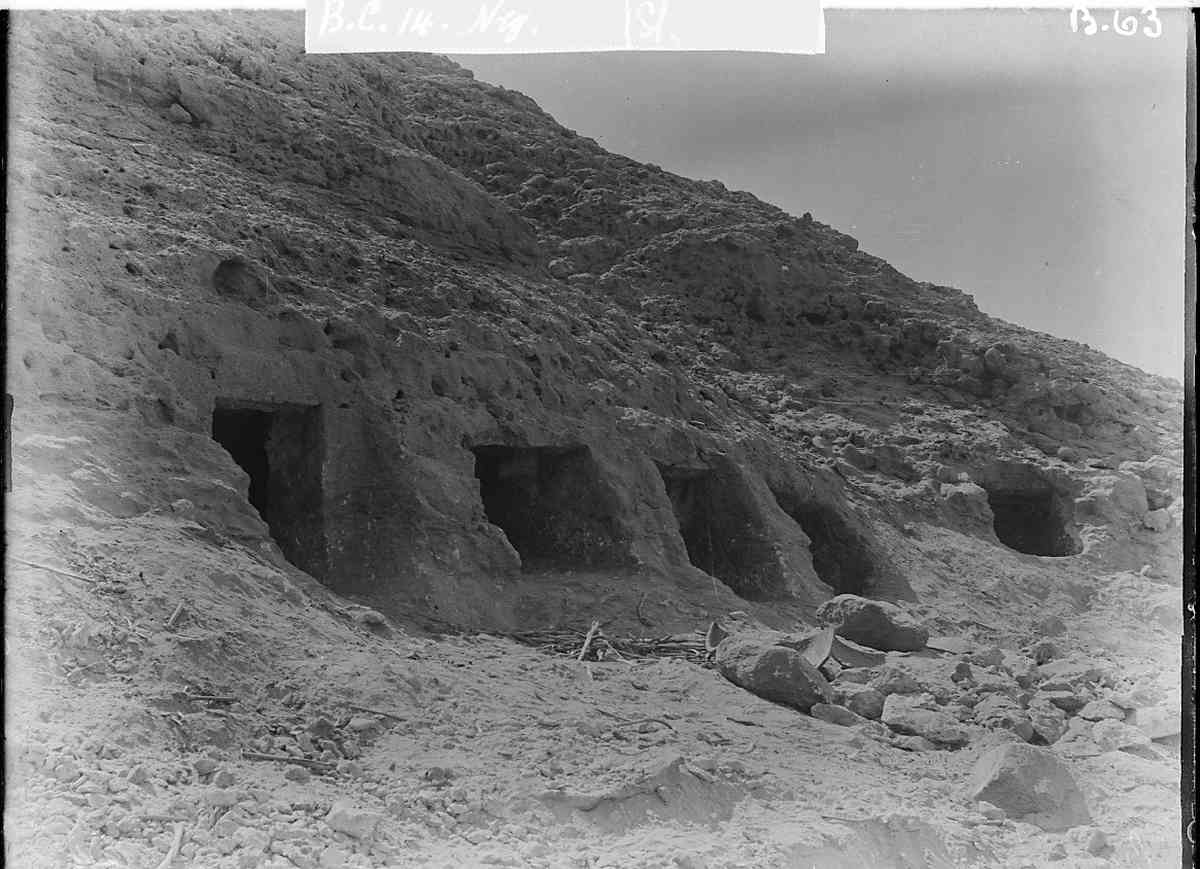
Rock-cut tombs
Four-fifths of the genome showed links to North Africa and the region around Egypt. But a fifth of the genome showed links to the area in the Middle East between the Tigris and Euphrates Rivers, known as the Fertile Crescent, where Mesopotamian civilization flourished.
“The finding is highly significant” because it “is the first direct evidence of what has been hinted at” in prior work, said Daniel Antoine, curator of Egypt and Sudan at the British Museum.
Earlier archeological evidence has shown trade links between Egypt and Mesopotamia, as well as similarities in pottery-making techniques and pictorial writing systems. While resemblances in dental structures suggested possible ancestral links, the new study clarifies the genetic ties.
The Nile River is “likely to have acted as an ancient superhighway, facilitating the movement of not only cultures and ideas, but people,” said Antoine, who was not involved in the study.
The skeleton was found in an Egyptian tomb complex at the archaeological site of Nuwayrat, inside a chamber carved out from a rocky hillside. An analysis of wear and tear on the skeleton — and the presence of arthritis in specific joints — indicates the man was likely in his 60s and may have worked as a potter, said coauthor and bioarchaeologist Joel Irish of Liverpool John Moores University.
The man lived just before or near the start of ancient Egypt’s Old Kingdom, when Upper and Lower Egypt were unified as one state, leading to a period of relative political stability and cultural innovation — including the construction of the Giza pyramids.
“This is the time that centralized power allowed the formation of ancient Egypt as we know it,” said coauthor Linus Girdland-Flink, a paleogeneticist at the University of Aberdeen.
At approximately the same time, Sumerian city-states took root in Mesopotamia and cuneiform emerged as a writing system.
Researchers said analysis of other ancient DNA samples is needed to obtain a clearer picture of the extent and timing of movements between the two cultural centers.








Most Read
Popular articles in the past 24 hours
-

German Journalist Traces Footsteps of Great-Grandfather Who Was P...
-

10 Foreign Tourists Sustain Injuries After Fire at Capsule Hotel ...
-

World Baseball Classic: Venezuela Beats Japan in Nail-biting Back...
-

Rapid Services Resume on JR Chuo Line; Suspension Caused by Accid...
-

Rapid Services on JR Chuo Line Suspended; Accident at Kokubunji S...
-

World Baseball Classic: Venezuela Beats Japan in Back-and-Forth Q...
-

World Baseball Classic: Red Sox’s Abreu Hits 3-run Homer, Giving ...
-

Zelenskiy Says Ukraine Wants Money, Technology in Return for Midd...
Popular articles in the past week
-

Japan Figure Skating Legend Yuzuru Hanyu Is Proud Disaster Surviv...
-
15 Measles Patients Confirmed in Tokyo in Past 6 Days; 1 May Have...
-

Massive Sewer Pipe Found Jutting Out of Highway in Osaka
-

Japan Govt to Tighten Requirements to Receive Permanent Residency...
-

Power Outage Forces About 980 Passengers in Yokohama to Walk to T...
-

JR Tokai Breaks Ground on Yamanashi Maglev Station; Will Be Part ...
-

Parents in Japan to Get Instagram Notifications When Teens Repeat...
-

'World's Oldest Bio-Business' Is Japan's Seed Koji Retailing, Mol...
Popular articles in the past month
-

Producer Behind Pop Group XG Arrested for Cocaine Possession
-

Japan PM Takaichi’s Cabinet Resigns en Masse
-

Man Infected with Measles Reportedly Dined at Restaurant in Tokyo...
-
Japan Figure Skating Legend Yuzuru Hanyu Is Proud Disaster Surviv...
-

iPS Treatments Pass Key Milestone, but Broader Applications Far f...
-

Sanae Takaichi Elected Prime Minister of Japan; Keeps All Cabinet...
-

South Korea Tightens Rules on Foreigners Buying Homes in Seoul Me...
-

Nepal Bus Crash Kills 19 People, Injures 25 Including One Japanes...
Top Articles in Science & Nature
-
iPS Treatments Pass Key Milestone, but Broader Applications Far from Guaranteed
-

Record 700 Startups to Gather at SusHi Tech Tokyo in April; Event Will Center on Themes Like Artificial Intelligence and Robotics
-
Parents in Japan to Get Instagram Notifications When Teens Repeatedly Search for Suicide Content
-
iPS Cell Products for Parkinson’s, Heart Disease OK’d for Commercialization by Japan Health Ministry Panel
-

Japan to Ban Use of Power Banks on Airplanes
JN ACCESS RANKING
-
Producer Behind Pop Group XG Arrested for Cocaine Possession
-
Japan PM Takaichi’s Cabinet Resigns en Masse
-
Man Infected with Measles Reportedly Dined at Restaurant in Tokyo Station
-
Japan Figure Skating Legend Yuzuru Hanyu Is Proud Disaster Survivor and Gold Medalist, Vows to Continue Support Efforts
-
iPS Treatments Pass Key Milestone, but Broader Applications Far from Guaranteed