
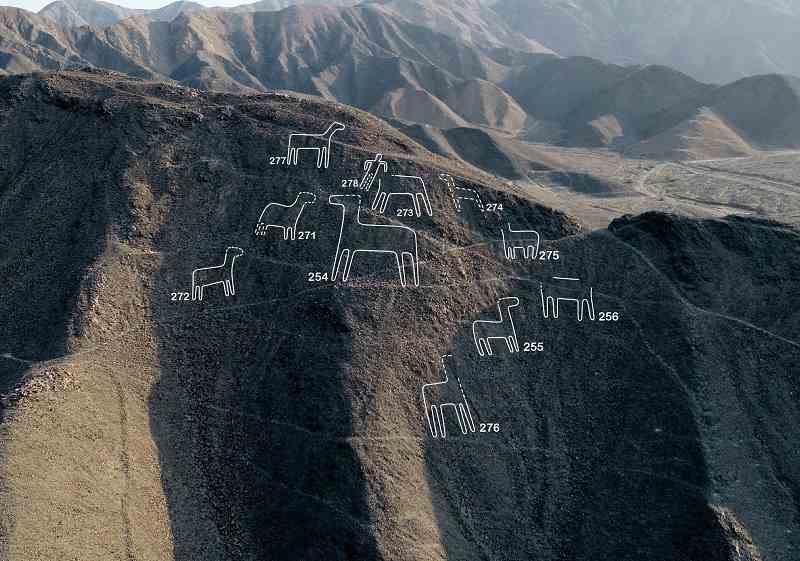
A general view shows mapping of geoglyphs found in the Nazca Plain as part of research led by Peruvian and Japanese researchers from Yamagata University, in this undated photo released on Dec. 19.
19:42 JST, January 13, 2023
More than a hundred new designs discovered in and around Peru’s ancient Nazca Plain and surrounding areas could bring new information to light about the mysterious pre-Columbian artworks that have intrigued scientists and visitors for decades.
Following two years of field surveys with aerial photos and drones, Peruvian and Japanese researches from Yamagata University in December reported the discovery of 168 new designs at the UNESCO World Heritage site on Peru’s southern Pacific coast.
The geoglyphs, huge figures carved into the South American desert, date back more than 2,000 years and represent humans, cats, snakes, killer whales, birds and native camalids — animals such as llamas, guanacos and alpacas.
Jorge Olano, head archaeologist for the Nazca Lines research program, said the new figures averaged between 2 and 6 meters in length. The purpose of the Nazca lines, which could only be seen from the air, remain a mystery.
Last month’s findings, however, are smaller and can be seen from the ground, Masato Sakai, a professor from Yamagata University who led the study, told Reuters.
The figures, iconic vestiges of Peru’s rich history, are about a three-hour drive from the capital Lima.
Researchers had already discovered 190 figures in the area since 2004. But the vastness of the terrain they cover has complicated efforts to study and conserve the heritage site.
Yamagata University said the research will be used in artificial intelligence-based surveys to help inform the lines’ preservation.
Studies from the university in collaboration with Peru’s government have helped delineate and protect the area, which is facing threats from urban and economic developments.
“Some geoglyphs are in danger of being destroyed due to the recent expansion of mining-related workshops in the archaeological park,” Sakai said.






Most Read
Popular articles in the past 24 hours
-

10 Foreign Tourists Sustain Injuries After Fire at Capsule Hotel ...
-

World Baseball Classic: Venezuela Beats Japan in Nail-biting Back...
-

Zelenskiy Says Ukraine Wants Money, Technology in Return for Midd...
-

Rapid Services Resume on JR Chuo Line; Suspension Caused by Accid...
-

Rapid Services on JR Chuo Line Suspended; Accident at Kokubunji S...
-

World Baseball Classic: Venezuela Beats Japan in Back-and-Forth Q...
-

World Baseball Classic: Red Sox’s Abreu Hits 3-run Homer, Giving ...
-

Rich Local Ingredients Make Nagato Oden Popular Dish
Popular articles in the past week
-

Japan Figure Skating Legend Yuzuru Hanyu Is Proud Disaster Surviv...
-
15 Measles Patients Confirmed in Tokyo in Past 6 Days; 1 May Have...
-

Massive Sewer Pipe Found Jutting Out of Highway in Osaka
-

Japan Govt to Tighten Requirements to Receive Permanent Residency...
-

Power Outage Forces About 980 Passengers in Yokohama to Walk to T...
-
JR Tokai Breaks Ground on Yamanashi Maglev Station; Will Be Part ...
-

Parents in Japan to Get Instagram Notifications When Teens Repeat...
-
'World's Oldest Bio-Business' Is Japan's Seed Koji Retailing, Mol...
Popular articles in the past month
-

Producer Behind Pop Group XG Arrested for Cocaine Possession
-

Japan PM Takaichi’s Cabinet Resigns en Masse
-

Man Infected with Measles Reportedly Dined at Restaurant in Tokyo...
-
Japan Figure Skating Legend Yuzuru Hanyu Is Proud Disaster Surviv...
-

iPS Treatments Pass Key Milestone, but Broader Applications Far f...
-

Sanae Takaichi Elected Prime Minister of Japan; Keeps All Cabinet...
-

South Korea Tightens Rules on Foreigners Buying Homes in Seoul Me...
-

Nepal Bus Crash Kills 19 People, Injures 25 Including One Japanes...
Top Articles in Science & Nature
-
iPS Treatments Pass Key Milestone, but Broader Applications Far from Guaranteed
-

Record 700 Startups to Gather at SusHi Tech Tokyo in April; Event Will Center on Themes Like Artificial Intelligence and Robotics
-
Parents in Japan to Get Instagram Notifications When Teens Repeatedly Search for Suicide Content
-
iPS Cell Products for Parkinson’s, Heart Disease OK’d for Commercialization by Japan Health Ministry Panel
-

Japan to Ban Use of Power Banks on Airplanes
JN ACCESS RANKING
-
Producer Behind Pop Group XG Arrested for Cocaine Possession
-
Japan PM Takaichi’s Cabinet Resigns en Masse
-
Man Infected with Measles Reportedly Dined at Restaurant in Tokyo Station
-
Japan Figure Skating Legend Yuzuru Hanyu Is Proud Disaster Survivor and Gold Medalist, Vows to Continue Support Efforts
-
iPS Treatments Pass Key Milestone, but Broader Applications Far from Guaranteed