
Japan’s PM Seen Likely to Take Chance on Snap Election to Achieve Stable Administration
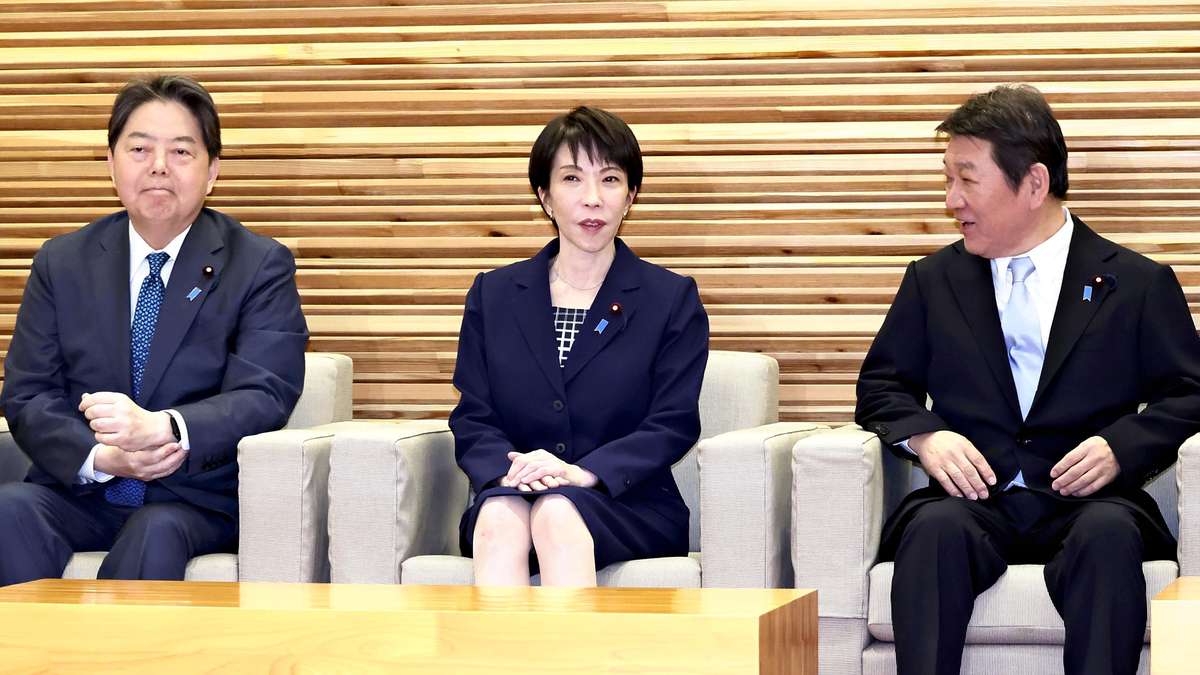
Prime Minister Sanae Takaichi, center, and other Cabinet members attend a meeting at the Prime Minister’s Office on Friday.
15:49 JST, January 10, 2026
Prime Minister Sanae Takaichi’s decision to consider dissolving the House of Representatives is based on her judgment that it is necessary to take a chance on a snap election to secure public trust at an early stage and stabilize the foundation of her administration.
Seeing the sustained high approval ratings of her Cabinet as an opportunity, Takaichi appears to have decided, despite voices seeking caution, to play a card she had quietly been considering since taking office.
Takaichi asked some senior Liberal Democratic Party lawmakers in Tokyo in late November, “What would you think if I dissolved [the lower house] at the start of the new year?” in an attempt to gauge the mood of her party.
One was positive, saying, “We would definitely gain seats.” Another, however, expressed caution, telling her: “While your popularity is high, the party’s approval ratings haven’t risen. We’d face backlash from the public.” No decision was reached at the time, and Takaichi seemed to shelve the idea of an early dissolution.
However, Takaichi has remained dissatisfied with the present state of national politics and continues to seek a breakthrough. In the lower house, the ruling coalition of the LDP and the Japan Innovation Party, together with non-affiliated lawmakers, hold a narrow majority. In the House of Councillors, the LDP and the JIP are a ruling minority.
Even if Takaichi wants to push forward with her bold, flagship policies, such as aggressive fiscal spending and the strengthening of intelligence gathering and analysis capabilities, they would likely to face resistance from opposition parties and thus be difficult to implement.
There is a view spreading that Japan-China relations, which have become further strained following Takaichi’s remarks in the Diet regarding a potential Taiwan contingency, are likely to persist for some time.
Takaichi likely feels the need to bolster her leadership through victory in a lower house election to create an environment more conducive to calmly engaging with China. She was also advised that it would be wise to “seek the public’s trust while her Cabinet’s approval ratings are high.” The benefits of a preemptive move thus appear to be significant.
A secret LDP survey on a lower house election conducted in November projected the party could win over 260 seats. Another survey at the start of the year showed even stronger sentiment, further bolstering Takaichi’s resolve.
Takaichi instructed her aides last month to propose dates for the dissolution up until the end of the first half of this year. The earliest option was the end of the extraordinary Diet session at the end of December, but this was not selected to avoid disrupting work on compiling next fiscal year’s budget. The focus then shifted to the next date – the opening of the next ordinary Diet session.
At the ordinary Diet session, scheduled to be convened on Jan. 23, deliberations are expected to continue on the budget proposal until the end of March. With Budget Committee meetings, where opposition parties can make their presence felt through asking tough questions, set to be held almost daily, concerns have been raised among those around Takaichi that if any scandals emerge, approval ratings could plummet.
A Japan-South Korea summit is scheduled in Nara Prefecture, Takaichi’s home turf, on Tuesday, and Italian Prime Minister Giorgia Meloni is set to visit Japan starting Thursday. This could be an opportunity for Takaichi to demonstrate her diplomatic capabilities, which would create conditions favorable for the dissolution.
However, the outcome of playing such a high-stakes game remains uncertain. Even if the Diet was reconvened in mid-February following a lower house election, passing the fiscal 2026 budget within the current fiscal year, after deliberations in both houses, would be difficult.
Opposition parties are certain to question Takaichi’s consistency with her stance of prioritizing economic measures. There is also the possibility of backlash from the JIP, which has not seen its key policy demands — such as a reduction in the number of lower house seats — realized.
According to a Yomiuri Shimbun survey last month, the Cabinet approval rating stood at 73%, but support for the LDP was only 30%. This falls short even of the level seen before the 2024 lower house election, in which the LDP suffered a crushing defeat under former Prime Minister Shigeru Ishiba.
The LDP also cannot now count on Komeito votes, estimated at 10,000 to 20,000 per single-seat constituency for LDP candidates. Within the LDP, there remains deep-rooted unease as Cabinet approval ratings is not a perfect predictor of voting behavior.








Most Read
Popular articles in the past 24 hours
-
15 Measles Patients Confirmed in Tokyo in Past 6 Days; 1 May Have...
-

‘King Kazu’ Discusses His Connection to Fukushima
-
JR Tokai Breaks Ground on Yamanashi Maglev Station; Will Be Part ...
-

Japan Closely Monitoring Situation around Hormuz Strait, Collecti...
-

Japan’s Gunma Official Suspended For Unauthorized Absence From Wo...
-

Milano Cortina 2026: Japan’s Alpine Skier Muraoka Extends P...
-
Rising Kabuki Star Works to Ensure Deaf Audience's Enjoyment of P...
-

White House Takes First Step toward Permanent Fix for Illegal Tar...
Popular articles in the past week
-

Japan Figure Skating Legend Yuzuru Hanyu Is Proud Disaster Surviv...
-

Nippon Life Insurance's U.S. Arm Sues OpenAI Over Legal Assistanc...
-

Govt to Utilize ODA for Ensuring Economic Security; Securing Ener...
-

Massive Sewer Pipe Found Jutting Out of Highway in Osaka
-

Beckoning Cats Get Makeover to Fit Modern Lifestyles with Sleek D...
-
15 Measles Patients Confirmed in Tokyo in Past 6 Days; 1 May Have...
-
Japan Govt Survey Finds Just 10% of Workers Want Working Hours to...
-

Japan Govt to Tighten Requirements to Receive Permanent Residency...
Popular articles in the past month
-

Producer Behind Pop Group XG Arrested for Cocaine Possession
-

Japan PM Takaichi’s Cabinet Resigns en Masse
-

Man Infected with Measles Reportedly Dined at Restaurant in Tokyo...
-

Videos Plagiarized, Reposted with False Subtitles Claiming ‘Ryuky...
-
Japan Figure Skating Legend Yuzuru Hanyu Is Proud Disaster Surviv...
-

iPS Treatments Pass Key Milestone, but Broader Applications Far f...
-

Sanae Takaichi Elected Prime Minister of Japan; Keeps All Cabinet...
-

Nepal Bus Crash Kills 19 People, Injures 25 Including One Japanes...
Top Articles in Politics
-
Japan PM Takaichi’s Cabinet Resigns en Masse
-
Sanae Takaichi Elected Prime Minister of Japan; Keeps All Cabinet Appointees from Previous Term
-

Japan’s Govt to Submit Road Map for Growth Strategy in March, PM Takaichi to Announce in Upcoming Policy Speech
-
LDP Begins Training New Lawmakers to Avoid Scandal, Gaffes; Historic Victory in Latest Election Heightens Focus on Party
-

Japan PM Sanae Takaichi Welcomes Peach Ambassadors Koga Momo Musume to Official Residence
JN ACCESS RANKING
-
Producer Behind Pop Group XG Arrested for Cocaine Possession
-
Japan PM Takaichi’s Cabinet Resigns en Masse
-
Man Infected with Measles Reportedly Dined at Restaurant in Tokyo Station
-
Videos Plagiarized, Reposted with False Subtitles Claiming ‘Ryukyu Belongs to China’; Anti-China False Information Also Posted in Japan
-
Japan Figure Skating Legend Yuzuru Hanyu Is Proud Disaster Survivor and Gold Medalist, Vows to Continue Support Efforts