
When a Japanese Prime Minister Dissolves Lower House, History Is Made — for Better or Worse
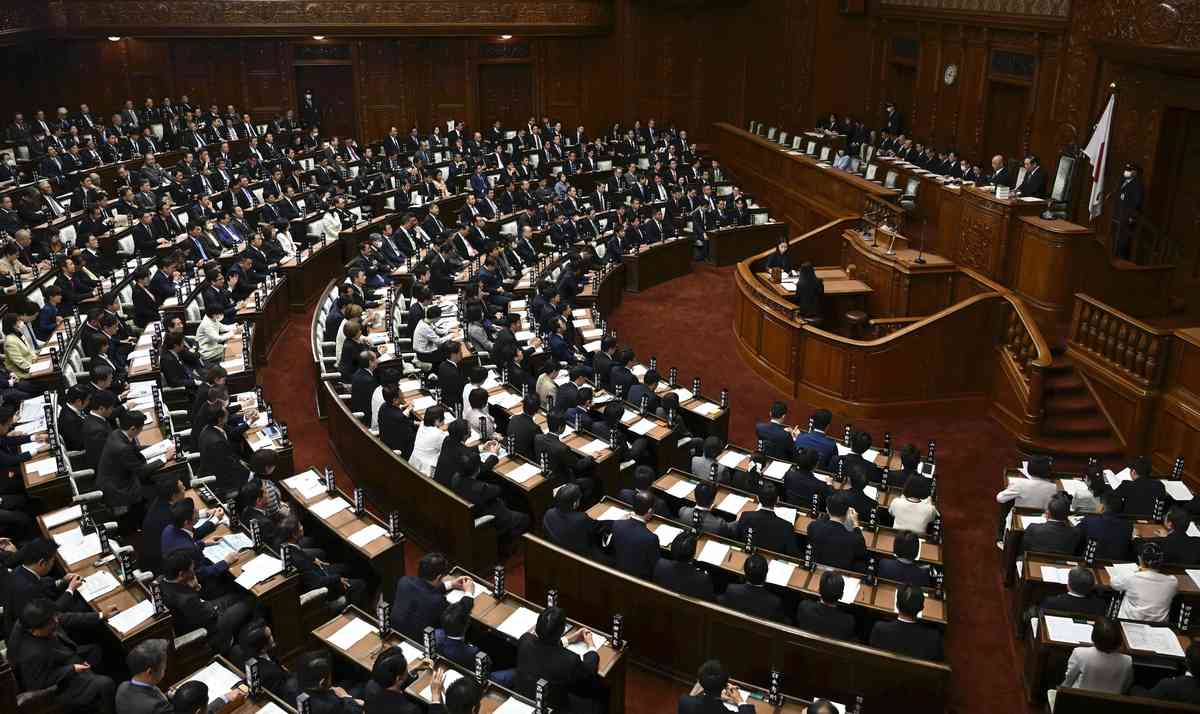
A plenary session of the House of Representatives is held in November in December.
14:36 JST, January 10, 2026
For successive prime ministers, dissolution of the House of Representatives — a move often called their “treasured family sword,” an idiom for a weapon of last resort — has been one of the most daunting political decisions, with its outcome dictating the very survival of their administrations.
Former Prime Minister Shinzo Abe, a role model for current Prime Minister Sanae Takaichi’s governance, strategically executed two Diet dissolutions at moments precisely chosen for their political advantage.
Backed by the Liberal Democratic Party’s sweeping victory in the December 2012 lower house election that marked the party’s return to power, Abe could afford to wait until November 2014 — about two years after taking office — to call his first dissolution.
In September 2017, he again gambled on a snap election, citing reasons such as a change in how consumption tax revenue would be used.
His resounding victories in both elections enabled him to lead the longest-running administration in Japan’s history.
Former Prime Minister Fumio Kishida, who took office in October 2021, dissolved the Diet just 10 days after his inauguration, successfully securing a standalone majority for the LDP.
He served as prime minister for a full three-year term as party president, marking the eighth-longest tenure since the end of World War II.
His successor as prime minister, Shigeru Ishiba, also opted for an early dissolution just as Kishida did. With only eight days passing from his start to the dissolution, he set a new post-war record for the quickest call to an election.
However, the administration was battered by severe headwinds such as the political funds scandals involving LDP factions, leading to a crushing defeat that reduced the LDP-Komeito coalition to a minority government.
Some leaders missed their best chance to act because they prioritized policy and were too cautious.
Upon taking office in September 2008, former Prime Minister Taro Aso was widely expected by his party to call an early election. However, the fallout from the Lehman Brothers collapse forced him to prioritize crisis management instead.
He ended up with a forced dissolution — often called being “driven into a corner” — leading to the LDP losing power to the Democratic Party of Japan.
Former Prime Minister Yoshihide Suga also enjoyed high approval ratings upon taking office in September 2020, fueling momentum for an early election. However, he chose to prioritize delivering tangible policy results before heading to the polls.
As the COVID-19 pandemic dragged on with no end in sight, his approval ratings continued to slide.
Unable to dissolve the Diet, he eventually dropped out of the party leadership race and stepped down in October 2021.








Most Read
Popular articles in the past 24 hours
-
Japan Govt to Tighten Requirements to Receive Permanent Residency...
-

Tail of ANA Plane Struck Runway During Landing in Houston; No Inj...
-

Medical Care at Home and Disasters: Ensure Systems to Provide Con...
-

Samurai Japan Holds First Practice in Miami; Team Will Play again...
-

CARTOON OF THE DAY (March 12)
-

White House Takes First Step toward Permanent Fix for Illegal Tar...
-

Iran Targets Busiest International Airport as Top UN Body Demands...
-

Japan to Face Venezuela in World Baseball Classic Quarterfinals
Popular articles in the past week
-

Japan Figure Skating Legend Yuzuru Hanyu Is Proud Disaster Surviv...
-

Nippon Life Insurance's U.S. Arm Sues OpenAI Over Legal Assistanc...
-
Govt to Utilize ODA for Ensuring Economic Security; Securing Ener...
-
Massive Sewer Pipe Found Jutting Out of Highway in Osaka
-

Beckoning Cats Get Makeover to Fit Modern Lifestyles with Sleek D...
-
Japan Govt Survey Finds Just 10% of Workers Want Working Hours to...
-
Japan's 2nd Round of U.S. Investments May Be Worth Over $100 Bill...
-

Imperial Family Watches World Baseball Classic Game Against Austr...
Popular articles in the past month
-

Producer Behind Pop Group XG Arrested for Cocaine Possession
-

Japan PM Takaichi’s Cabinet Resigns en Masse
-

Man Infected with Measles Reportedly Dined at Restaurant in Tokyo...
-

Videos Plagiarized, Reposted with False Subtitles Claiming ‘Ryuky...
-
Japan Figure Skating Legend Yuzuru Hanyu Is Proud Disaster Surviv...
-

iPS Treatments Pass Key Milestone, but Broader Applications Far f...
-

Sanae Takaichi Elected Prime Minister of Japan; Keeps All Cabinet...
-

Nepal Bus Crash Kills 19 People, Injures 25 Including One Japanes...
Top Articles in Politics
-
Japan PM Takaichi’s Cabinet Resigns en Masse
-
Sanae Takaichi Elected Prime Minister of Japan; Keeps All Cabinet Appointees from Previous Term
-

Japan’s Govt to Submit Road Map for Growth Strategy in March, PM Takaichi to Announce in Upcoming Policy Speech
-
LDP Begins Training New Lawmakers to Avoid Scandal, Gaffes; Historic Victory in Latest Election Heightens Focus on Party
-
Japan PM Sanae Takaichi Welcomes Peach Ambassadors Koga Momo Musume to Official Residence
JN ACCESS RANKING
-
Producer Behind Pop Group XG Arrested for Cocaine Possession
-
Japan PM Takaichi’s Cabinet Resigns en Masse
-
Man Infected with Measles Reportedly Dined at Restaurant in Tokyo Station
-
Videos Plagiarized, Reposted with False Subtitles Claiming ‘Ryukyu Belongs to China’; Anti-China False Information Also Posted in Japan
-
Japan Figure Skating Legend Yuzuru Hanyu Is Proud Disaster Survivor and Gold Medalist, Vows to Continue Support Efforts