
LDP, JIP Agree to Reduce Lower House Seats; Seats Will be ‘Automatically Reduced’ If No Concrete Plan Made Within 1 Year
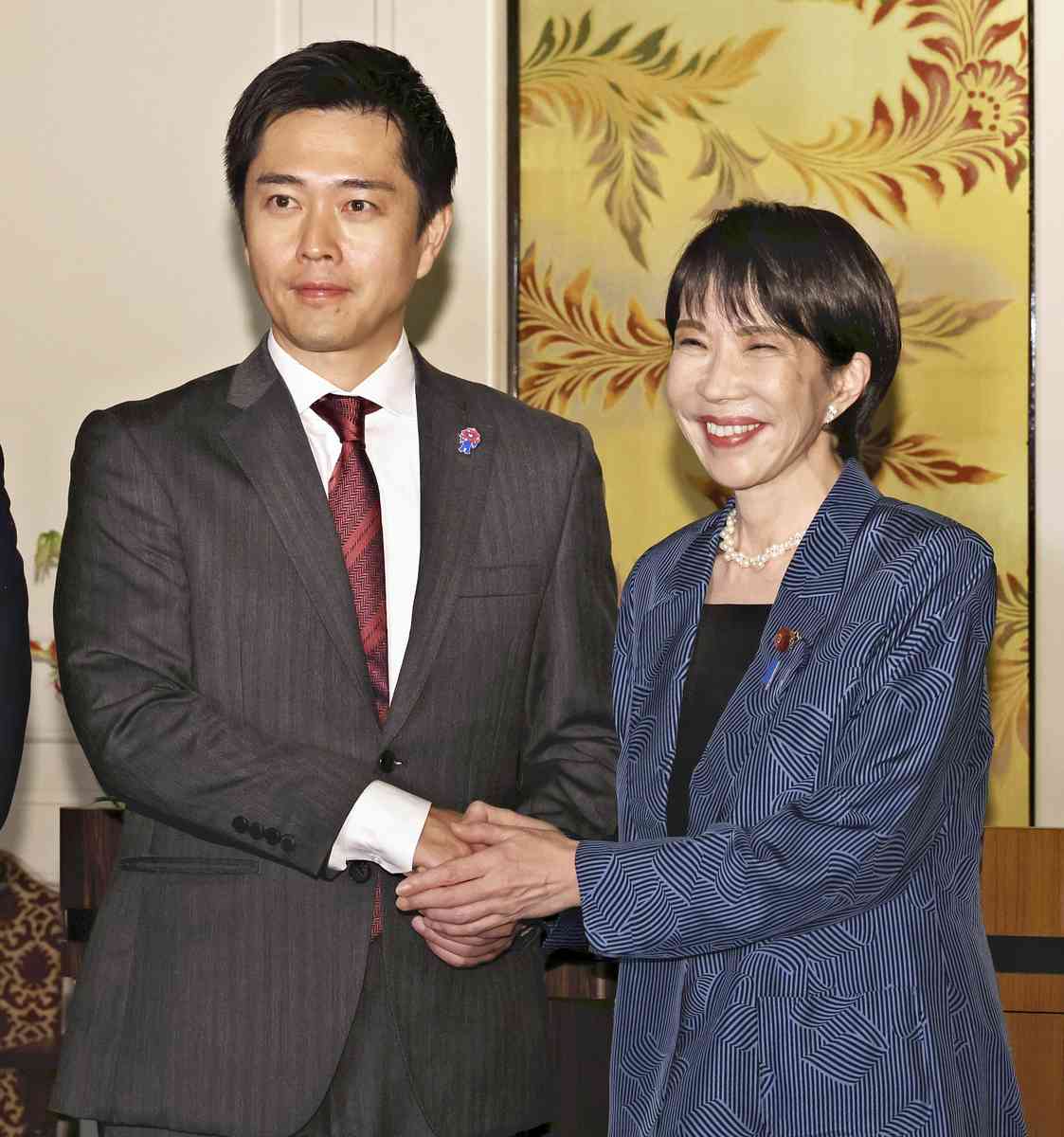
Prime Minister Sanae Takaichi, right, and Japan Innovation Party leader Hirofumi Yoshimura shake hands after signing an agreement for a coalition government in the Diet building on Oct. 20.
14:53 JST, December 2, 2025
The Liberal Democratic Party and its coalition partner the Japan Innovation Party agreed on Monday to include a provision in a seat reduction bill that would automatically reduce the number of seats in the House of Representatives by a total of 10% in single-seat constituencies and the proportional representation segment. The automatic reduction would come into effect if they fail to compile concrete ways to reduce seats within one year.
The two parties intend to make final adjustments on a baseline of reducing 45 seats in total — 25 in single-seat constituencies and 20 in the proportional representation segment. They plan to submit the bill to the Diet as early as the end of this week.
On Monday, Prime Minister Sanae Takaichi, who is also the LDP president, met with JIP leader Hirofumi Yoshimura, who is the governor of Osaka Prefecture, at the Prime Minister’s Office. The two agreed on the issue at the meeting and were joined by other members of the parties, including LDP Secretary General Shunichi Suzuki, JIP coleader Fumitake Fujita and JIP Secretary General Hiroshi Nakatsuka.
The two parties also agreed they will aim to pass the seat reduction bill during the current Diet session.
After the meeting, Yoshimura told reporters, “It is significant that both LDP President Takaichi and I were present at the meeting and reached an agreement.”
Upon launching their coalition government, the LDP and the JIP agreed to decrease lower house seats, aiming for a 10% reduction goal.
At their working-level meeting, both parties agreed to reduce the current 465 seats by at least 45 seats. They also agreed to entrust consultative meetings of ruling and opposition parties to make decisions on matters such as concrete ways to reduce the seats, with a conclusion to be reached within one year.
The JIP had originally asked for the bill to include a provision that if a conclusion was not reached within one year, 50 seats would automatically be reduced from the proportional representation segment. Based on that original proposal, the two parties have continued their discussions.
The ruling parties do not hold a majority in the House of Councillors, which means they must gain the cooperation of opposition parties in order to pass the bill.
Jun Azumi, secretary general of the major opposition Constitutional Democratic Party of Japan told reporters on Monday: “I’d like to hear [from the ruling parties] on why they decided on a reduction of 10% in one year. At present, it’s difficult to say whether our party is for or against the bill.”









Most Read
Popular articles in the past 24 hours
-
JR Tokai Breaks Ground on Yamanashi Maglev Station; Will Be Part ...
-

‘King Kazu’ Discusses His Connection to Fukushima
-

Japan’s Gunma Official Suspended For Unauthorized Absence From Wo...
-

Milano Cortina 2026: Japan’s Alpine Skier Muraoka Extends P...
-
Rising Kabuki Star Works to Ensure Deaf Audience's Enjoyment of P...
-

Lady Bess: Iroha Okuda, Mayuko Kominami Discuss Performing Elizab...
-

Trump Discourages Iranian Soccer Team from Attending the World Cu...
-

Driver Dies in Collision with Express Train at Crossing in Mito; ...
Popular articles in the past week
-

Japan Figure Skating Legend Yuzuru Hanyu Is Proud Disaster Surviv...
-

Nippon Life Insurance's U.S. Arm Sues OpenAI Over Legal Assistanc...
-
Govt to Utilize ODA for Ensuring Economic Security; Securing Ener...
-
Massive Sewer Pipe Found Jutting Out of Highway in Osaka
-
15 Measles Patients Confirmed in Tokyo in Past 6 Days; 1 May Have...
-

Beckoning Cats Get Makeover to Fit Modern Lifestyles with Sleek D...
-

Japan Govt to Tighten Requirements to Receive Permanent Residency...
-
Japan Govt Survey Finds Just 10% of Workers Want Working Hours to...
Popular articles in the past month
-

Producer Behind Pop Group XG Arrested for Cocaine Possession
-

Japan PM Takaichi’s Cabinet Resigns en Masse
-

Man Infected with Measles Reportedly Dined at Restaurant in Tokyo...
-

Videos Plagiarized, Reposted with False Subtitles Claiming ‘Ryuky...
-
Japan Figure Skating Legend Yuzuru Hanyu Is Proud Disaster Surviv...
-

iPS Treatments Pass Key Milestone, but Broader Applications Far f...
-

Sanae Takaichi Elected Prime Minister of Japan; Keeps All Cabinet...
-

Nepal Bus Crash Kills 19 People, Injures 25 Including One Japanes...
Top Articles in Politics
-
Japan PM Takaichi’s Cabinet Resigns en Masse
-
Sanae Takaichi Elected Prime Minister of Japan; Keeps All Cabinet Appointees from Previous Term
-
Japan’s Govt to Submit Road Map for Growth Strategy in March, PM Takaichi to Announce in Upcoming Policy Speech
-
LDP Begins Training New Lawmakers to Avoid Scandal, Gaffes; Historic Victory in Latest Election Heightens Focus on Party
-

Japan PM Sanae Takaichi Welcomes Peach Ambassadors Koga Momo Musume to Official Residence
JN ACCESS RANKING
-
Producer Behind Pop Group XG Arrested for Cocaine Possession
-
Japan PM Takaichi’s Cabinet Resigns en Masse
-
Man Infected with Measles Reportedly Dined at Restaurant in Tokyo Station
-
Videos Plagiarized, Reposted with False Subtitles Claiming ‘Ryukyu Belongs to China’; Anti-China False Information Also Posted in Japan
-
Japan Figure Skating Legend Yuzuru Hanyu Is Proud Disaster Survivor and Gold Medalist, Vows to Continue Support Efforts