
Japan’s LDP Mulls Timing, Method of Party Presidential Election to Select Ishiba’s Successor
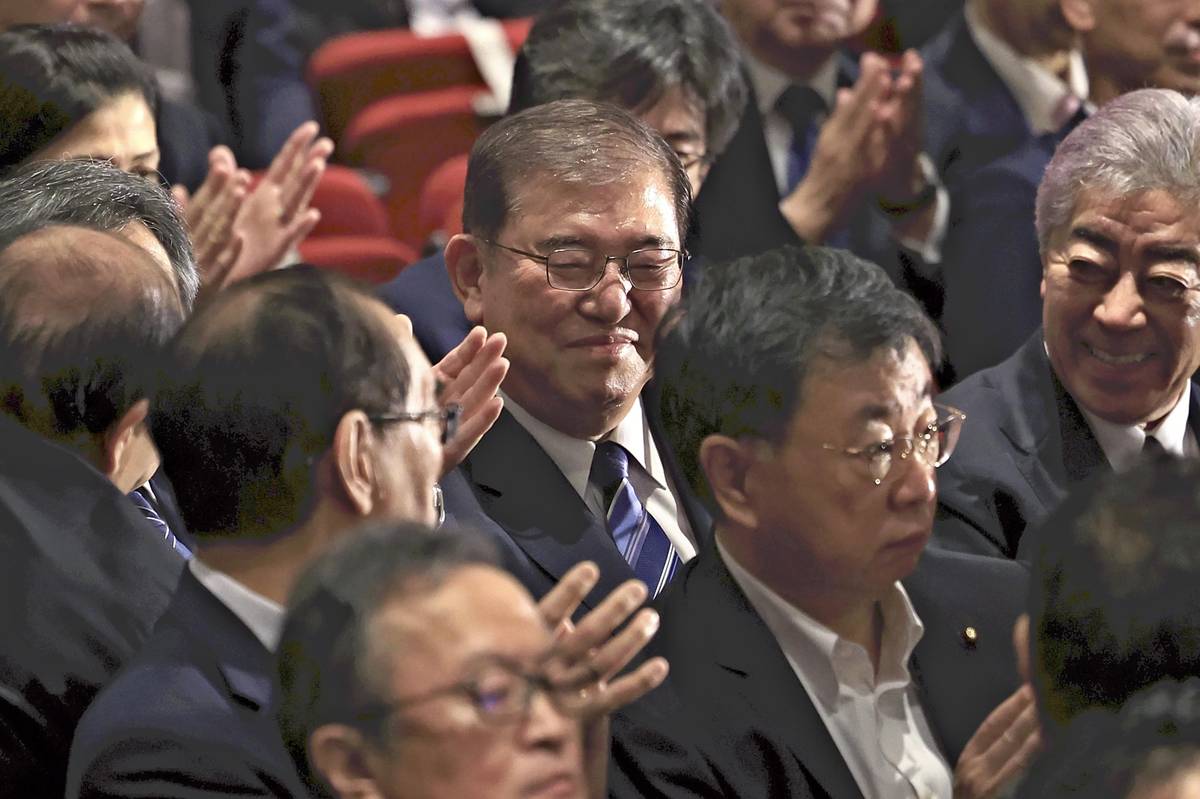
Prime Minister Shigeru Ishiba, center, at the LDP presidential election held last September
6:00 JST, July 25, 2025
The timing of when Prime Minister Shigeru Ishiba announces his resignation and when that resignation goes into effect will impact when and in what way the Liberal Democratic Party, of which he is president, will hold an election to choose his successor.
Several LDP members have called for a swift resignation announcement by Ishiba and holding of a presidential election. “The longer the prime minister stays in office, the more we will lose support for the party,” a mid-ranking LDP member said.
However, a politically quiet setting is desirable as for instance, the nation will observe the anniversary of the end of World War II on Aug. 15. Opinions are divided therefore on the specifics of the ideal schedule of events.
A proposal has been floated among LDP executive members to hold the vote in September and convene an extraordinary session of the Diet for the prime ministerial election in October. This assumes that Ishiba stays in office until the Ninth Tokyo International Conference on African Development (TICAD 9) scheduled for Aug. 20-22, which is the main diplomatic event in August.
Considering that the LDP-Komeito ruling coalition holds a minority in both the House of Representatives and House of Councillors, a senior LDP member said, “we need to set aside enough time to confirm that non-ruling party forces will not unite in the prime ministerial election to replace the government.”
Attention is also being paid to how the LDP presidential election will be conducted.
According to LDP regulations, the party president can be chosen at a joint plenary meeting of LDP members of both houses of the Diet “in cases of particular urgency” as the president is unable to fulfill their term. Each LDP member in the Diet can cast one vote and each prefectural chapter three votes, increasing the weight of legislators’ votes in this election format.
However, if there is sufficient time after Ishiba’s resignation announcement, there may be increasing calls for the LDP presidential election held in a “complete form” that gives party members voting parity with Diet members.
In the LDP’s presidential election in September last year, former economic security minister Sanae Takaichi came out on top in the votes cast by rank-and-file members in the first round of voting. Lawmakers and others supporting Takaichi argued that the next presidential election should be conducted in the complete form to “listen to the voices of party members, given the party’s critical situation.”
On the other hand, some LDP executives who are wary of Takaichi’s hard-line conservative stance are believed to be aiming to for a general meeting of LDP lawmakers from both houses of the Diet as the way to select the new party president.


Related Tags

Most Read
Popular articles in the past 24 hours
-

Director Naomi Kawase's New Film Explores Heart Transplants in Ja...
-

Japan’s Nikkei Stock Average Rises on Tech Rally and Takaichi's S...
-

Takaichi Expected to Express Desire for Constitutional Revision P...
-
Japanese Man Living in Iraq Suspected of Illegally Entering U.S. ...
-

Security Services Law Unconstitutional: Do Not Restrict Career Ch...
-

Milano Cortina 2026: Snowboarding Star Fukada Wins Gold in Hard-F...
-

New Leader of Japan's CRA Opposition Party Faces Challenge of For...
-

Tokyo Exhibition Featuring VR Walk Through 2025 Osaka-Kansai Expo...
Popular articles in the past week
-

Japan PM Takaichi’s Cabinet Resigns en Masse
-

Man Infected with Measles Reportedly Dined at Restaurant in Tokyo...
-

Videos Plagiarized, Reposted with False Subtitles Claiming ‘Ryuky...
-

Sanae Takaichi Elected 105th Prime Minister of Japan; Keeps All C...
-

Japan's Govt to Submit Road Map for Growth Strategy in March, PM ...
-

Milano Cortina 2026: Figure Skaters Riku Miura, Ryuichi Kihara Pa...
-

Tokyo’s New Record-Breaking Fountain Named ‘Tokyo Aqua Symphony’
-

Bus Carrying 40 Passengers Catches Fire on Chuo Expressway; All E...
Popular articles in the past month
-
Japan PM Takaichi’s Cabinet Resigns en Masse
-

Japan Institute to Use Domestic Commercial Optical Lattice Clock ...
-

Israeli Ambassador to Japan Speaks about Japan’s Role in the Reco...
-
Man Infected with Measles Reportedly Dined at Restaurant in Tokyo...
-

Man Infected with Measles May Have Come in Contact with Many Peop...
-

Prudential Life Insurance Plans to Fully Compensate for Damages C...
-
Videos Plagiarized, Reposted with False Subtitles Claiming ‘Ryuky...
-

Woman with Measles Visited Hospital in Tokyo Multiple Times Befor...
Top Articles in Politics
-
Japan PM Takaichi’s Cabinet Resigns en Masse
-
Sanae Takaichi Elected 105th Prime Minister of Japan; Keeps All Cabinet Appointees from Previous Term
-
Japan’s Govt to Submit Road Map for Growth Strategy in March, PM Takaichi to Announce in Upcoming Policy Speech
-

LDP Wins Historic Landslide Victory
-

LDP Wins Landslide Victory, Secures Single-party Majority; Ruling Coalition with JIP Poised to Secure Over 300 seats (UPDATE 1)
JN ACCESS RANKING
-
Japan PM Takaichi’s Cabinet Resigns en Masse
-
Japan Institute to Use Domestic Commercial Optical Lattice Clock to Set Japan Standard Time
-
Israeli Ambassador to Japan Speaks about Japan’s Role in the Reconstruction of Gaza
-
Man Infected with Measles Reportedly Dined at Restaurant in Tokyo Station
-
Man Infected with Measles May Have Come in Contact with Many People in Tokyo, Went to Store, Restaurant Around When Symptoms Emerged