
Ishiba Avoids Offering Criticism, Bargaining Chips to Trump; PM Stresses Japan’s Investment in U.S.
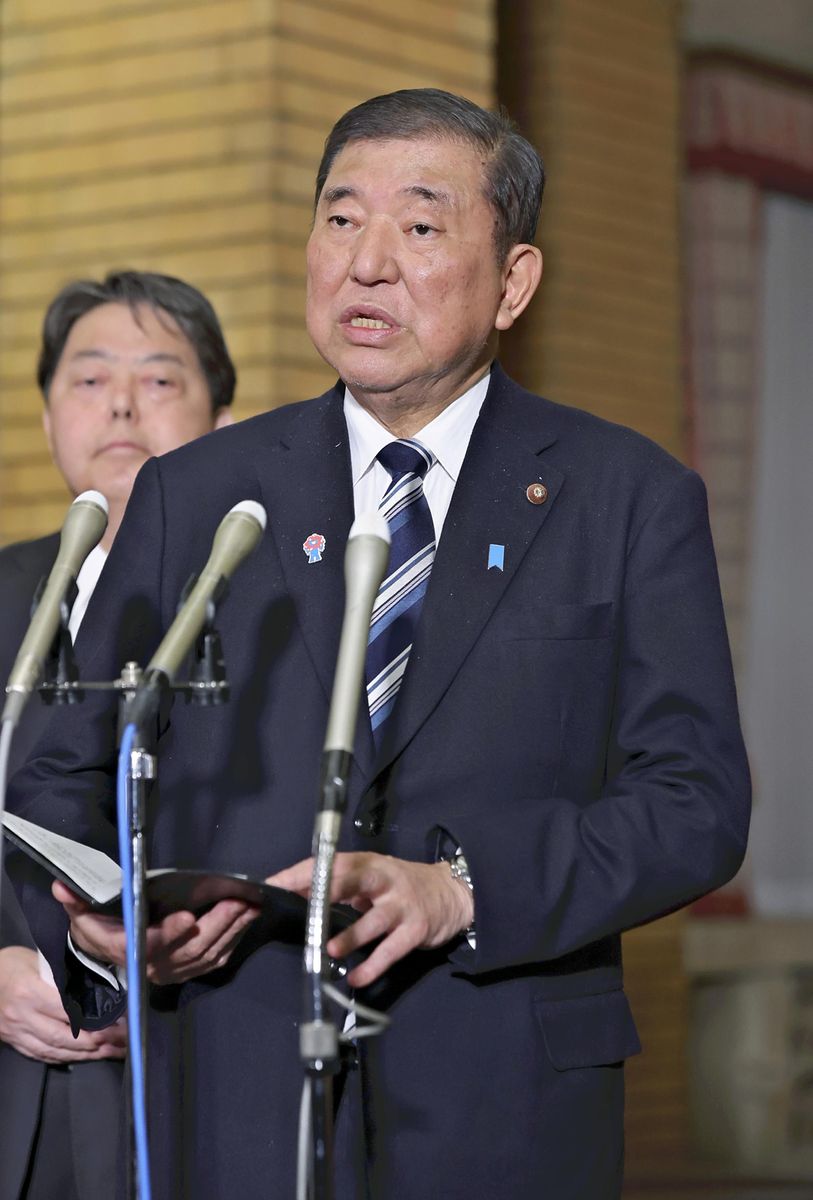
Prime Minister Shigeru Ishiba speaks to reporters on Monday at the prime minister’s official residence after a telephone conversation with U.S. President Donald Trump.
15:54 JST, April 8, 2025
Prime Minister Shigeru Ishiba refrained from criticizing U.S. President Donald Trump during their recent phone conversation about U.S. tariff policy, instead focusing on seeking mutual benefits, judging that there was nothing to be gained from confronting Trump.
Ishiba also prioritized securing a pledge to start negotiations and refrained from presenting specific bargaining chips during the talk on Monday.
“I confirmed with Trump that we will continue to have candid and constructive discussions,” Ishiba told reporters at the prime minister’s official residence afterward, hinting at a somewhat positive response.
Ishiba has been critical of the United States’ unilateral tariff policy, calling it “extremely undesirable and regrettable.” In the phone conversation, however, rather than protesting, Ishiba focused on stressing that Japan is the world’s largest investor in the United States and that bilateral cooperation is the quickest way to maximize mutual interests.
There is a strong view within the Japanese government that offending Trump would do nothing but cause an opportunity to negotiate to be lost. A senior government official said bagging ministerial meetings was “a sufficient gain.”
“We will lose out if we present [bargaining chips] and they say ‘it is not enough,’” a senior Foreign Ministry official said. The government intends to decide upon what bargaining chips Japan can offer in future negotiations.
As for possible bargaining chips, things that would contribute to the U.S. economy and lead to an expansion of U.S. exports to Japan are being considered. For example, providing investment to develop the liquefied natural gas industry in Alaska or a revision to Japan’s non-tariff barriers.
Tokyo has considered options to review its import tariffs on agricultural products, in consideration of Washington’s criticism of Japan’s high tariffs on rice, or to increase defense spending.


Related Tags




Most Read
Popular articles in the past 24 hours
-
78% Interested in Reconstruction from 2011 Disaster; Concern High...
-

15 Years since Great East Japan Earthquake: How Can Affected Area...
-

Japan’s Nikkei Stock Average Rise Lifted by AI Stocks, Easing Con...
-

2 Mt. Fuji Hikers Identified as Police Warn People Not to Climb i...
-

Parents in Japan to Get Instagram Notifications When Teens Repeat...
-

Japan’s Mitsui O.S.K. Lines Container Ship Anchored in Persian Gu...
-

CARTOON OF THE DAY (March 11)
-
Tokyo Conference 2026 Opens, Discusses Rebuilding Multilateralism...
Popular articles in the past week
-

Ibaraki Pref.'s 1st Foreign Bus Driver Hired in Tsukuba
-

Nippon Life Insurance's U.S. Arm Sues OpenAI Over Legal Assistanc...
-
Govt to Utilize ODA for Ensuring Economic Security; Securing Ener...
-

Amid Strait of Hormuz Blockade, Shipping Companies Scramble to Ge...
-
Japan Govt Survey Finds Just 10% of Workers Want Working Hours to...
-

Beckoning Cats Get Makeover to Fit Modern Lifestyles with Sleek D...
-
Japan's 2nd Round of U.S. Investments May Be Worth Over $100 Bill...
-

Imperial Family Watches World Baseball Classic Game Against Austr...
Popular articles in the past month
-

Producer Behind Pop Group XG Arrested for Cocaine Possession
-

Japan PM Takaichi’s Cabinet Resigns en Masse
-

Man Infected with Measles Reportedly Dined at Restaurant in Tokyo...
-

Videos Plagiarized, Reposted with False Subtitles Claiming ‘Ryuky...
-

iPS Treatments Pass Key Milestone, but Broader Applications Far f...
-

Sanae Takaichi Elected Prime Minister of Japan; Keeps All Cabinet...
-

Nepal Bus Crash Kills 19 People, Injures 25 Including One Japanes...
-

South Korea Tightens Rules on Foreigners Buying Homes in Seoul Me...
Top Articles in Politics
-
Japan PM Takaichi’s Cabinet Resigns en Masse
-
Sanae Takaichi Elected Prime Minister of Japan; Keeps All Cabinet Appointees from Previous Term
-

Japan’s Govt to Submit Road Map for Growth Strategy in March, PM Takaichi to Announce in Upcoming Policy Speech
-
CRA Leadership Election Will Center on Party Rebuilding; Lower House Defeat Leaves Divisions among Former CDPJ, Komeito Members
-
LDP Begins Training New Lawmakers to Avoid Scandal, Gaffes; Historic Victory in Latest Election Heightens Focus on Party
JN ACCESS RANKING
-
Producer Behind Pop Group XG Arrested for Cocaine Possession
-
Japan PM Takaichi’s Cabinet Resigns en Masse
-
Man Infected with Measles Reportedly Dined at Restaurant in Tokyo Station
-
Videos Plagiarized, Reposted with False Subtitles Claiming ‘Ryukyu Belongs to China’; Anti-China False Information Also Posted in Japan
-
iPS Treatments Pass Key Milestone, but Broader Applications Far from Guaranteed