
Diet Approves Record ¥114 tril. FY23 Budget, with Focus on Declining Birth Rate, Defense Boost
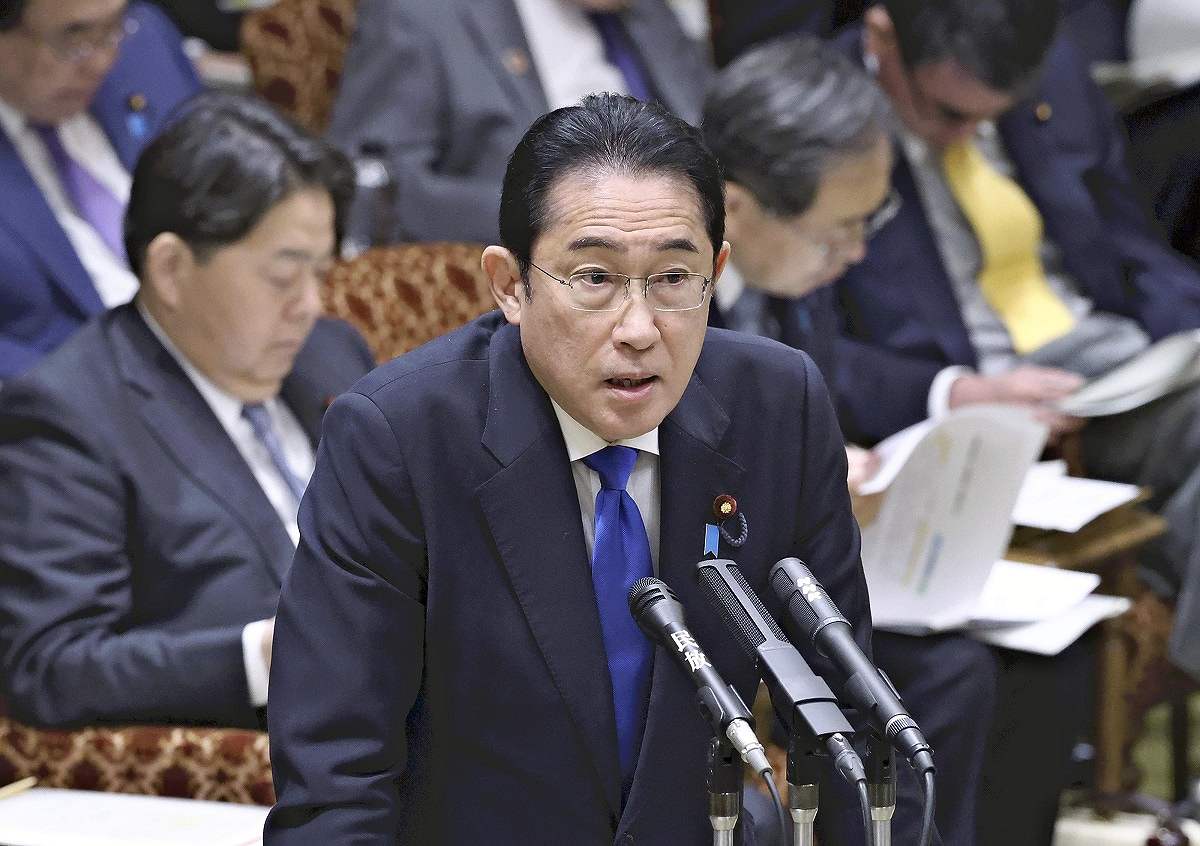
Prime Minister Fumio Kishida answers a question during the House of Councillors Budget Committee on Tuesday.
16:07 JST, March 28, 2023
The Diet approved a record ¥114.3812 trillion budget for fiscal 2023 on Tuesday, with measures to tackle the declining birth rate and enhance the nation’s defense capabilities at the forefront of the plan.
The budget was passed by a majority in a plenary session of the House of Councillors in the afternoon, following a final question and answer session in the upper house Budget Committee, which Prime Minister Fumio Kishida attended with all of his Cabinet members.
During the session, Kishida reiterated the importance of possessing counterattack capabilities that would enable Japan to attack missile-launch bases and other targets in enemy territory for self-defense purposes. Such capabilities would serve as a “shield” to protect the public from missile attacks, Kishida said.
Japan and the United States traditionally split security-related roles regarding the defense of the Japanese archipelago, with the Self-Defense Forces concentrating on missile interception and other such fortifications, and the United States assuming responsibility for offense.
Kishida stressed “there will be no change in the basic division of roles between Japan and the United States” in this regard.
Meanwhile, the prime minister expressed a sense of urgency regarding inflation, citing the unpredictability of the situation amid a global surge in prices. “We’ll respond quickly and flexibly in light of the trends in prices and the economy,” he said.
Regarding the controversy surrounding former internal affairs and communications minister Sanae Takaichi and documents allegedly compiled during the administration of former Prime Minister Shinzo Abe concerning the Broadcasting Law, Takaichi again rejected the content of the records, referring to them as “unreliable, dubious documents.”
Takaichi, who is now state minister for economic security, said she “has nothing to hide,” in response to demands from opposition parties for her resignation.
¥2.2 tril to tackle soaring prices
On Tuesday, the government earmarked ¥2.2226 trillion from fiscal 2022 reserve funds for measures to combat surging prices.
Local governments will be free to decide how to use ¥1.2 trillion of funds for subsidies originally intended for revitalization measures, among other things.
The central government has advised local governments to use the funds to reduce the burden of energy fees for households in rural areas and large factories. They have also been advised to issue vouchers for local purchases and to subsidize school lunch expenses, among other measures.
The funds will include a special quota to provide ¥30,000 handouts to low-income households, such as those exempt from paying residential tax. In addition, ¥155.1 billion was appropriated to provide ¥50,000 per child to low-income families.
Efforts will also be made to curb soaring feed prices to support livestock farmers. Additional measures will be taken to curb the price of imported wheat sold by the government starting in April.



Most Read
Popular articles in the past 24 hours
-

‘Dry Bonsai’ Gives New Life to Withered Trees, Allows Free Artist...
-

McDonald's Japan Raises Prices; Big Mac to Cost ¥500, Double Chee...
-

Nepal Bus Crash Kills 19 People, Injures 25 Including One Japanes...
-

Japan’s Nikkei Stock Average Rises as AI-Related Stocks Shine; Co...
-

Aggression against Ukraine: Malignant Precedent Must Not Be Set t...
-

Joruri Bunraku Narrative Performed in Honor of Donald Keene by La...
-

Early-Blooming Kawazu Cherry Blossoms Create Sea of Pink at Park ...
-

Astellas Collaborates with Vir to Develop Its Experimental Prosta...
Popular articles in the past week
-

Producer Behind Pop Group XG Arrested for Cocaine Possession
-

Japan PM Takaichi’s Cabinet Resigns en Masse
-

Sanae Takaichi Elected Prime Minister of Japan; Keeps All Cabinet...
-

Japan's Govt to Submit Road Map for Growth Strategy in March, PM ...
-

Bus Carrying 40 Passengers Catches Fire on Chuo Expressway; All E...
-

Japan, U.S. Name 3 Inaugural Investment Projects; Reached Agreeme...
-

Riku-Ryu Pair Wins Gold Medal: Their Strong Bond Leads to Major C...
-

iPS Treatments Pass Key Milestone, but Broader Applications Far f...
Popular articles in the past month
-
Producer Behind Pop Group XG Arrested for Cocaine Possession
-
Japan PM Takaichi’s Cabinet Resigns en Masse
-

Japan Institute to Use Domestic Commercial Optical Lattice Clock ...
-

Man Infected with Measles Reportedly Dined at Restaurant in Tokyo...
-

Israeli Ambassador to Japan Speaks about Japan’s Role in the Reco...
-

Videos Plagiarized, Reposted with False Subtitles Claiming ‘Ryuky...
-

Man Infected with Measles May Have Come in Contact with Many Peop...
-

Prudential Life Insurance Plans to Fully Compensate for Damages C...
Top Articles in Politics
-
Japan PM Takaichi’s Cabinet Resigns en Masse
-
Sanae Takaichi Elected Prime Minister of Japan; Keeps All Cabinet Appointees from Previous Term
-
Japan’s Govt to Submit Road Map for Growth Strategy in March, PM Takaichi to Announce in Upcoming Policy Speech
-

LDP Wins Historic Landslide Victory
-

LDP Wins Landslide Victory, Secures Single-party Majority; Ruling Coalition with JIP Poised to Secure Over 300 seats (UPDATE 1)
JN ACCESS RANKING
-
Producer Behind Pop Group XG Arrested for Cocaine Possession
-
Japan PM Takaichi’s Cabinet Resigns en Masse
-
Japan Institute to Use Domestic Commercial Optical Lattice Clock to Set Japan Standard Time
-
Man Infected with Measles Reportedly Dined at Restaurant in Tokyo Station
-
Israeli Ambassador to Japan Speaks about Japan’s Role in the Reconstruction of Gaza