
Former U.S. National Cyber Director Chris Inglis: Japan, U.S. Need to Urgently Work Together Against Threats in Cyberspace

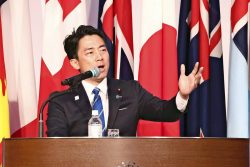
Former U.S. National Cyber Director Chris Inglis during an interview in Washington on Feb. 6
15:59 JST, February 26, 2026
WASHINGTON — There is an urgent need for Japan, the United States and other countries concerned to jointly act against threats in cyberspace, former U.S. National Cyber Director Chris Inglis said during an interview with The Yomiuri Shimbun.
“There’s no one person, no one organization in cyberspace, who can see all that they must, who can understand its context, who can decide who can act,” Inglis said during the interview in Washington on Feb. 6.
Inglis, a former U.S. Air Force officer, served in such positions as deputy director of the U.S. Defense Department’s National Security Agency. He also served as the first national cyber director in U.S. President Joe Biden’s administration from 2021-23, contributing to the development of the National Cybersecurity Strategy, among other things.
Inglis highly praised Japan for its efforts to enhance response capabilities, which includes the enactment of a law last year related to “active cyber defense” to prevent cyberattacks on critical infrastructure based on the National Security Strategy formulated in 2022.
“Your active cyber defense legislation actually imagines the same possibility that there will be things offshore that hold your citizens at risk, and that you will act to understand what those are before they actually are fully executed and engage them at the earliest possible moment of the highest possible image,” he said.
He also said Japan, the United States and any other country that they have ties with should try to find ways to collaborate in cyberspace.
Regarding the cyberattack threats Japan faces, Inglis indicated the need for the government and the private sector to cooperate to build cyber defense capabilities.
“The use of cyberspace and the attacks on cyberspace don’t live within certain jurisdictional boundaries, within the nation state, within the organization … We must then have a shared defense,” he said.
Inglis said that state-sponsored cyberattacks by countries like China and Russia that target critical infrastructure “have an outsized effect, a disproportionate effect” and “a much, much more significant effect.”
“I describe as nation states who use cyberspace to propagate their nations, to obtain money, but also to obtain secrets, so that they might then kind of chart their diplomatic course forward, that they very much are not using cyberspace in a way that is responsible and respectful of their other community of nations,” he said.
There has been an increase in recent years in sophisticated cyberattacks to cripple nations and infrastructure operators by infiltrating communication systems.
Regarding attacks against the United States, it has been revealed that hacker group Volt Typhoon, believed to be backed by the Chinese government, has repeatedly infiltrated systems at U.S. military-related facilities and other such facilities since 2021.
Inglis said it remains unclear whether the Chinese side anticipated the United States would discover the malware that was planted. However, he said, if they did anticipate it, “The message we would take is that [they] can hold [us] at risk.”
He explained that the primary aim of the cyberattacks is to put pressure on U.S. military forces with a possible Taiwan contingency and other emergencies in mind. He said Volt Typhoon is meant to affect the confidence of those they target.
Regarding China’s cyberattacks against Japan, he said that what China does “is meant to acquire information such that they would understand Japan’s aspirations, understand how perhaps they can respond to those aspirations or challenge those aspirations if they’re in conflict with China’s.”
He pointed to the possibility of China employing tactics such as spreading disinformation or planting malware in critical infrastructure, with scenarios like a Taiwan contingency or seizing the Senkaku Islands in Okinawa Prefecture in mind.
Inglis will deliver a keynote address at a forum to be held by the Sasakawa Peace Foundation and The Yomiuri Shimbun in Tokyo on Wednesday. The forum will be held on the theme of protecting society from cyberattacks.









Most Read
Popular articles in the past 24 hours
-

Milano Cortina 2026: Japanese Gold Medalist Figure Skater Miura S...
-

Yokohama to Test Out Renewable-Powered Offshore Floating Data Cen...
-
Japan’s Takaichi Speaks on New U.S. Tariff in Upper House, Says P...
-

Ishinomaki Man Plush Toy Offers Hope to Children in Times of Disa...
-

Japan Authorities Begin On-site Inspection of Japanese Microsoft ...
-

Japan's Takaichi Lets LDP Lawmakers Choose Gifts for Election Suc...
-

Nikkei Tops 59,000 for First Time
-

Dodgers' Roki Sasaki Erratic in First Spring Training Outing, Giv...
Popular articles in the past week
-

Producer Behind Pop Group XG Arrested for Cocaine Possession
-

iPS Treatments Pass Key Milestone, but Broader Applications Far f...
-

Japan, U.S. Name 3 Inaugural Investment Projects; Reached Agreeme...
-

Tokyo Skytree's Elevator Stops, Trapping 20 People; All Rescued (...
-

Japan’s Major Real Estate Firms Expanding Overseas Businesses to ...
-
Milano Cortina 2026: Japanese Gold Medalist Figure Skater Miura S...
-

Baby Monkey Punch Captures Hearts at Chiba Pref. Zoo, on Social M...
-

Milano Cortina 2026: Japanese Figure Skater Kaori Sakamoto’...
Popular articles in the past month
-
Producer Behind Pop Group XG Arrested for Cocaine Possession
-

Japan PM Takaichi’s Cabinet Resigns en Masse
-

Japan Institute to Use Domestic Commercial Optical Lattice Clock ...
-

Man Infected with Measles Reportedly Dined at Restaurant in Tokyo...
-

Israeli Ambassador to Japan Speaks about Japan’s Role in the Reco...
-

Videos Plagiarized, Reposted with False Subtitles Claiming ‘Ryuky...
-

Man Infected with Measles May Have Come in Contact with Many Peop...
-

Prudential Life Insurance Plans to Fully Compensate for Damages C...
Top Articles in Politics
-
Japan PM Takaichi’s Cabinet Resigns en Masse
-

Sanae Takaichi Elected Prime Minister of Japan; Keeps All Cabinet Appointees from Previous Term
-

Japan’s Govt to Submit Road Map for Growth Strategy in March, PM Takaichi to Announce in Upcoming Policy Speech
-

LDP Wins Historic Landslide Victory
-

LDP Wins Landslide Victory, Secures Single-party Majority; Ruling Coalition with JIP Poised to Secure Over 300 seats (UPDATE 1)
JN ACCESS RANKING
-
Producer Behind Pop Group XG Arrested for Cocaine Possession
-
Japan PM Takaichi’s Cabinet Resigns en Masse
-
Man Infected with Measles Reportedly Dined at Restaurant in Tokyo Station
-
Israeli Ambassador to Japan Speaks about Japan’s Role in the Reconstruction of Gaza
-
Videos Plagiarized, Reposted with False Subtitles Claiming ‘Ryukyu Belongs to China’; Anti-China False Information Also Posted in Japan