
U.S. Looks to Leverage Japan as Counterweight to China
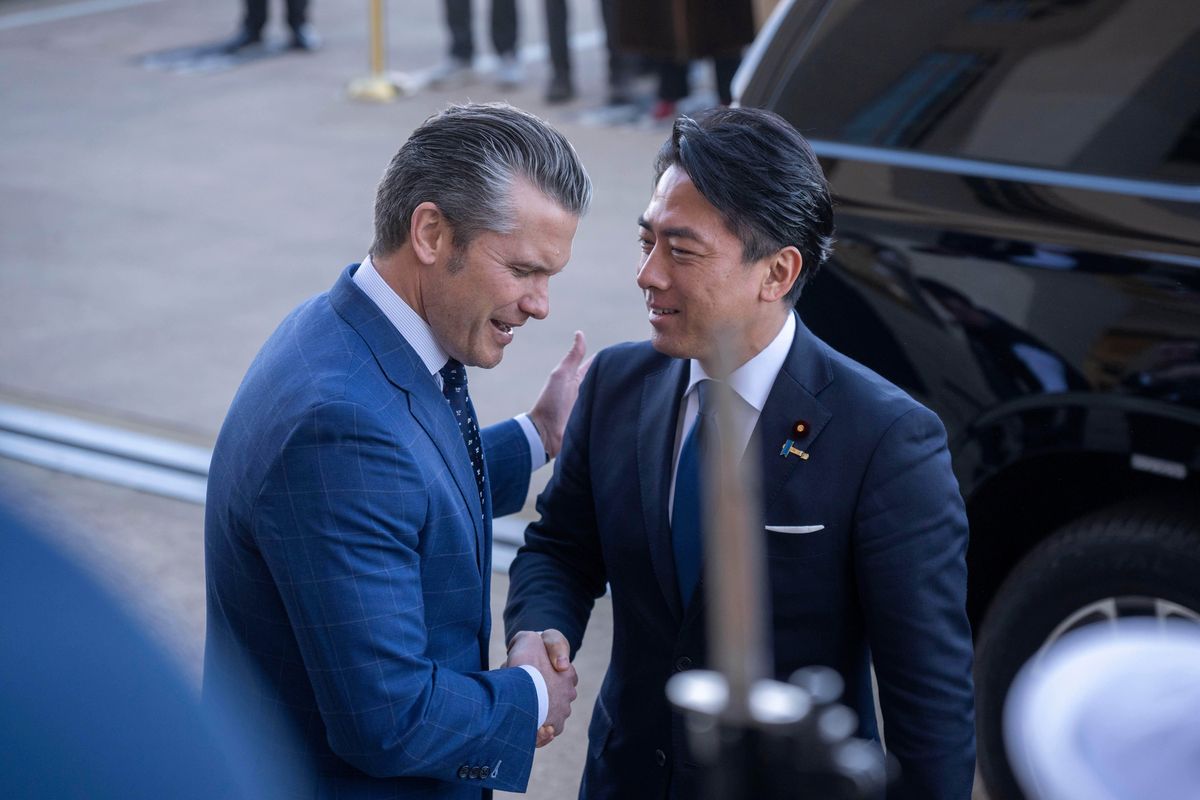
Defense Secretary Pete Hegseth, left, welcomes Japanese Defense Minister Shinjiro Koizumi to the Pentagon on Thursday in Washington.
7:05 JST, January 17, 2026
WASHINGTON — In a speech last December, U.S. Secretary of Defense Pete Hegseth identified increased defense spending by allies as a top security priority for the United States. Amid the relative decline of American influence, President Donald Trump’s administration has continued to urge allies to bolster their defenses to deter China.
Last June, NATO set a new target for member states to raise defense spending to 5% of gross domestic product. This was in response to Trump’s vocal dissatisfaction with low spending levels among European members. His administration believes that Indo-Pacific allies, specifically Japan, should follow NATO’S lead.
While the United States has not set a specific numerical target, it has high hopes for Japan — which Hegseth described as a “model ally” — in countering China’s ongoing military expansion. The National Security Strategy, released last December as the U.S. administration’s blueprint for foreign and military policy, noted that because China has not ruled out the use of force to unify Taiwan, the United States will reinforce its own capacity and that of its allies “to deny any attempt to seize Taiwan.”
Strengthening the Japan-U.S. alliance is central to this strategy. The plan aims to enhance the defense capabilities of both the U.S. military and the Self-Defense Forces along the First Island Chain, which links Japan’s Nansei Islands, Taiwan and the Philippines.
On Jan. 2, Trump spoke on the phone with Prime Minister Sanae Takaichi. The leaders agreed to move quicker on preparations for the prime minister’s official visit to the United States this spring.
Cooperation between the countries also extends to economic security. Tokyo and Washington are currently discussing targets for the $550 billion (about ¥87 trillion) Japan has said it will invest in the United States, based on an agreement reached last year. Coordination in the energy sector is considered a high priority. The United States plans to deepen its coordination with Japan to stabilize the Indo-Pacific, a region its National Security Strategy characterizes as an “economic and geopolitical battleground.”


Related Tags


Most Read
Popular articles in the past 24 hours
-
Kesennuma, Miyagi Pref., Locals Raise Carp Streamers as Symbol of...
-

Iran Situation: Significance of Rule of Law Must Be Conveyed
-

Toyota Advancing Plant-Based Biofuel Development in Fukushima Tow...
-

Trump Says Iran Had a New Site for Developing Nuclear Weapons
-
2 People Reportedly Found on Mt. Fuji; Hiking Trail Currently Clo...
-
CARTOON OF THE DAY (March 10)
-
Rapeseed Flowers Reach Peak Viewing Period at Tokyo's Showa Kinen...
-
Japan's TEPCO to Raise Electricity Rates for Corporations in Apri...
Popular articles in the past week
-

Ibaraki Pref.'s 1st Foreign Bus Driver Hired in Tsukuba
-
Amid Strait of Hormuz Blockade, Shipping Companies Scramble to Ge...
-
Govt to Utilize ODA for Ensuring Economic Security; Securing Ener...
-
Japan Govt Survey Finds Just 10% of Workers Want Working Hours to...
-
Japan's 2nd Round of U.S. Investments May Be Worth Over $100 Bill...
-

Imperial Family Watches World Baseball Classic Game Against Austr...
-

Nippon Life Insurance's U.S. Arm Sues OpenAI Over Legal Assistanc...
-
Donald Keene’s Drinking Buddy and Translator Yukio Kakuchi Pays T...
Popular articles in the past month
-

Producer Behind Pop Group XG Arrested for Cocaine Possession
-

Japan PM Takaichi’s Cabinet Resigns en Masse
-

Man Infected with Measles Reportedly Dined at Restaurant in Tokyo...
-

Videos Plagiarized, Reposted with False Subtitles Claiming ‘Ryuky...
-

iPS Treatments Pass Key Milestone, but Broader Applications Far f...
-

Sanae Takaichi Elected Prime Minister of Japan; Keeps All Cabinet...
-

Nepal Bus Crash Kills 19 People, Injures 25 Including One Japanes...
-

South Korea Tightens Rules on Foreigners Buying Homes in Seoul Me...
Top Articles in Politics
-
Japan PM Takaichi’s Cabinet Resigns en Masse
-
Sanae Takaichi Elected Prime Minister of Japan; Keeps All Cabinet Appointees from Previous Term
-

Japan’s Govt to Submit Road Map for Growth Strategy in March, PM Takaichi to Announce in Upcoming Policy Speech
-
CRA Leadership Election Will Center on Party Rebuilding; Lower House Defeat Leaves Divisions among Former CDPJ, Komeito Members
-
LDP Begins Training New Lawmakers to Avoid Scandal, Gaffes; Historic Victory in Latest Election Heightens Focus on Party
JN ACCESS RANKING
-
Producer Behind Pop Group XG Arrested for Cocaine Possession
-
Japan PM Takaichi’s Cabinet Resigns en Masse
-
Man Infected with Measles Reportedly Dined at Restaurant in Tokyo Station
-
Videos Plagiarized, Reposted with False Subtitles Claiming ‘Ryukyu Belongs to China’; Anti-China False Information Also Posted in Japan
-
iPS Treatments Pass Key Milestone, but Broader Applications Far from Guaranteed