
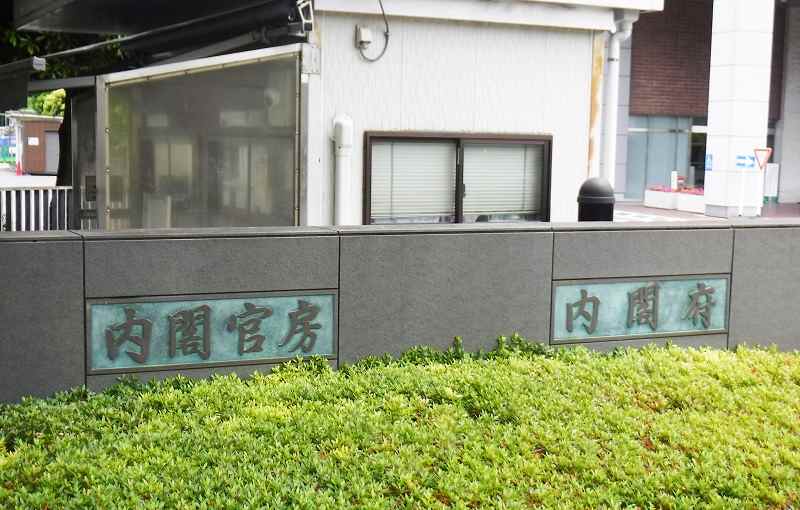
The Cabinet Office
17:00 JST, May 27, 2022
The government will establish an economic security office within the Cabinet Office, according to a draft of the Basic Policy on Economic and Fiscal Management and Reform to be compiled in early June.
The draft will be presented at a meeting of the Council on Economic and Fiscal Policy chaired by Prime Minister Fumio Kishida on May 31.
The draft states that the government will promptly compile a basic policy to implement the law to promote economic security, which was enacted May 11. The economic security promotion office will coordinate issues involving multiple ministries and agencies, including the Economy, Trade and Industry Ministry and the Internal Affairs and Communications Ministry.
Disruption to supplies of key materials such as semiconductors, rare earths, batteries and pharmaceuticals can severely buffet the economy. In order to ensure stable supplies, the draft states that about ¥500 billion will be earmarked for financial assistance and subsidies, including the establishment of a special fund. Companies with advanced technologies will also be considered as candidates for support.
Due to Russia’s ongoing invasion of Ukraine, the Kishida administration will take all possible measures to ensure energy security. In order to reduce Japan’s dependence on Russian fossil fuels, the government will tap a wide variety of alternate suppliers. According to the draft, Japan will work with other major countries to encourage crude oil and other resource producers to increase production.
Human resources
The draft also prioritizes measures for investing in human resources, which is one of the pillars of Kishida’s “new form of capitalism” economic policy. The measures will cost about ¥400 billion over three years.
With an eye on reducing education costs, the draft also outlines the creation of a new student financial aid system. Under the new system, the government will cover tuition at universities and other institutions, which students will start repaying based on their earnings after reaching a certain annual income threshold after graduation.
The draft also states that the government will support the introduction of an elective four-day workweek system, on the basis that the move will help people balance work with childcare and nursing care.
To encourage companies to invest in human talent, the draft urges firms to disclose information not reflected in financial statements, such as training programs and efforts to ensure diversity.
Kishida has already announced a policy to oblige firms to disclose wage disparities between men and women, and the draft states that there will be a review of the rules on disclosing corporate information.





Most Read
Popular articles in the past 24 hours
-

Japan to Strictly Control Exports of Lethal Defense Equipment Whi...
-

High-Hydration Bread on the Rise, Seeing Increase in Specialty Sh...
-
Japan's Prime Minister Sanae Takaichi Is ‘World's Most Powerful W...
-

Reform of Retrial System: Diet Must Thoroughly Discuss Remedies f...
-
White and Pink Plum Blossoms Begin to Bloom at Yuki Shrine in Jap...
-
17-Year-Old Fatally Stabbed in Osaka’s Dotonbori; Suspect at Larg...
-
Gold Smuggling into Japan Running Rampant
-

Bear Found in Warehouse in Fukushima Prefecture Culled
Popular articles in the past week
-

Prudential Life Insurance Plans to Fully Compensate for Damages C...
-

Woman with Measles Visited Hospital in Tokyo Multiple Times Befor...
-

Woman with No Overseas Travel History Infected with Measles in Na...
-
Measles Patient Flew Between Tokyo, Hokkaido in Late January; Lik...
-

Milano Cortina 2026: Kokomo Murase Comes Out on Top After Overcom...
-
CRA Leadership Election Will Center on Party Rebuilding; Lower Ho...
-

Videos Plagiarized, Reposted with False Subtitles Claiming ‘Ryuky...
-
Crime in Japan Ticks Up for 4th Straight Year
Popular articles in the past month
-

Japan Institute to Use Domestic Commercial Optical Lattice Clock ...
-

Israeli Ambassador to Japan Speaks about Japan’s Role in the Reco...
-

Man Infected with Measles May Have Come in Contact with Many Peop...
-

China Eyes Rare Earth Foothold in Malaysia to Maintain Dominance,...
-
Prudential Life Insurance Plans to Fully Compensate for Damages C...
-
Woman with Measles Visited Hospital in Tokyo Multiple Times Befor...
-
Australian Woman Dies After Mishap on Ski Lift in Nagano Prefectu...
-
Foreign Snowboarder in Serious Condition After Hanging in Midair ...
Top Articles in Politics
-

LDP Wins Historic Landslide Victory
-

LDP Wins Landslide Victory, Secures Single-party Majority; Ruling Coalition with JIP Poised to Secure Over 300 seats (UPDATE 1)
-
Japan Tourism Agency Calls for Strengthening Measures Against Overtourism
-
CRA Leadership Election Will Center on Party Rebuilding; Lower House Defeat Leaves Divisions among Former CDPJ, Komeito Members
-

Voters Using AI to Choose Candidates in Japan’s Upcoming General Election; ChatGPT, Other AI Services Found Providing Incorrect Information
JN ACCESS RANKING
-
Japan Institute to Use Domestic Commercial Optical Lattice Clock to Set Japan Standard Time
-
Israeli Ambassador to Japan Speaks about Japan’s Role in the Reconstruction of Gaza
-
Man Infected with Measles May Have Come in Contact with Many People in Tokyo, Went to Store, Restaurant Around When Symptoms Emerged
-
China Eyes Rare Earth Foothold in Malaysia to Maintain Dominance, Counter Japan, U.S.
-
Prudential Life Insurance Plans to Fully Compensate for Damages Caused by Fraudulent Actions Without Waiting for Third-Party Committee Review