
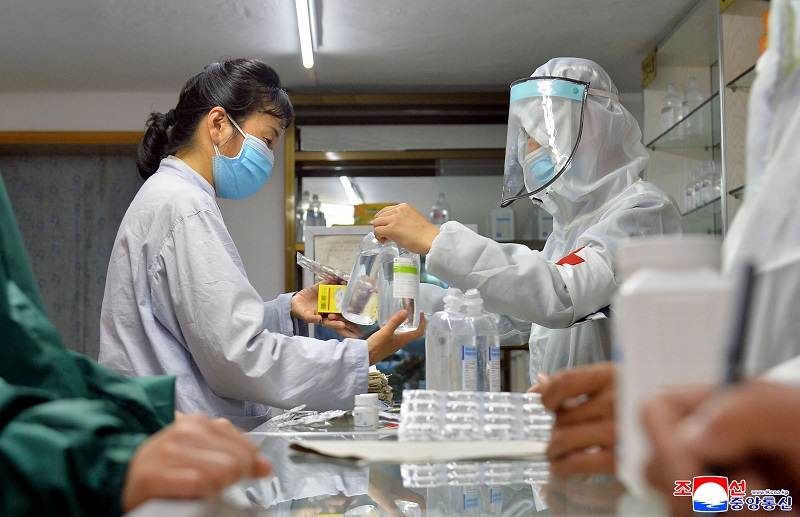
Army medics involved in medicine supply distribution work at a pharmacy amid concerns of coronavirus disease (COVID-19) spread in Pyongyang, North Korea May 22, 2022 in this photo released May 23, 2022 by the country’s Korean Central News Agency.
10:25 JST, June 2, 2022
SEOUL (Reuters) – The World Health Organization has cast doubts on North Korea’s claims of progress in the fight against a COVID-19 outbreak, saying it believes the situation is getting worse, not better, amid an absence of independent data.
North Korean state media has said the COVID wave has abated, after daily numbers of people with fever topped 390,000 about two weeks ago.
Pyongyang has never directly confirmed how many people have tested positive for the virus but experts suspect underreporting in the figures released through government-controlled media, making it difficult to assess the scale of the situation.
“We assume the situation is getting worse, not better,” WHO emergencies chief Michael Ryan said during a video briefing Wednesday.
He said the WHO did not have access to any privileged information beyond the numbers publicly reported by state media.
“We have real issues in getting access to the raw data and to the actual situation on the ground,” Ryan said, adding that the WHO is working with neighbours like South Korea and China to try to get a better picture.
The WHO has offered assistance on multiple occasions, including vaccines and supplies, he said.
North Korea reported 96,610 more people showing fever amid its nationwide lockdown aimed at containing the impoverished country’s first confirmed COVID-19 outbreak, state news agency KCNA said on Thursday.
The media, however, did not mention whether there were any new deaths.
KCNA said provinces were “intensifying” their anti-epidemic campaigns, including enforcing some lockdowns and coastal blockades, increasing production of drugs and medical supplies, and carrying out disinfection work.
Key work such as farming continued, however.
North Korean Premier Kim Tok Hun inspected a pair of pharmaceutical factories, amid a push to put the country’s drug industry on a “on a new higher level,” including meeting international standards, KCNA reported.
“Sufficient production and supply of medicines serve as a prerequisite to protecting the people’s lives and health in the current rigorous anti-epidemic campaign,” he said.






Most Read
Popular articles in the past 24 hours
-
Warning Issued After Fake Social Media Account Impersonating Nobe...
-

G7 Foreign Ministers Meet for Talks in Munich, Discussing Situati...
-

Milano Cortina 2026: Miho Takagi Won Bronze in Women’s 500-...
-

Sony's Entertainment Focus Becomes Even Clearer; Shift Away from ...
-

Milano Cortina 2026: Japan’s Ikuma Horishima Wins Silver in...
-
1st Overseas Suke-San Udon to Open in Taiwan; Company Aims for Mo...
-

Japan’s Nikkei Stock Average Dips as Soft Data, Post-Election Lul...
-

Japan’s Lotteria Restaurant Operator Co. Changes Name, Will Rebra...
Popular articles in the past week
-

Prudential Life Insurance Plans to Fully Compensate for Damages C...
-

Woman with No Overseas Travel History Infected with Measles in Na...
-

Videos Plagiarized, Reposted with False Subtitles Claiming ‘Ryuky...
-

Milano Cortina 2026: Kokomo Murase Comes Out on Top After Overcom...
-
CRA Leadership Election Will Center on Party Rebuilding; Lower Ho...
-
Crime in Japan Ticks Up for 4th Straight Year
-
Japan’s Sumitomo Life Employees Mishandled Nearly 800 Documents a...
-
Japanese Constitutional Revision Debate Expected to be Revived Af...
Popular articles in the past month
-

Japan Institute to Use Domestic Commercial Optical Lattice Clock ...
-

Israeli Ambassador to Japan Speaks about Japan’s Role in the Reco...
-

Man Infected with Measles May Have Come in Contact with Many Peop...
-
China Eyes Rare Earth Foothold in Malaysia to Maintain Dominance,...
-
Prudential Life Insurance Plans to Fully Compensate for Damages C...
-

Woman with Measles Visited Hospital in Tokyo Multiple Times Befor...
-
Australian Woman Dies After Mishap on Ski Lift in Nagano Prefectu...
-
Foreign Snowboarder in Serious Condition After Hanging in Midair ...
Top Articles in News Services
-

Prudential Life Expected to Face Inspection over Fraud
-
Hong Kong Ex-Publisher Jimmy Lai’s Sentence Raises International Outcry as China Defends It
-
Japan’s Nikkei Stock Average Touches 58,000 as Yen, Jgbs Rally on Election Fallout (UPDATE 1)
-

Trump Names Former Federal Reserve Governor Warsh as the Next Fed Chair, Replacing Powell
-
Suzuki Overtakes Nissan as Japan’s Third‑Largest Automaker in 2025
JN ACCESS RANKING
-
Japan Institute to Use Domestic Commercial Optical Lattice Clock to Set Japan Standard Time
-
Israeli Ambassador to Japan Speaks about Japan’s Role in the Reconstruction of Gaza
-
Man Infected with Measles May Have Come in Contact with Many People in Tokyo, Went to Store, Restaurant Around When Symptoms Emerged
-
Prudential Life Insurance Plans to Fully Compensate for Damages Caused by Fraudulent Actions Without Waiting for Third-Party Committee Review
-
Woman with Measles Visited Hospital in Tokyo Multiple Times Before Being Diagnosed with Disease