
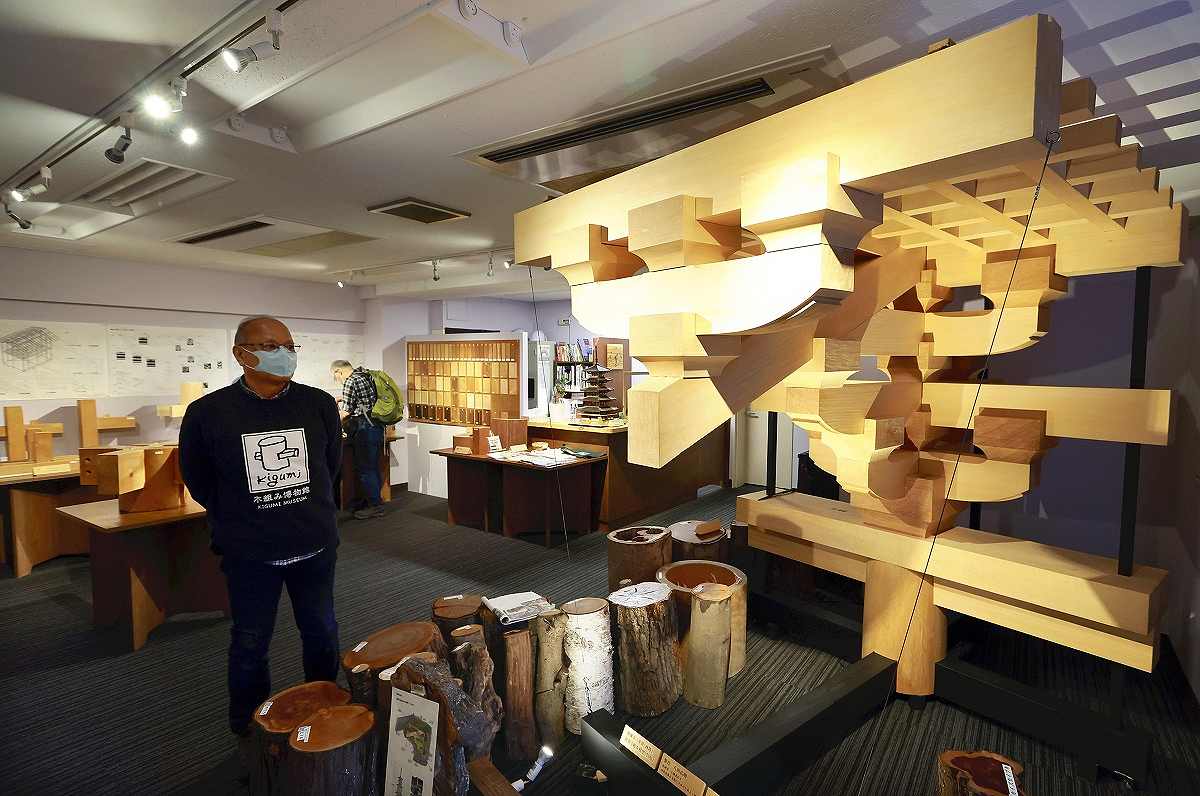
A model of a roof support for the lowest level of Yakushiji temple’s West Pagoda is seen at right.
14:00 JST, April 12, 2023
The Kigumi Museum, a private facility in Shinjuku Ward, Tokyo, was established to pass on to younger generations the culture of kigumi, traditional Japanese techniques for wood construction.
Kazuo Tanikawa, the museum’s founder and director, worked for a construction company for many years, and was involved in the building of traditional shrines and temples, as well as sukiya-zukuri architecture such as tea-ceremony houses.
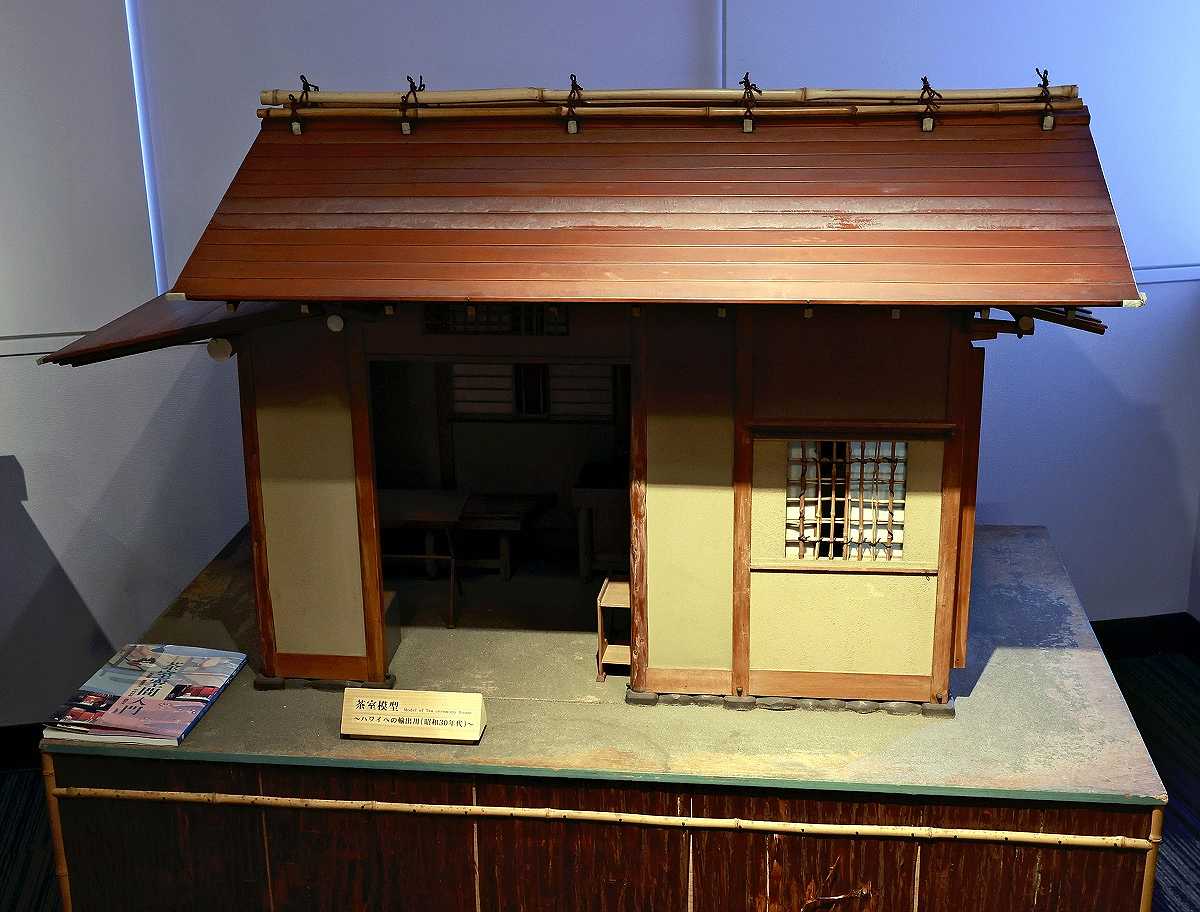
A model of a tea house for export to Hawaii
Kigumi are Japanese traditional construction methods in which cuts of wood are joined together without nails or other metal fasteners. The techniques are said to date back 4,000 years, which would put their beginnings in the Jomon period.
In the sixth century, architectural styles and techniques were introduced to Japan from the Asian continent, leading to a significant development of kigumi culture.
Kigumi techniques are mainly divided into tsugite, in which wood pieces are connected vertically, and shiguchi, in which wood pieces are joined at a right angle or diagonally, but there are said to be as many as 4,000 different techniques in total.
The museum exhibits samples of 40 or so typical kigumi techniques. Since visitors are able to touch most of the displays, they can deepen their understanding by assembling and disassembling the pieces.
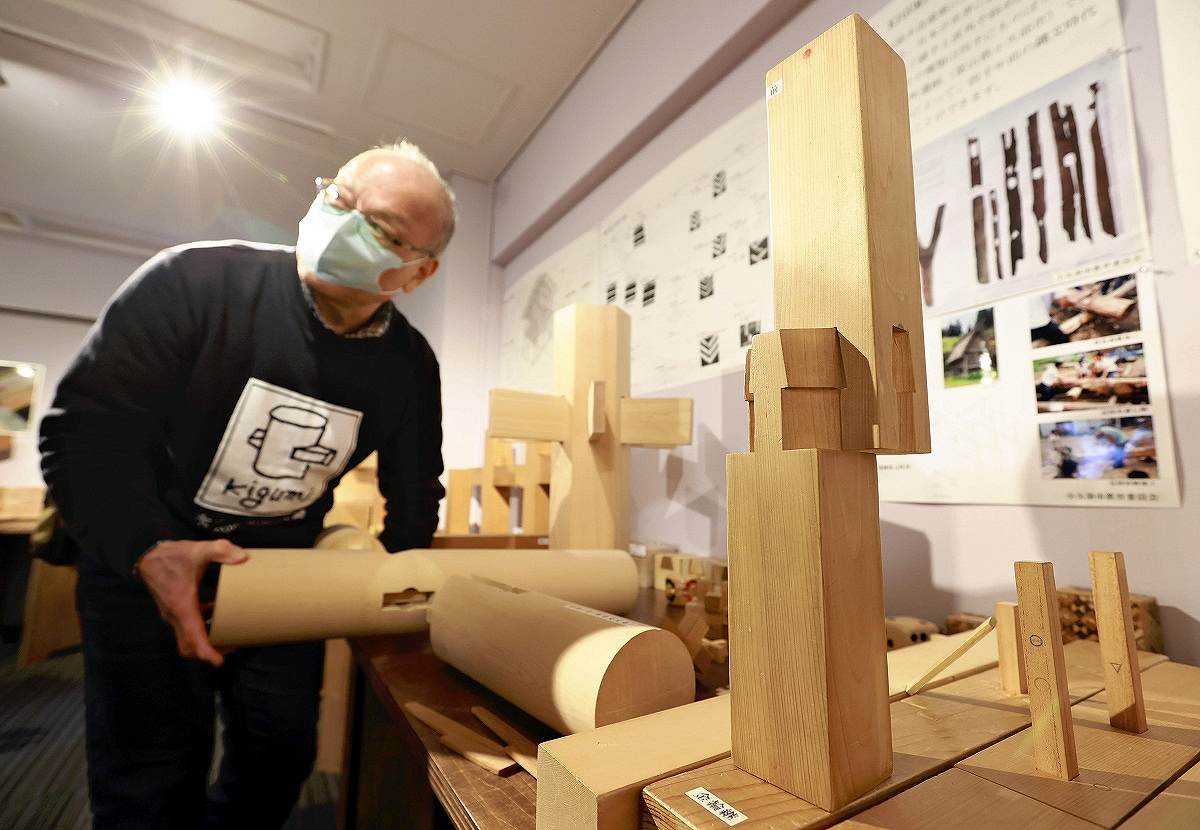
Visitors can enjoy assembling and disassembling fitted wooden pieces.
One of the most impressive exhibits is a 2.3-meter-high wooden model of the West Pagoda of Yakushiji temple in Nara Prefecture. The model uses a technique called masugumi. It shows at 3/4 scale how masugumi structures support the roof of the lowest level of the pagoda.
The exhibit was crafted by Hiroaki Hatta, a master carpenter who was involved in the reconstruction of the West Pagoda under Tsunekazu Nishioka, once called as “the last temple and shrine carpenter.”
Visitors can also learn about other traditional techniques, such as those for carvings and onigawara tiles, and examine related materials and tools. A model of a tea house for export is also on display.

A variety of traditional onigawara decorative roof tiles are on display.
Craftsmen, such as temple and shrine carpenters who use kigumi techniques, are thought to be growing more and more scarce, and passing down the techniques to future generations has become a challenge. Kunio Watanabe, a researcher at the museum, said: “I hope that not only adults but also children will visit us to enjoy the exhibits. And I hope that more people will work in the construction industry in the future and carry on the traditional techniques.”
Kigumi Museum
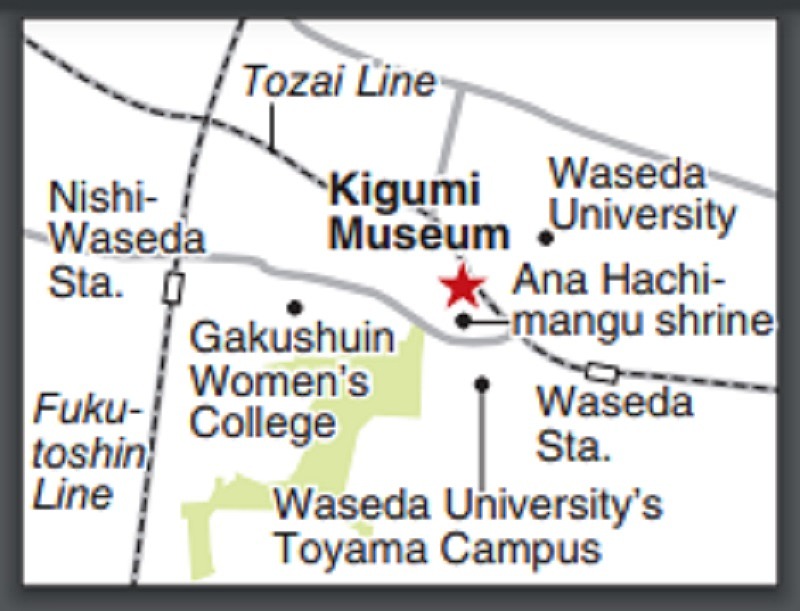
The museum opened in 2015. A model of the roof frame for the gate of the neighboring Ana Hachimangu shrine is also on display.
Address: Hall Eight 3F, 2-3-26 Nishi-Waseda, Shinjuku Ward, Tokyo
Hours: 10 a.m.-4 p.m. on Tuesdays, Wednesdays and Thursdays. Also open one Saturday a month. Closed on year-end and New Year’s holidays.
Admission: Free. Contact the museum in advance for a visit by a group of more than 10 people.


Related Tags




Most Read
Popular articles in the past 24 hours
-

Masako Ikeda, Voice of Maetel in ‘Galaxy Express 999,' Dies at 87
-

Japan's TEPCO Releases Footage from Fukushima N-Plant Reactor
-

Japan Considering Taking Part in U.S. ‘Golden Dome’ Defense Syste...
-

Japan's Sanyo Shinkansen Suspended Again; Between Okayama, Aioi S...
-

Oil Reserve Releases: G7 Members Unite against Growing Threat
-

Milano Cortina 2026: Japan’s Momoka Muraoka Takes Silver in...
-

46 Evacuated from UAE, Oman on Japanese Govt-chartered Flight
-

Paw Patrol: Larry Marks 15 Years at 10 Downing Street
Popular articles in the past week
-

Japan Figure Skating Legend Yuzuru Hanyu Is Proud Disaster Surviv...
-

Nippon Life Insurance's U.S. Arm Sues OpenAI Over Legal Assistanc...
-

Govt to Utilize ODA for Ensuring Economic Security; Securing Ener...
-
15 Measles Patients Confirmed in Tokyo in Past 6 Days; 1 May Have...
-

Massive Sewer Pipe Found Jutting Out of Highway in Osaka
-

Japan Govt to Tighten Requirements to Receive Permanent Residency...
-

Beckoning Cats Get Makeover to Fit Modern Lifestyles with Sleek D...
-

Japan's 2nd Round of U.S. Investments May Be Worth Over $100 Bill...
Popular articles in the past month
-

Producer Behind Pop Group XG Arrested for Cocaine Possession
-

Japan PM Takaichi’s Cabinet Resigns en Masse
-

Man Infected with Measles Reportedly Dined at Restaurant in Tokyo...
-

Videos Plagiarized, Reposted with False Subtitles Claiming ‘Ryuky...
-
Japan Figure Skating Legend Yuzuru Hanyu Is Proud Disaster Surviv...
-

iPS Treatments Pass Key Milestone, but Broader Applications Far f...
-

Sanae Takaichi Elected Prime Minister of Japan; Keeps All Cabinet...
-

Nepal Bus Crash Kills 19 People, Injures 25 Including One Japanes...
Top Articles in Features
-

Tokyo’s New Record-Breaking Fountain Named ‘Tokyo Aqua Symphony’
-

High-Hydration Bread on the Rise, Seeing Increase in Specialty Shops, Recipe Searches
-
Japanese Students Use Traditional Pickle to Create Novel Wagashi Confectionery
-

My Spendthrift Mother Constantly Asks Me for Money
-
Heirs to Kyoto Talent: Craftsman Works to Keep Tradition of ‘Kinran’ Brocade Alive Through Initiatives, New Creations
JN ACCESS RANKING
-
Producer Behind Pop Group XG Arrested for Cocaine Possession
-
Japan PM Takaichi’s Cabinet Resigns en Masse
-
Man Infected with Measles Reportedly Dined at Restaurant in Tokyo Station
-
Videos Plagiarized, Reposted with False Subtitles Claiming ‘Ryukyu Belongs to China’; Anti-China False Information Also Posted in Japan
-
Japan Figure Skating Legend Yuzuru Hanyu Is Proud Disaster Survivor and Gold Medalist, Vows to Continue Support Efforts