
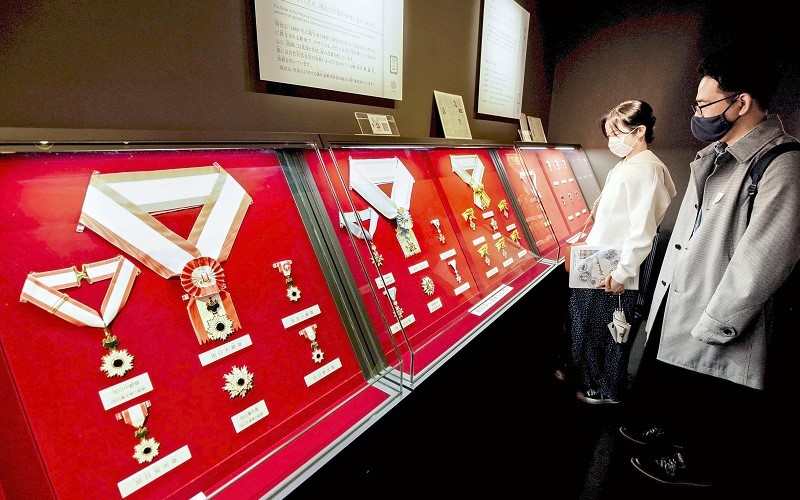
Decorations such as the Order of the Rising Sun and the Order of the Sacred Treasure are on display at the Mint Museum of Saitama Branch.
19:34 JST, July 20, 2021
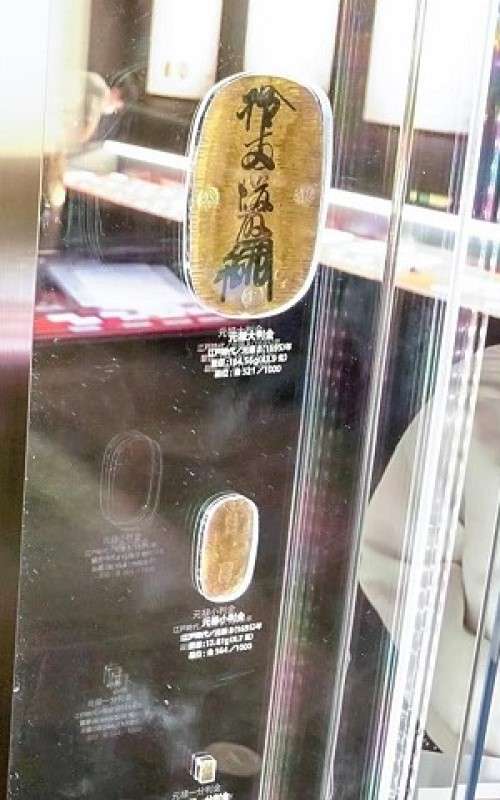
Large gold coins minted during the Edo period
In addition to the nation’s currency, the Saitama branch of the Japan Mint also produces decorative commemorative coins and medals, and its adjacent museum is particularly worth visiting to view such beautiful creations.
The Collar of the Supreme Order of the Chrysanthemum, the nation’s most honorable decorative ornament, shines brightly at a corner of the exhibition, where visitors are prohibited from taking photos.
In May 2019, when the Reiwa era began, the Emperor donned this collar when he attended the Sokui-go-Choken-no-gi, an emperor’s first audience after acceding to the throne.
Only here can the average person get such an up-close view of the ornament’s intricate design, which comprises a rising sun disc and its rays. The 22-karat gold sparkles, and the green chrysanthemum leaves are gorgeous.
There are also decorations such as the Order of Culture, in the shape of a citrus tachibana flower, and the Order of the Sacred Treasure, decorated with small beads. These decorations were said to be handmade by skilled mint artisans using through filing and firing glazes.
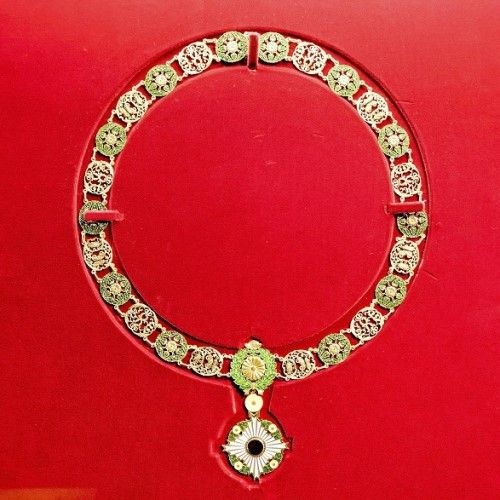
The Collar of the Supreme Order of the Chrysanthemum, photographed by special permission
Commemorative coins produced for major events such as the Olympics or the World Expo are worth seeing for their rich designs.
The commemorative coins marking the 60th anniversary of the enforcement of the Local Autonomy Law, issued from 2008 to 2016, have patterns for each prefecture. For example, the representative of Saitama Prefecture was Eiichi Shibusawa (1840-1931), an industrialist from that prefecture. He will have his portrait on the new ¥10,000 note, but I did not know he had already appeared on a coin.
“One of the purposes of issuing commemorative coins is to test new technologies to prevent forgery,” said Mitsuo Iwasaki, a spokesperson for the branch.
In fact, this commemorative coin is the first to use the technology of combining three kinds of metal materials, and a new ¥500 coin of the same structure will be issued this November.
Preventing forgery is the mint’s priority, apparently followed closely by the pursuit of beauty. Seeing the series of decorations, I could not help but contemplate the mission and pride of the Japan Mint.
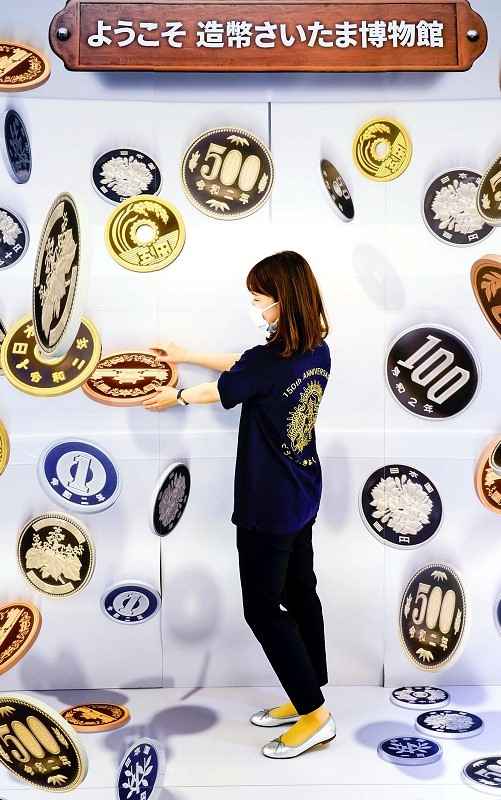
An Instagrammable photo spot
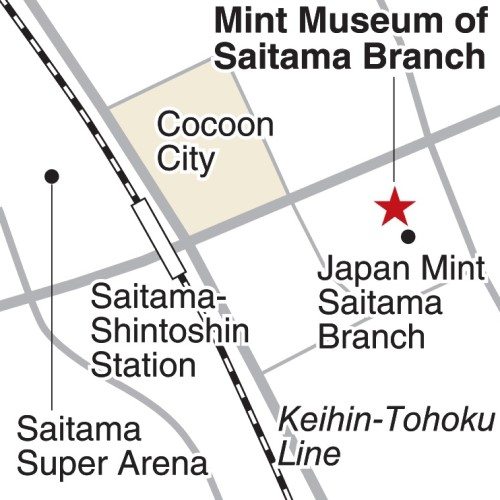
Mint Museum of Saitama Branch
1-190-22, Kitabukurocho, Omiya Ward, Saitama


Related Tags



Most Read
Popular articles in the past 24 hours
-

Director Naomi Kawase's New Film Explores Heart Transplants in Ja...
-

Japan’s Nikkei Stock Average Rises on Tech Rally and Takaichi's S...
-

Takaichi Expected to Express Desire for Constitutional Revision P...
-
Japanese Man Living in Iraq Suspected of Illegally Entering U.S. ...
-

Security Services Law Unconstitutional: Do Not Restrict Career Ch...
-
New Leader of Japan's CRA Opposition Party Faces Challenge of For...
-

Milano Cortina 2026: Snowboarding Star Fukada Wins Gold in Hard-F...
-
Tokyo Exhibition Featuring VR Walk Through 2025 Osaka-Kansai Expo...
Popular articles in the past week
-

Japan PM Takaichi’s Cabinet Resigns en Masse
-

Man Infected with Measles Reportedly Dined at Restaurant in Tokyo...
-

Videos Plagiarized, Reposted with False Subtitles Claiming ‘Ryuky...
-

Sanae Takaichi Elected 105th Prime Minister of Japan; Keeps All C...
-

Japan's Govt to Submit Road Map for Growth Strategy in March, PM ...
-

Milano Cortina 2026: Figure Skaters Riku Miura, Ryuichi Kihara Pa...
-
Tokyo’s New Record-Breaking Fountain Named ‘Tokyo Aqua Symphony’
-

Bus Carrying 40 Passengers Catches Fire on Chuo Expressway; All E...
Popular articles in the past month
-
Japan PM Takaichi’s Cabinet Resigns en Masse
-

Japan Institute to Use Domestic Commercial Optical Lattice Clock ...
-

Israeli Ambassador to Japan Speaks about Japan’s Role in the Reco...
-
Man Infected with Measles Reportedly Dined at Restaurant in Tokyo...
-

Man Infected with Measles May Have Come in Contact with Many Peop...
-

Prudential Life Insurance Plans to Fully Compensate for Damages C...
-
Videos Plagiarized, Reposted with False Subtitles Claiming ‘Ryuky...
-

Woman with Measles Visited Hospital in Tokyo Multiple Times Befor...
Top Articles in Features
-
Sapporo Snow Festival Opens with 210 Snow and Ice Sculptures at 3 Venues in Hokkaido, Features Huge Dogu
-
Tokyo’s New Record-Breaking Fountain Named ‘Tokyo Aqua Symphony’
-

Tourists Flock to Ice Dome Lodge at Resort in Hokkaido, Japan; Facility Invites Visitors to Sleep on Beds Made of Ice
-
High-Hydration Bread on the Rise, Seeing Increase in Specialty Shops, Recipe Searches
-
Heirs to Kyoto Talent: Craftsman Works to Keep Tradition of ‘Kinran’ Brocade Alive Through Initiatives, New Creations
JN ACCESS RANKING
-
Japan PM Takaichi’s Cabinet Resigns en Masse
-
Japan Institute to Use Domestic Commercial Optical Lattice Clock to Set Japan Standard Time
-
Israeli Ambassador to Japan Speaks about Japan’s Role in the Reconstruction of Gaza
-
Man Infected with Measles Reportedly Dined at Restaurant in Tokyo Station
-
Man Infected with Measles May Have Come in Contact with Many People in Tokyo, Went to Store, Restaurant Around When Symptoms Emerged