
Oita: Farmers grow sugarcane on abandoned paddies to feed elephants at Oita zoo
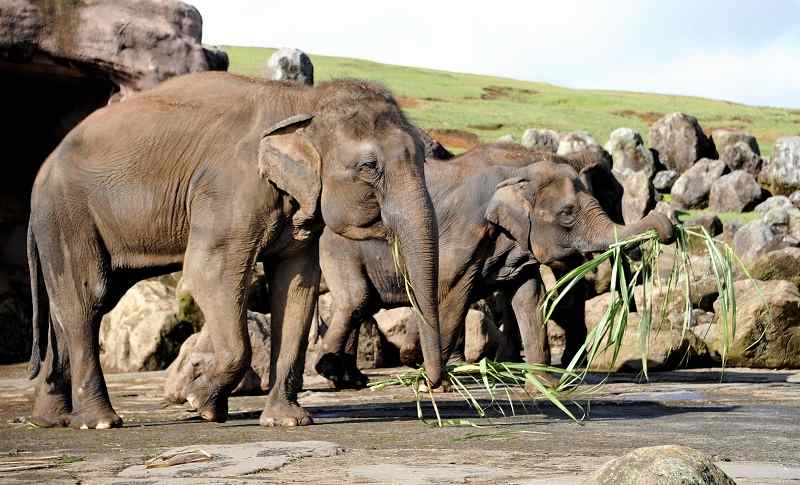
Elephants eat locally grown sugarcane at the African Safari wildlife park in Usa, Oita Prefecture.
8:13 JST, April 3, 2021
BEPPU, Oita — Sugarcane is being grown in abandoned rice fields to feed Asian elephants at a local zoo in Oita Prefecture, providing one solution to the problem of deserted farm land that is increasing year by year as the population ages.
There are five Asian elephants at the African Safari wildlife park in the city of Usa, which is near the Beppu hot spring resort area.
Elephants in Thailand and other countries naturally eat sugarcane and other wild plants, but at the Usa park they have mainly been eating pasture grass.
The zoo used to order sugarcane from Okinawa and the Amami Islands, where sugarcane cultivation is prevalent, but they could only secure enough to provide it at events, due to high transportation costs. That sugarcane was only available as processed short stalks.
Addressing the increasing amount of abandoned farmland in Oita Prefecture, the local office of the agriculture ministry reached out to young farmers with an appeal to grow sugarcane, to which a group of farmers in Beppu responded.
The farmers began cultivating sugarcane in late March last year on a total of about 500 square meters of abandoned land and other fields. Harvesting continued until December, reaching about 1.8 tons.
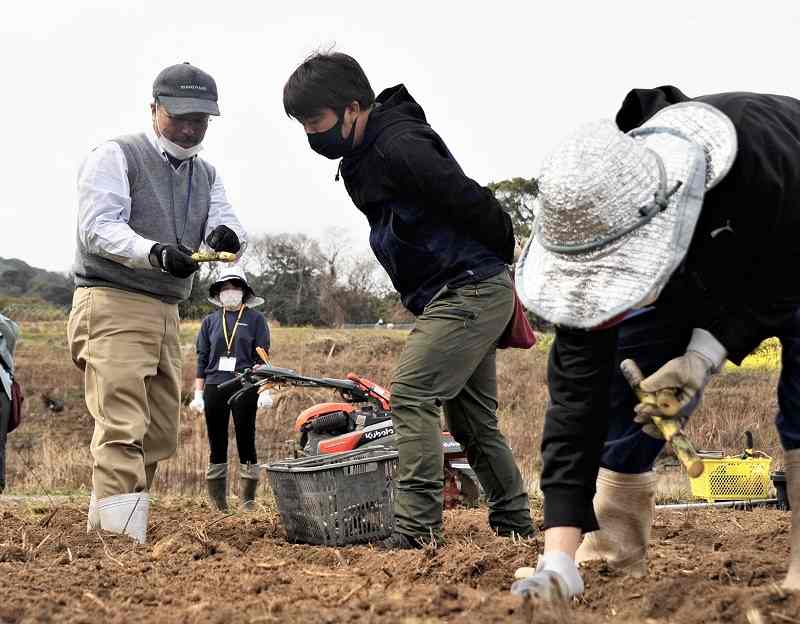
Keisho Tsunematsu, center, a member of a local farmers group, plants sugarcane in a field in Beppu, Oita Prefecture.
When shipping costs are factored, the locally grown sugarcane is far more economical than that from Okinawa and Amami.
This year, they expect to harvest 14.4 tons on 3,600 square meters of fields.
Since September, the zoo has been feeding the elephants sugarcane grown in the prefecture on a trial basis.
The elephants will hold several stalks of sugarcane about three meters long with their trunks, crunching away as they eat.
“It’s fresh, so the elephants become happy and more active,” said Iwai Kanda, director of African Safari and a veterinarian. “It also helps that the cost is low.”
On March 11, sugarcane was planted once again in terraced rice fields in Beppu.
“We are grateful that we know from the beginning where we will sell our products,” said Keisho Tsunematsu, a member of the local farmers group. “Next year, we would like to expand our planting to increase the yield and use all the abandoned land.”
Tsunematsu said he also envisions expanding beyond the zoo to refining sugarcane and using it for processed products.


Related Tags



Most Read
Popular articles in the past 24 hours
-

Director Naomi Kawase's New Film Explores Heart Transplants in Ja...
-

Japan’s Nikkei Stock Average Rises on Tech Rally and Takaichi's S...
-

Takaichi Expected to Express Desire for Constitutional Revision P...
-

Security Services Law Unconstitutional: Do Not Restrict Career Ch...
-
Japanese Man Living in Iraq Suspected of Illegally Entering U.S. ...
-

New Leader of Japan's CRA Opposition Party Faces Challenge of For...
-

Milano Cortina 2026: Snowboarding Star Fukada Wins Gold in Hard-F...
-

Tokyo Exhibition Featuring VR Walk Through 2025 Osaka-Kansai Expo...
Popular articles in the past week
-

Japan PM Takaichi’s Cabinet Resigns en Masse
-

Man Infected with Measles Reportedly Dined at Restaurant in Tokyo...
-

Videos Plagiarized, Reposted with False Subtitles Claiming ‘Ryuky...
-

Sanae Takaichi Elected 105th Prime Minister of Japan; Keeps All C...
-

Japan's Govt to Submit Road Map for Growth Strategy in March, PM ...
-

Milano Cortina 2026: Figure Skaters Riku Miura, Ryuichi Kihara Pa...
-

Tokyo’s New Record-Breaking Fountain Named ‘Tokyo Aqua Symphony’
-

Bus Carrying 40 Passengers Catches Fire on Chuo Expressway; All E...
Popular articles in the past month
-
Japan PM Takaichi’s Cabinet Resigns en Masse
-

Japan Institute to Use Domestic Commercial Optical Lattice Clock ...
-

Israeli Ambassador to Japan Speaks about Japan’s Role in the Reco...
-
Man Infected with Measles Reportedly Dined at Restaurant in Tokyo...
-

Man Infected with Measles May Have Come in Contact with Many Peop...
-

Prudential Life Insurance Plans to Fully Compensate for Damages C...
-
Videos Plagiarized, Reposted with False Subtitles Claiming ‘Ryuky...
-

Woman with Measles Visited Hospital in Tokyo Multiple Times Befor...
Top Articles in Features
-
Sapporo Snow Festival Opens with 210 Snow and Ice Sculptures at 3 Venues in Hokkaido, Features Huge Dogu
-
Tokyo’s New Record-Breaking Fountain Named ‘Tokyo Aqua Symphony’
-

Tourists Flock to Ice Dome Lodge at Resort in Hokkaido, Japan; Facility Invites Visitors to Sleep on Beds Made of Ice
-

High-Hydration Bread on the Rise, Seeing Increase in Specialty Shops, Recipe Searches
-

Heirs to Kyoto Talent: Craftsman Works to Keep Tradition of ‘Kinran’ Brocade Alive Through Initiatives, New Creations
JN ACCESS RANKING
-
Japan PM Takaichi’s Cabinet Resigns en Masse
-
Japan Institute to Use Domestic Commercial Optical Lattice Clock to Set Japan Standard Time
-
Israeli Ambassador to Japan Speaks about Japan’s Role in the Reconstruction of Gaza
-
Man Infected with Measles Reportedly Dined at Restaurant in Tokyo Station
-
Man Infected with Measles May Have Come in Contact with Many People in Tokyo, Went to Store, Restaurant Around When Symptoms Emerged