
16:10 JST, February 15, 2026
The popularity of “high-hydration bread,” made from dough with a high water content and characterized by its soft, elastic texture, is on the rise. An increasing number of shops are offering it, with some bakeries specializing in this type. Home bakers are also increasingly interested in it, as evidenced by a rise in recipe searches online.
High-hydration bread is also called high water content bread.
According to Hiroyuki Miyazaki, a baking instructor at Tsuji Culinary Institute in Osaka, the water content in bread dough varies by type, but most contain around 65% of the flour weight. Dough with a hydration rate of 80% or more is classified as high-hydration bread.
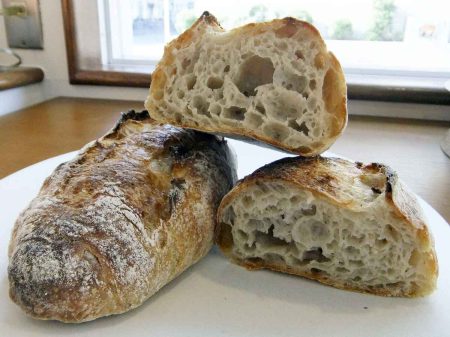
Oatmeal bread with a moist texture and soft crust sold at the Point Pour Point bread and Western confectionery shop in Kamigyo Ward, Kyoto
High-hydration breads, such as the Lodeve that originated in southern France, Germany’s bread Seelen and Italy’s Ciabatta, are traditionally known among bakers, but rarely found in shops.
About 10 years ago, however, there was a notable increase in the number of shops selling high-hydration bread and in the quantities of the breads themselves, indicating a rise in customer interest.
Miyazaki characterizes high-hydration bread as “being moist, having a uniquely chewy texture and becoming less dry over time.” On the other hand, the dough can be difficult to handle, due to the sticky texture caused by high water content.
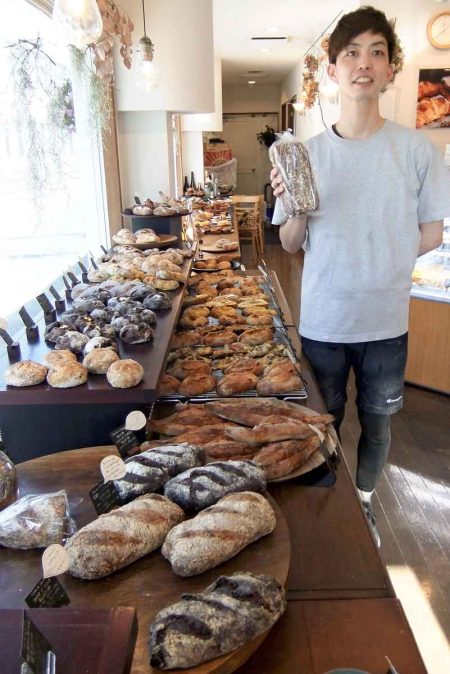
Kentaro Takeuchi, head of Point Pour Point, explains the characteristics of high-hydration bread varieties.
At bread and Western confectionery shop Point Pour Point in Kamigyo Ward, Kyoto, where among 40 to 50 bread varieties are sold, all except croissants are high-hydration bread.
One popular item, the oatmeal bread (¥350 plus tax), has a hydration rate reaching 135%. Its golden-brown crust offers a soft bite, while the inside is moist, tender and subtly sweet. Oatmeal is added to the dough after being cooked with water five times its weight.
Shop representative Kentaro Takeuchi learned bread-making over a period of five years at a shop in the city and another in Fukuoka, both famous for high-hydration bread.
In July 2022, he began producing and selling high-hydration bread at his family-run Western confectionery shop. His customer base is broad, including foreigners and elderly people.
“The textures of our bread are often praised as being ‘easy to chew’ and ‘going down smoothly’,’’ Takeuchi said.
Crispy surface when baked
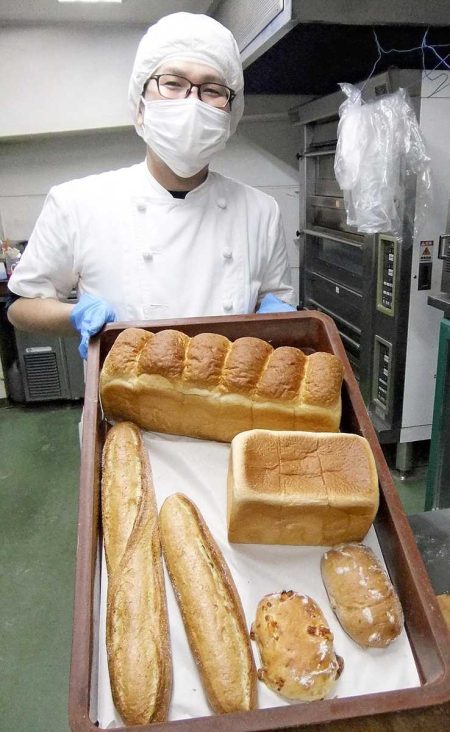
High-hydration bread varieties sold by Cascade in Nishinomiya, Hyogo Prefecture, including the Meiho loaf, seen at the back
Many high-hydration bread products are sold without publicity or mention.
Cascade, a bakery company based in Nishinomiya, Hyogo Prefecture, which operates 16 shops mainly in the Kyoto-Osaka-Kobe area, launched its high-hydration white bread Meihou (¥330 per loaf, plus tax) about 20 years ago. The company currently offers six products, including the Nama France varieties (walnut bread for ¥190, cheese bread for ¥200, plus tax). These products have a hydration rate of 100% or higher.
According to Kazuya Okada, deputy factory manager at the company’s Nishinomiya-Kitaguchi factory, the Meihou was developed to create a soft, chewy texture closer to Japan’s rice-based food culture. Its crisp texture when toasted was well-received, making it the most popular regular item among the company products.
Dough for professional use
High-hydration dough for professional use is also available.
In February 2020, Nagoya-based Pasco Shikishima Corp. launched Kokusan Komugi no Lodeve (Lodeve made from wheat grown in Japan), a frozen dough sold to supermarkets and bakeries.
There are currently five varieties, including one that is chocolate flavored. Its positive reception comes mainly from being frozen after shaping, ensuring efficient baking in shops and consistent quality.
Home bakers’ interest
Home bakers are also becoming interested in high-hydration bread.
As of Dec. 22, there were 122 “high-hydration” recipes posted on the Cookpad recipe search site. According to the site’s operating company, searches for “high-hydration” began increasing around 2022, with the search frequency in 2025 being about 2.26 times higher than 2024.
Takako Kotake, head of the company’s public relations department, said: “In 2022, public interest in fresh textures such as ‘moist’ and ‘chewy’ surged. In 2025, a similar texture trend resurfaced with products like ‘mochimochi [chewy] doughnuts.’ The rise in searches for high-hydration bread corresponds with this increased demand for the textures. I see high-hydration bread’s popularity as part of the trend.”





Most Read
Popular articles in the past 24 hours
-

Nippon Life Insurance's U.S. Arm Sues OpenAI Over Legal Assistanc...
-

Japan Asked U.S. Not to Disadvantage Tokyo under New Tariff Rules
-

Heckling, Once a Fixture of Diet Debate in Japan, Abates in the F...
-

Sake Mash Brewed Aboard ISS Returns to Japan; Final Product Alrea...
-

Milano Cortina Paralympics Open: Games Represent a Wish for Inclu...
-

Japan to Send SDF Jet to Maldives for Iran Evacuations; Planes to...
-

Ohtani Helps Get Samurai Japan Off to Stellar Start in WBC Opener...
-

Yamamoto's High School Coach Discovered His Pitching Talent; Dodg...
Popular articles in the past week
-

South Korea Tightens Rules on Foreigners Buying Homes in Seoul Me...
-

Ibaraki Pref.'s 1st Foreign Bus Driver Hired in Tsukuba
-

Amid Strait of Hormuz Blockade, Shipping Companies Scramble to Ge...
-

2 Unpublished Early Novellas by Japan's Kenzaburo Oe Discovered, ...
-

Strait of Hormuz Closure Shakes Markets; Prolonged Closure Could ...
-

Iran Situation: Japan Must Exert Diplomatic Efforts without Merel...
-
Measles Patient Visited Hospital in Bunkyo Ward, Tokyo, Metropoli...
-

Japanese Shipping Giants Halt Strait of Hormuz Transit as Iran Co...
Popular articles in the past month
-

Producer Behind Pop Group XG Arrested for Cocaine Possession
-

Japan PM Takaichi’s Cabinet Resigns en Masse
-

Man Infected with Measles Reportedly Dined at Restaurant in Tokyo...
-

Videos Plagiarized, Reposted with False Subtitles Claiming ‘Ryuky...
-

Prudential Life Insurance Plans to Fully Compensate for Damages C...
-

Woman with Measles Visited Hospital in Tokyo Multiple Times Befor...
-

iPS Treatments Pass Key Milestone, but Broader Applications Far f...
-

Sanae Takaichi Elected Prime Minister of Japan; Keeps All Cabinet...
Top Articles in Features
-

Tokyo’s New Record-Breaking Fountain Named ‘Tokyo Aqua Symphony’
-
Heirs to Kyoto Talent: Craftsman Works to Keep Tradition of ‘Kinran’ Brocade Alive Through Initiatives, New Creations
-

My Spendthrift Mother Constantly Asks Me for Money
-
Maltese Pavilion’s Famous Ftira Bread Now Available in Osaka; Loaves Became Popular during 2025 Osaka-Kansai Expo
-
Japanese Students Use Traditional Pickle to Create Novel Wagashi Confectionery
JN ACCESS RANKING
-
Producer Behind Pop Group XG Arrested for Cocaine Possession
-
Japan PM Takaichi’s Cabinet Resigns en Masse
-
Man Infected with Measles Reportedly Dined at Restaurant in Tokyo Station
-
Videos Plagiarized, Reposted with False Subtitles Claiming ‘Ryukyu Belongs to China’; Anti-China False Information Also Posted in Japan
-
Prudential Life Insurance Plans to Fully Compensate for Damages Caused by Fraudulent Actions Without Waiting for Third-Party Committee Review